
This post is also available in:
 Português
  Español
  Français
  Deutsch
  Italiano
  Русский
Summary
Aid workers count about 150,000 people displaced in Afar.
Seven armed groups announced an alliance to remove Prime Minister Abiy Ahmed. The UN said it was "particularly troubled." No peacekeepers are coming to help.
Ethiopia has 130 million people, six in ten of them Christians, and no coast since Eritrea broke away in 1993.
This is not a religious war.
From 1991 to 2018 the TPLF, born as a Marxist-Leninist guerrilla, ran the whole country although Tigrayans are only about six percent of the population.
Abiy pushed the TPLF aside, war followed in 2020, about 600,000 died, and a 2022 peace deal was never fully carried out.
Now the Amhara Fano militias and Eritrea, once the government's allies, stand with the TPLF.
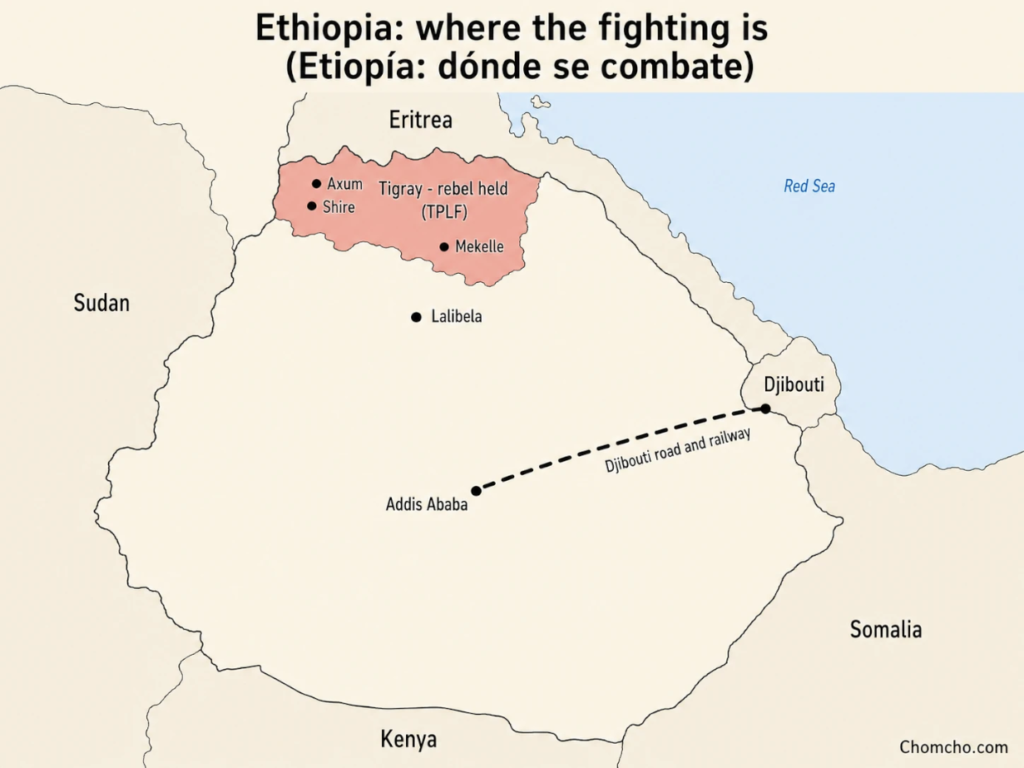
The rebel push into Afar aims at the road and railway from Djibouti, the artery that carries almost all of Ethiopia's trade and fuel.
Ethiopia's army chief accuses Sudan, Egypt "and other external powers" of supplying the rebels, without evidence; Egypt's interest is the Grand Ethiopian Renaissance Dam on the Nile.
Weeks ago the U.S. government lifted the sanctions imposed during the war, and the U.S. embassy called the TPLF offensive disappointing: two signals pointing toward the Ethiopian government, not the rebels.
A Christian nation of 130 million a few miles from the Red Sea matters to America whether the press covers it or not.
Ethiopia goes back to war, and the world pays little attention
On September 23 the Tigray People’s Liberation Front, the TPLF, the party that governs Ethiopia’s northern region of Tigray, seized the airports of Mekelle, the regional capital, and of the towns of Axum and Shire, and sent its fighters into the neighboring regions of Afar, to the east, and Amhara, to the south.
The TPLF calls the fighting a “defensive war.” The government in Addis Ababa, the national capital, calls the fighting an “all-out offensive.”
Ethiopian Airlines suspended flights, the airport of Lalibela, famous for its churches carved into rock, closed, and phones and internet went dark across Tigray.
The army claims to have killed more than 700 rebels; it gives no figures for its own dead or for civilians. Aid workers count about 150,000 people displaced in Afar alone.
Days earlier, seven armed groups, the TPLF among them, announced an alliance to remove Prime Minister Abiy Ahmed.
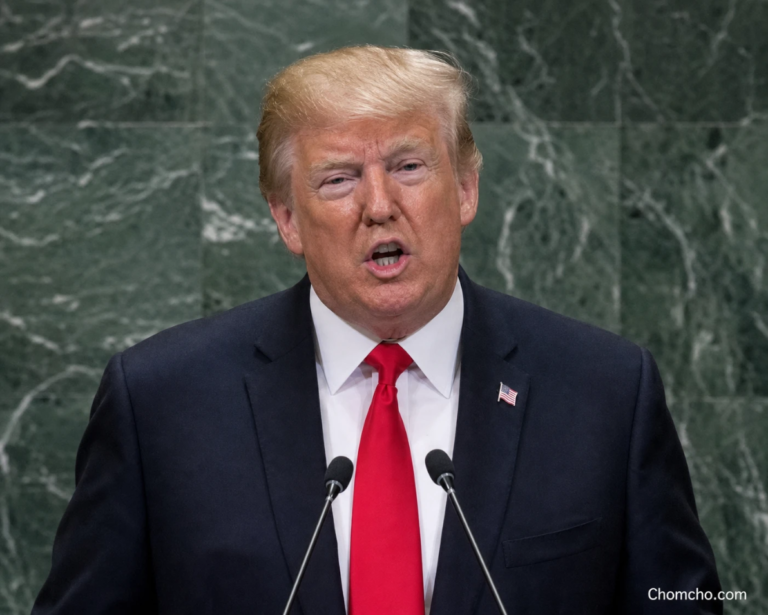
The United Nations said it was “particularly troubled” by drone strikes and harm to civilians, and UN Secretary-General António Guterres raised the matter with leaders in New York.
No peacekeepers are coming.
The Ethiopia civil war of 2020 to 2022 killed about 600,000 people by the African Union’s estimate, and the UN answered it with statements then too.
The country, for those who never had a reason to look
Ethiopia has about 130 million people, second in Africa only to Nigeria, on a territory roughly the size of Texas and California together, with no coast: it lost its Red Sea ports when Eritrea broke away in 1993.
Almost everything it imports, fuel included, comes by road and rail from the port of Djibouti.
Six in ten Ethiopians are Christians, most of them in the Ethiopian Orthodox Church, one of the oldest churches on earth, with a fast-growing Protestant minority; about a third are Muslim.
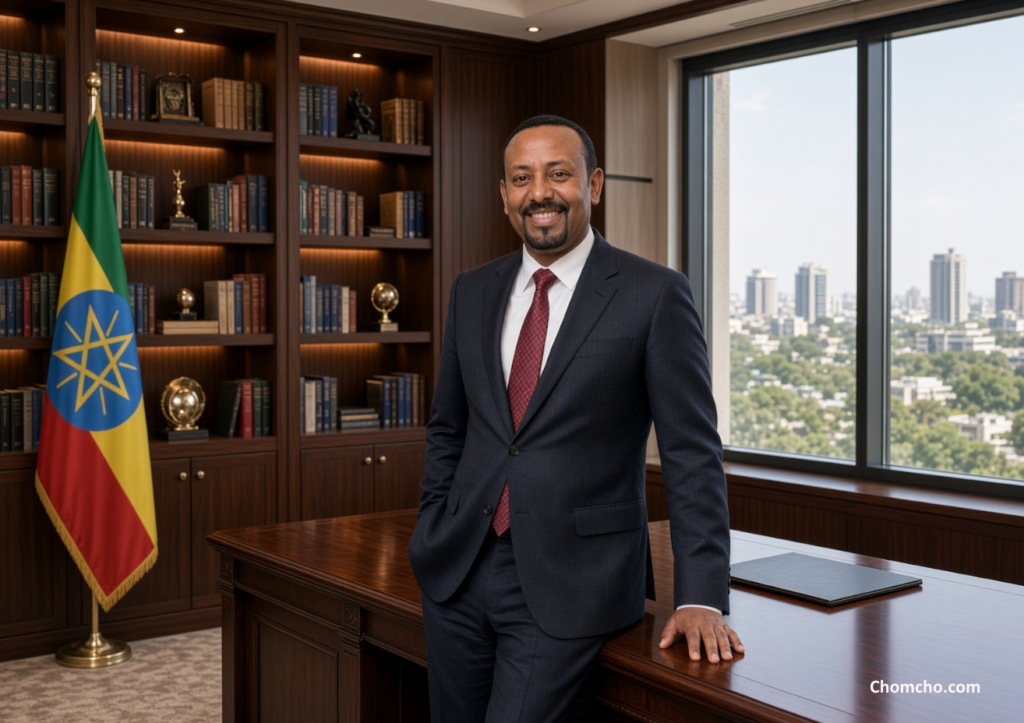
Abiy Ahmed, prime minister since 2018, is a Pentecostal Christian of the Oromo people, the country’s largest ethnic group, and he won the 2019 Nobel Peace Prize for making peace with Eritrea.
A note worth mentioning: this is not a religious war.
Tigrayans are mostly Orthodox Christians, the Afar people whose towns the rebels are now taking are mostly Muslim, and the Oromo are split between the two faiths. The lines run along ethnicity and power, not the cross and the crescent.
How it got here
From 1991 to 2018 the TPLF, born as a Marxist-Leninist guerrilla movement, ran the whole country through a coalition it controlled, although Tigrayans are only about six percent of the population. Tigrayans were an ethnic minority ruling an entire nation.
Abiy pushed the TPLF aside. In 2020 Tigray held its own election in defiance of the federal government, and in November TPLF forces attacked federal army bases inside Tigray, a strike the TPLF called preemptive.
The war that followed brought Eritrea’s dictatorship in on the government’s side, a blockade, famine and atrocities by every party.
It ended in November 2022 with an agreement signed in Pretoria, South Africa, that was never fully carried out: land disputed between Tigray and Amhara, hundreds of thousands still displaced, and Eritrea never a signatory.
Clashes resumed late last year.
But by then the alliances had flipped. The Amhara militias known as Fano, who fought beside the government against Tigray, turned against Addis Ababa in 2023 and now fight alongside the TPLF.
Same with Eritrea: the government’s ally in the last war is now accused of financing the TPLF, because Abiy wants sovereign access to the Eritrean port of Assab and Eritrea fears he will take it by force.
Who is right, and who is wrong?
On one hand, a party with Marxist roots that ruled for 27 years, started the last war, and today is funded by a dictatorship.
On the other, an elected government supported by the United States and led by a Christian prime minister.
That government, according to the UN, uses drones on its own territory, and it has an insurgency in nearly every region, so no side is blameless.
But the choice is not hard, and Washington has made it.
The road from Djibouti
The rebel push into Afar, through the towns of Abala and Erebti toward Afdeera, has one target: the highway and railway from Djibouti, the main supply route that carries almost all of Ethiopia’s trade and fuel. If it is cut, the capital runs out of fuel and goods.
It is the same strategy the TPLF used in 2021, when its columns marched south through Amhara toward Addis Ababa before the government’s counteroffensive turned them back.
Egypt, the Nile and the Red Sea
Ethiopia’s army chief, Field Marshal Birhanu Jula, said on Sunday: “Neither Shaebia nor the TPLF can achieve anything alone, even if they are allied, unless they are backed, supported and supplied by Sudan, Egypt and other external powers.”
Shaebia is Eritrea’s ruling party. Birhanu offered no evidence. Sudan called the charge “baseless,” and Eritrea answered that the real problem is Abiy’s ambition for the sea.
Egypt’s motive is not a mystery. The Grand Ethiopian Renaissance Dam on the Blue Nile is Africa’s largest, and Egypt draws more than 90 percent of its fresh water from that river.
Cairo wants a binding agreement on how the dam is operated; Addis Ababa calls the dam a matter of sovereignty.
A government struggling to survive in the north has almost no strength left to argue about water. That is the logic, proven or not.
On the other side, the government’s drones were bought from Turkey, China and Iran, sellers rather than allies, and since 2025 Ethiopia has been building its own.
China holds the loan of 4,000 million dollars for the railway to Djibouti, part of China’s Belt and Road infrastructure program. No Russian mercenaries have been reported.
Washington’s signals point one way
Two facts, and a reading of them.
Weeks ago the U.S. government lifted the sanctions imposed on Ethiopia and Eritrea during the war, saying the “national emergency” had expired.
This week the U.S. embassy in Addis Ababa said it was “disappointed” by the TPLF offensive.
Neither is a declaration of policy, but together they point one way: in a region of bad options, the Trump administration is standing with the Ethiopian government, not the rebels, and that is the correct foreign policy instinct.
Why should Americans care?
Because 600,000 people died in the last Ethiopia civil war and the world barely noticed, while every accusation about the Gaza war fills the news.
A Christian nation of 130 million a few miles from the Red Sea, next to the shipping lane attacked by Yemen’s Houthi rebels, matters to America whether the press covers it or not.
“Blessed are the peacemakers: for they shall be called the children of God” (Matthew 5:9, KJV).
Peace in Ethiopia will not come from a UN statement. It will come from a government strong enough to keep it.
A country the world forgets is still a country. Its dead still matter.