
This post is also available in:
 Português
  Español
  Français
  Deutsch
  Italiano
  Русский
Summary
He also said he would probably be open to meeting Iranian President Masoud Pezeshkian in New York, but no meeting has been confirmed.
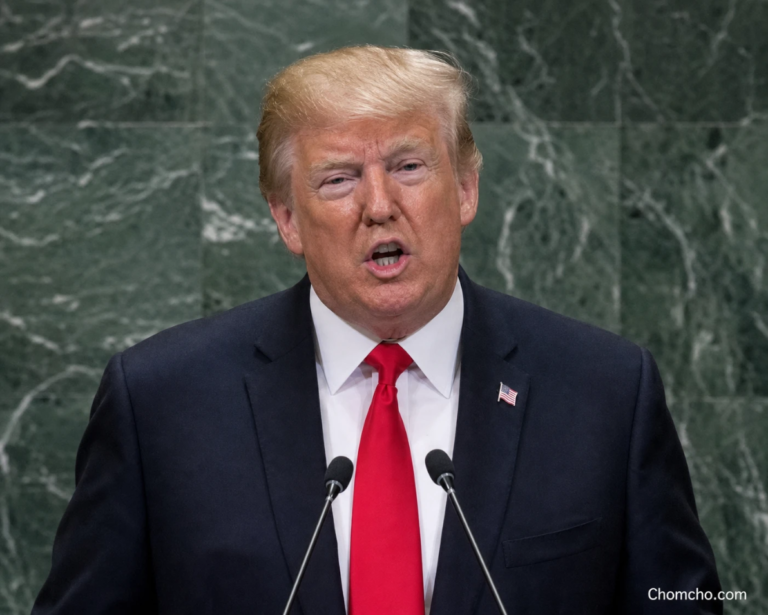
Trump speaks at the UN General Assembly on Tuesday, Pezeshkian on Wednesday, from the same podium.
Washington issued the Iranian delegation visas under the 1947 headquarters agreement, then restricted its movements in Manhattan.
Tehran arrived with seven conditions and published only three: end the war on all fronts, release its frozen assets, and lift the naval blockade.
Its security chief says Washington has "no choice" but to accept them, and warns Iran could reconsider the Non-Proliferation Treaty. That threat is exactly why the nuclear line is the one item that cannot be traded.
Qatar and Pakistan are carrying messages, but the last memorandum between the two presidents, signed in June, collapsed within weeks.
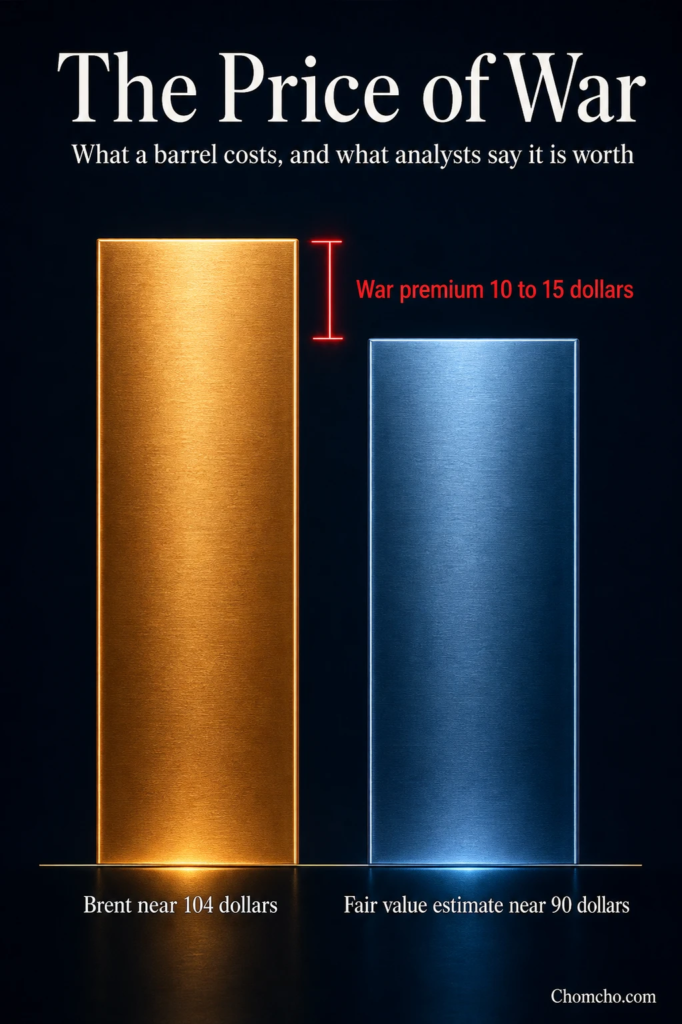
Markets are betting on the outcome. Brent sits near 104 dollars against a fair value estimate near 90, so roughly ten to fifteen dollars of every barrel is war premium, most of which a handshake would take care of.
Meanwhile Saudi Arabia issued air-raid alerts for Riyadh, and Aramco told at least two European refiners they will get no crude next month.
China has been the world's shock absorber, cutting purchases and living off stored barrels.
Now its imports are rising again, 7.84 million barrels a day in September against 7.25 million in August, and stored oil runs out.
The Arabic-language press, from the pan-Arab daily Al-Quds Al-Arabi to Al Jazeera's Arabic site, is asking whether America will still defend its allies.
The answer is a consistent doctrine: allies pay their share. NATO pledged to move toward 5 percent of GDP by 2035, Germany now funds the world's fourth-largest military budget, South Korea a record one, and Saudi Arabia signed a burden-sharing agreement and was cleared by the State Department to buy 48 F-35s.
The right posture for the week: no rush, no bad deal, the nuclear line non-negotiable.
Peace through strength, or no peace worth signing.
The Iran war arrives at the United Nations this week, and the American president has already told the world, in his own words, what he is weighing.
Deciding mode, days before the General Assembly
President Trump told Fox News on Sunday that he is in “deciding mode” on Iran, and then did something politicians rarely do: he laid out his own options in public. As reported from the interview, there are three: “to obliterate Iran, letting it rot economically or reach a deal.”
He added that very big things would happen in the not-so-distant future and warned Tehran to behave. According to Fox News correspondent Trey Yingst, he also asked the question no speechwriter would have handed him: “My question is, if and when do I blow the entire nation up?”
He also said he would probably be open to meeting Iranian President Masoud Pezeshkian in New York this week. No such meeting has been announced or confirmed by either government, and this Iran war update should be read with that caveat in front of it.
What is confirmed is the calendar, and the calendar is the story.
The choreography in New York
The general debate of the 81st General Assembly runs from September 22 to 28.
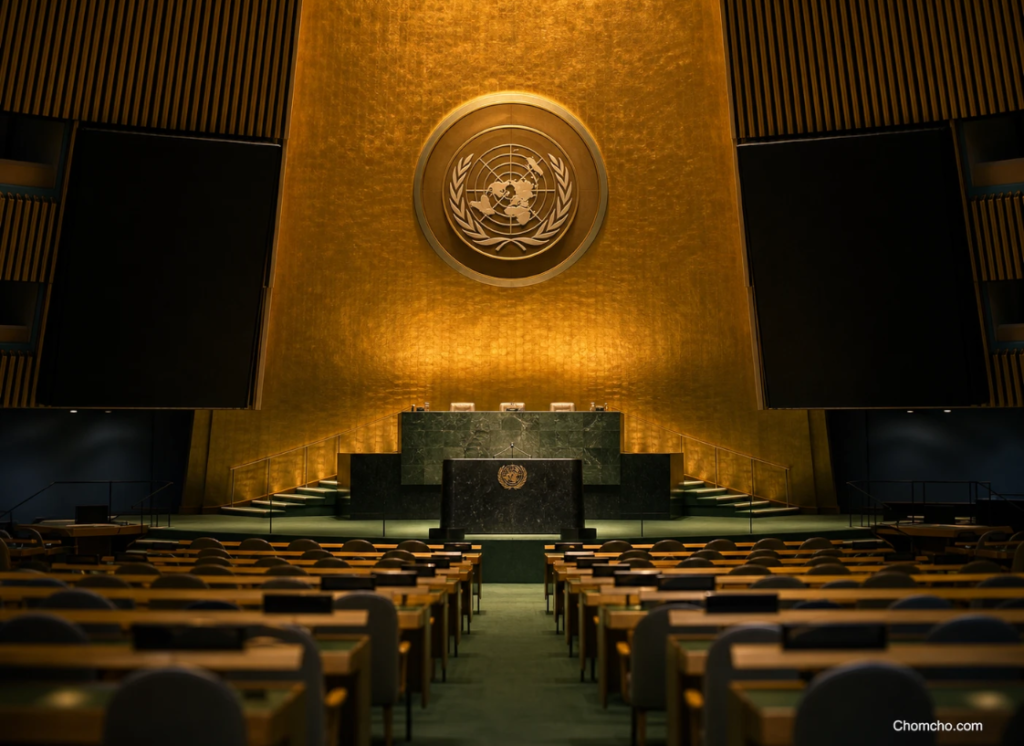
Trump speaks from the rostrum, the podium in the Assembly Hall from which each head of state delivers his country’s statement, on Tuesday. Pezeshkian speaks from the same podium on Wednesday.
Two governments at war, twenty-four hours apart, in the same room.
Tehran’s delegation is there because of a 1947 treaty.
Under the agreement that placed United Nations headquarters in New York, the host country generally must allow representatives of member states to reach the building, whatever its relations with their government.
So Washington approved visas for Pezeshkian, Foreign Minister Abbas Araghchi and a six-member delegation, and then restricted their movements in Manhattan.
State Department spokesman Tommy Pigott explained why: while ordinary Iranians endure repression, water and electricity shortages and soaring inflation, “the regime’s officials want to go on shopping sprees in New York.” Not on his watch, he added.
The American message is already set. Ambassador Mike Waltz said the administration would stress “ensuring that Iran never has a nuclear weapon.”
Seven demands, three published
Iran arrived with a list. Mohsen Rezaei, secretary of the Supreme National Security Council, announced on X that Tehran has conveyed seven conditions for beginning any negotiation, and that if Washington wants out of the predicament it created, it has “no choice but to accept Iran’s rights and conditions.”
He published three of them, in an interview with Al Jazeera: end the war on all fronts, release the frozen Iranian assets, and lift the naval blockade. Iranian officials have tied the package to reopening the Strait of Hormuz. The other four conditions were not disclosed.
Consider the posture. A government whose supreme leader was killed in this war, whose exports have collapsed and whose citizens live with water and electricity shortages is announcing that the United States has no choice.
It is also demanding that Washington accept a list it will not publish. Secrecy is not a negotiating position; it is an admission that the remaining items would not survive daylight.
The regime is welcome to return to the real world whenever it likes.
The nuclear card
Rezaei did not stop at demands. He also said American and Israeli military action could push Iran to reconsider its position on the Non-Proliferation Treaty, while noting that no decision to withdraw has been taken.
The threat is transparent: give us what we want, or we leave the treaty and build the weapon openly.
It is also the precise reason the nuclear line is the one item on the table that cannot be traded. Everything else in this negotiation is reversible. A bomb is not.
Qatar, Pakistan, and a memorandum that died young
The messages are moving through intermediaries.
Araghchi left Tehran on Sunday evening for New York with a stopover in Doha, and Qatar’s prime minister, Sheikh Mohammed bin Abdulrahman Al-Thani, confirmed that messages are passing between Washington and Tehran.
Pakistan is also carrying messages; it hosted the failed Islamabad talks in April.
There is precedent, and it is not encouraging.
On June 17, Trump and Pezeshkian signed a memorandum remotely that extended the ceasefire sixty days so that final terms could be negotiated.
It collapsed within weeks, long before its sixty days ran out, and by mid-July Washington was tightening the squeeze on Iranian shipping again.
Anyone promising a breakthrough this week should be asked what is different now.
What the market is betting
Traders have already placed their bet, and it is visible in the price.
Brent crude has slipped to near 104 dollars and West Texas Intermediate to near 100, after three days of modest declines that market coverage links partly to the diplomacy signals from Washington.
JP Morgan puts oil’s fair value around 90. That gap, roughly ten to fifteen dollars a barrel, is the war premium: what the world is paying for the possibility that this gets worse.
In our assessment, a handshake in New York would take care of most of it. Another strike would widen it.
The other direction is equally visible.
Saudi Arabia issued air-raid alerts for Riyadh over the weekend, the first in the capital since the height of the fighting in March and April, along with warnings for Red Sea hubs including Yanbu.
Saudi Aramco has told at least two European refining customers that they will receive no crude next month. The International Energy Agency has described the war’s impact as the “largest supply disruption in the history of the global oil market.”
One honest qualification is worth noting.
The diesel crisis punishing truckers and farmers is only partly an Iran story. A major cause is the damage Ukrainian drones have done to Russian refineries, which has halted or curtailed nearly a quarter of Russia’s refining capacity and pushed its refining to a 24-year low.
Thus, a deal with Tehran would cut the crude premium. It would not, by itself, fix diesel.
China’s buffer is wearing out
Here is the part of this Iran war update that almost nobody is watching.
For six months, China has been the world’s shock absorber. Beijing stockpiled aggressively before the war, holding well over a billion barrels across commercial and strategic reserves, and when prices spiked, it sharply cut its purchases and lived off the cheap barrels it had bought earlier.
China’s imports of Iranian crude, once about 1.4 million barrels a day and roughly 80 to 90 percent of Iran’s entire crude export trade, fell to about 530,000 in July and August, 48 percent below pre-war levels.
China’s two largest shipping groups, COSCO and China Merchants, kept more than a hundred supertankers out of the Strait of Hormuz and Bab el-Mandeb from late July, reducing the risk of Iranian fire and American sanctions.
That restraint did more to hold down oil prices than any diplomacy.
However, the cushion is now deflating. Chinese crude imports rose 6.2 percent in August to 37.9 million tonnes, the highest in four months, and Kpler data show September running at 7.84 million barrels a day against 7.25 million in August.
Stockpiles at Shandong, home to China’s independent refiners, had already fallen to an eight-month low by the end of July, and with refiners drawing on them since, they are likely lower still.
Analysts do not expect a fast return to pre-war levels, because high prices squeeze refining margins and the reserves still cover months rather than weeks. But the direction has changed, and the arithmetic is simple: stored oil runs out.
Two consequences follow. The lid on prices loosens as China returns to the market. And Beijing, which takes roughly half its oil from the Middle East and moves 5.4 million barrels a day through Hormuz, has its own reason to want this war ended.
What the Arabic-language press is saying
Six Middle Eastern leaders are expected in New York this week, and the regional press is asking a pointed question that rarely reaches Western readers: will America defend its allies?
The London-based pan-Arab daily Al-Quds Al-Arabi argues in an editorial that where a threat to Saudi Arabia once would have been treated as a threat to American power itself, as when Iraq invaded Kuwait, this administration has split the crisis in two, protecting American interests while treating the Saudi-Houthi war as a separate matter.
An opinion piece on Al Jazeera’s Arabic site describes the American umbrella as shifting from a “comprehensive guarantee” to “conditional and limited support.”
Euronews Arabic and the online daily Elaph both note that the Houthis pledged not to target American and Israeli ships, while Saudi ships were left outside that pledge.
Read carefully, the complaint is not only about Houthi missiles. It carries an implicit expectation that American forces and American taxpayers should carry the defense of wealthy Gulf states indefinitely, as they did for decades.
That expectation is exactly what this administration has set out to change.
A consistent doctrine: allies pay their share
Seen in isolation, the Saudi case can look like hesitation. Seen alongside Europe and Asia, it looks like a policy applied with unusual consistency.
In Europe, NATO members agreed at The Hague in June 2025 to raise defense spending toward 5 percent of GDP by 2035, and Secretary-General Mark Rutte credited Trump directly, saying the increase would not have happened without him.
European allies and Canada raised their combined defense spending by nearly 20 percent in real terms in 2025.
Germany, which averaged about 1.2 percent of GDP on defense over the previous decade, now funds a 2026 military budget of about 127 billion dollars, the fourth largest in the world.
In Asia, South Korea announced on September 3 a record defense budget, up 8.2 percent to about 54 billion dollars, under steady American pressure to spend more.
The Gulf follows the same pattern. When Washington and Riyadh signed their Strategic Defense Agreement in November 2025, the White House said it secured “new burden-sharing funds from Saudi Arabia to defray U.S. costs.”
The kingdom had already signed a mutual defense pact with Pakistan in September 2025, and in August it joined an alliance with Turkey and Pakistan. And on Thursday the State Department approved the sale of 48 F-35 stealth fighters worth 24.3 billion dollars, a move it said would contribute to “improving the security of a major non-NATO ally.” The sale still faces a thirty-day review in Congress.
That is not a small gesture. Washington does not sell the F-35 to just any country that asks; it has gone to its closest allies, and Turkey was expelled from the program in 2019. The Saudi embassy called the sale “a further step in defense cooperation between the two countries.”
The message to allies is therefore clearer than the regional editorials suggest.
America will sell its partners the best weapons it makes and stand with them against common enemies, but it will not permanently pay for their defense.
That is the central difference between this administration’s foreign policy and that of its predecessors, and it has now been applied in Berlin, in Seoul and in Riyadh.
Strength is what put Iran at the table
Whatever Trump decides, one fact should frame the reporting of it.
Iran is discussing conditions through Qatari intermediaries because its economy has been strangled and its leadership decimated, not because anyone in Tehran discovered the virtues of dialogue. The deal, if it comes, will be a product of pressure, not an alternative to it.
Which sets the correct posture for the week ahead: no rush, no bad deal, the nuclear line non-negotiable, and allies told plainly and in advance what they can count on.
A president who lists his own options in public has not lost control of the situation. He has told everyone at the table that all three remain on it.
Peace through strength, or no peace worth signing.