
This post is also available in:
 Português
  Español
  Français
  Deutsch
  Italiano
  Русский
The unexpected move that kept oil below the feared peak
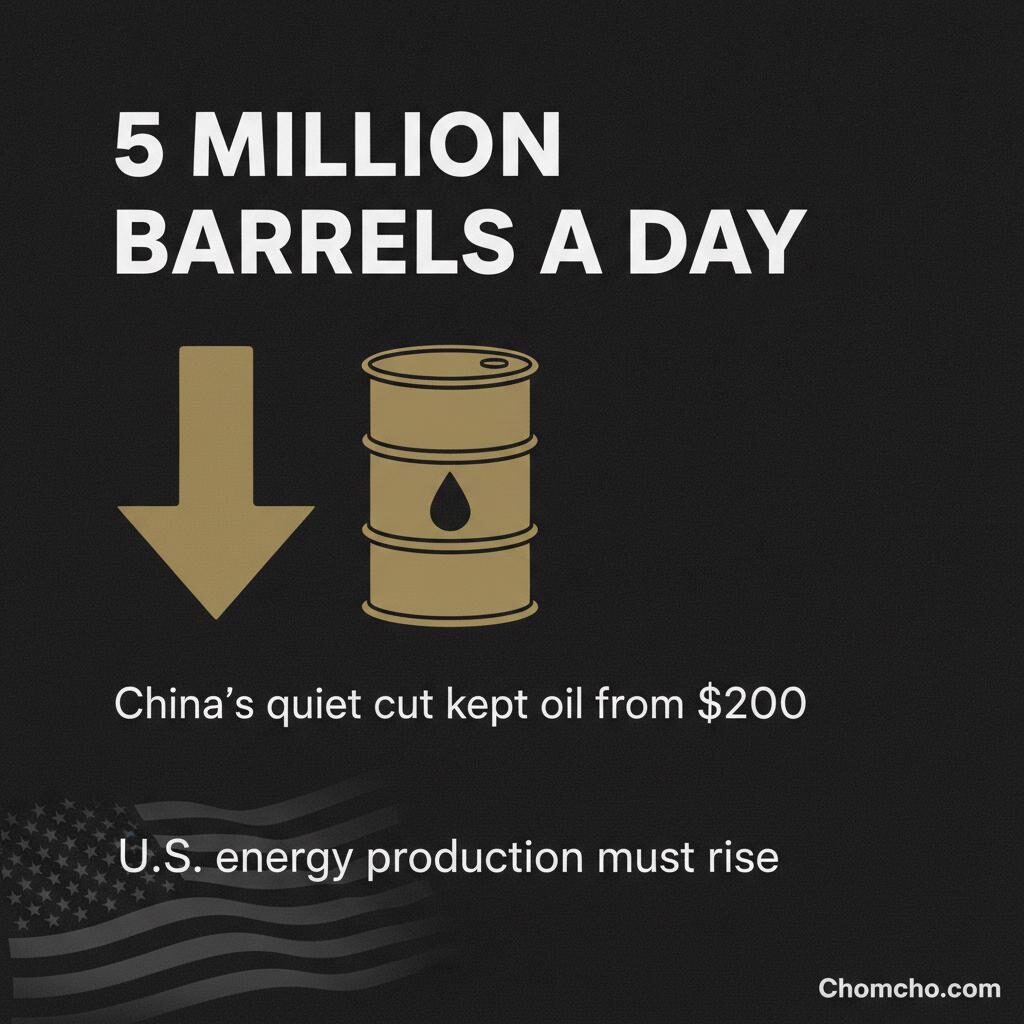
China quietly cut crude oil imports by about five million barrels a day after Iran closed the Strait of Hormuz.
The move absorbed roughly two-thirds of Asia’s spot-market shortfall. Oil prices never reached the $150 to $200 range many analysts had predicted.
Oil analyst Rory Johnston called the shift the largest unexpected swing in global oil balances by any single country in history.
China oil reserves played the decisive role. Beijing gave no official explanation.
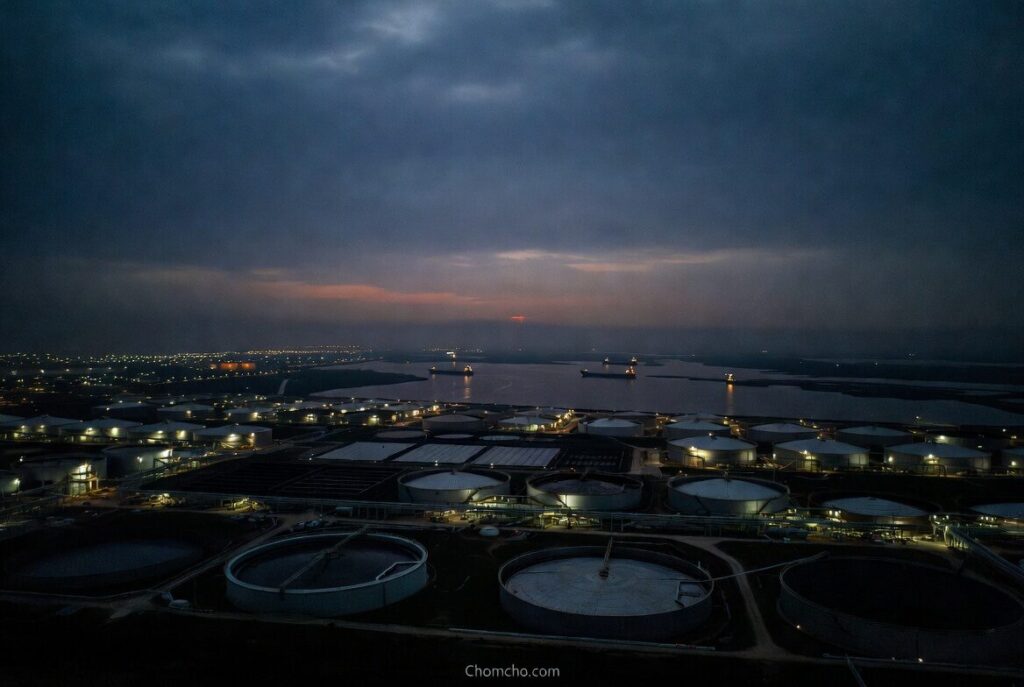
Chinese refining runs fell by about three million barrels a day. Satellite images of floating-roof storage tanks showed no matching drawdown of visible commercial inventories.
The evidence points to China’s opaque underground strategic stocks and possible refined-product stockpiles.
The cumulative reduction in Chinese crude imports through June reached roughly 450 million barrels.
That volume exceeded the entire coordinated release of emergency oil stocks by the International Energy Agency (IEA), the group of developed energy-importing countries that includes the United States, Japan, South Korea and many European nations.
China’s stockpile dwarfs Western reserves
China holds the world’s largest strategic oil reserves.
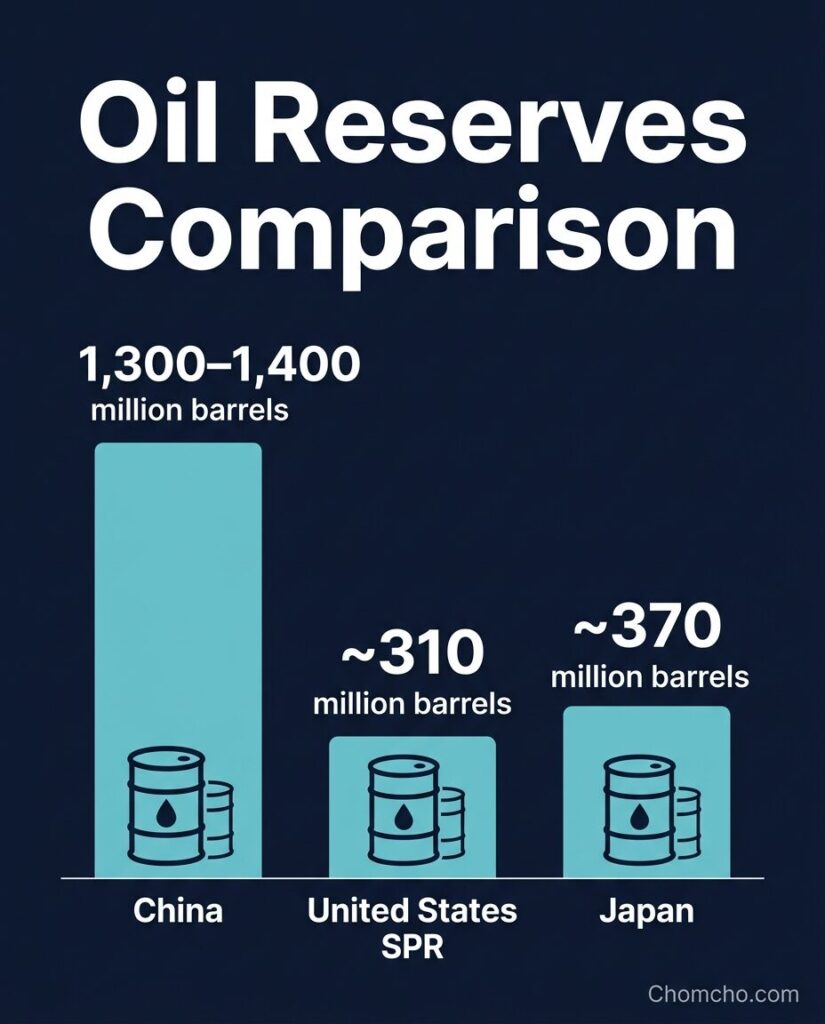
Estimates place total China oil reserves between 1,200 million and 1,500 million barrels, with the most common figure near 1,300 million to 1,400 million barrels.
The United States Strategic Petroleum Reserve started the crisis near 415 million barrels. It has already fallen to about 308 million to 311 million barrels, the lowest level since 1983.
President Trump ordered the release of 172 million barrels from the Strategic Petroleum Reserve (SPR). Of that total, roughly 100 million to 108 million barrels have already left the reserve.
That is about 25 percent of the starting level, with more still scheduled.
Japan holds roughly 370 million to 470 million barrels of combined national and private stocks.
After earlier releases during the crisis, the remaining buffer is still estimated near the lower end of that range and equals about 200 days of domestic consumption.
The International Energy Agency organized a record 400 million barrel release across its member countries.
China absorbed a larger volume through lower imports while giving almost no public accounting of its own draws.
Analysts believe only a limited share came from the visible above-ground commercial tanks that satellites can monitor.
The larger part appears to have come from less transparent underground strategic stocks and other commercial inventories that China had filled aggressively in 2025 with discounted oil.
Japan, South Korea and India depend the most on the Strait of Hormuz
China itself relies on the Strait of Hormuz for about 45 to 50 percent of its imports, yet it still executed the deepest cut.
Japan relies on the strait for 75 to 90 percent of its oil imports. South Korea depends on it for 60 to 80 percent. India depends on it for roughly 50 to 65 percent.
The first two countries depend heavily on American military protection. Large numbers of U.S. troops remain stationed in Japan and South Korea.
When the crisis required broader coordination to keep the strait open or to share the supply burden, their governments offered only limited steps.
South Korea’s presidential office said it had received no recent specific request from the United States to deploy a warship and was still reviewing its options for contributing to freedom of navigation in the Strait of Hormuz.
Japan showed similar caution.
Secretary of State Marco Rubio said it would be “in their interest” for Asian allies to contribute naval assets because they rely heavily on the oil and gas that moves through the strait.
From an America First perspective, the pattern is familiar.
Their dependence on American military protection continues, while their contribution remains limited when the crisis is real.
Western reserve releases and Beijing’s silence
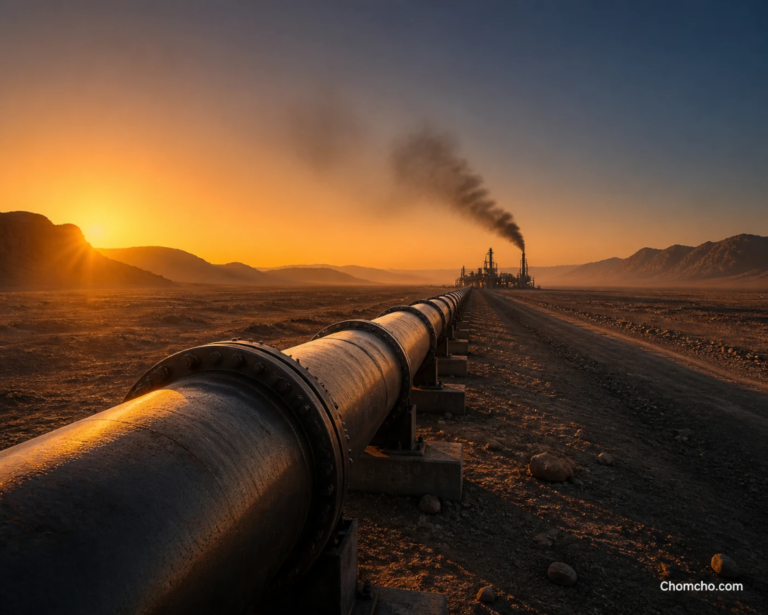
The IEA coordinated the largest emergency oil release in its history because the Hormuz closure removed 12 million to 13 million barrels a day from the market.
The United States contributed the largest national share. Japan, South Korea and several European countries also released oil from their strategic oil reserves.
China’s quiet import cut of five million barrels a day did more to stabilize prices than the entire Western release combined.
Beijing has taken no public credit and offered no explanation.
The action was not altruism.
It was primarily self-preservation. China had filled its tanks with discounted oil the year before and could afford to stop buying.
At the same time, the episode served as a practical test of how long the Chinese economy can operate with sharply lower seaborne oil imports.
That experience is useful for any future blockade of the Malacca Strait near Indonesia and Singapore, the route China fears most in a Taiwan conflict.
Rory Johnston summarized the surprise clearly: “China was definitely the most important factor in keeping prices down. And the thing is that nobody—and I mean nobody—saw it coming.”
What this means for American interests
The crisis exposed a hard structural reality.
China now holds more discretionary power over global oil balances than the collective West.
The United States drained a large part of its Strategic Petroleum Reserve while China conserved its far larger stockpile and simply reduced imports.
President Trump ordered the SPR release to protect American consumers and allies.
At the same time, he has pushed policies to raise U.S. oil production and reduce long-term dependence on foreign supply.
Early executive orders reopened federal lands and waters for drilling, accelerated permit approvals, and expanded offshore leasing plans. These steps aim to keep more American oil flowing at home.
The deeper lesson remains structural.
America continues to provide security for Japan and South Korea. Those countries depend on Hormuz oil and on U.S. troops. The contribution to reopening the strait or sharing the supply shock stayed limited.
Energy security is national security.
Rebuilding the U.S. Strategic Petroleum Reserve, expanding domestic production, and demanding clearer burden-sharing from allies are no longer optional.
The country that can remove five million barrels a day from the market without explanation holds real leverage.
China oil reserves proved larger and more flexible than most Western planners expected.
The truth will keep mattering.