
This post is also available in:
 Português
  Español
  Français
  Deutsch
  Italiano
  Русский
Summary
He promised never to allow Iran a nuclear weapon and predicted a deal right after the November 3 midterms, since Tehran is waiting on an election he is not running in.
The louder story was quieter. While he spoke, envoys Steve Witkoff and Jared Kushner met the Iranian delegation for three hours. Trump called it a very good meeting, and more are planned.
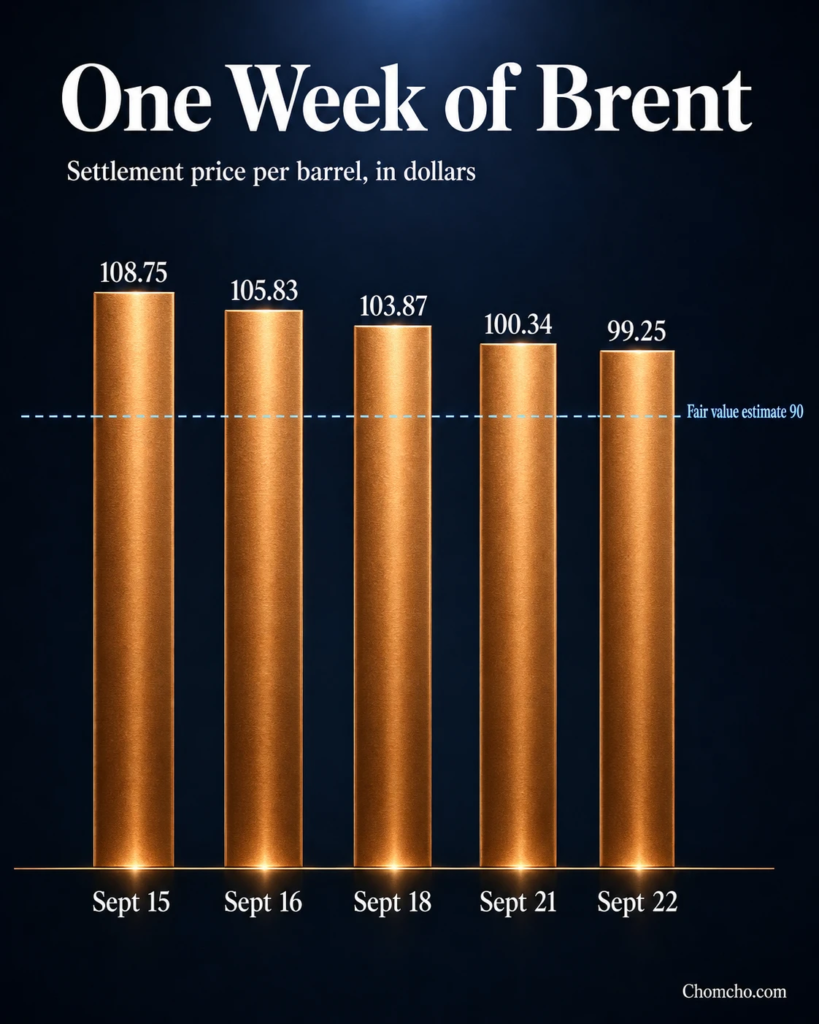
Markets priced both events. Prices rose during the speech, then fell when the meeting was reported. Brent settled at 99.25 dollars, below 100 for the first time since early September.
Trump also named the target of annihilation: Pickaxe Mountain, buried 80 to 100 meters under granite near Natanz, never inspected and never struck. It is the test of any agreement.
The New York Times reports Trump has decided against striking the Houthis for now, despite Saudi appeals. Washington sells its allies the best weapons it makes, but does not fight their wars for them.
One line does not move: Iran never gets a nuclear weapon.
The president narrows the choice
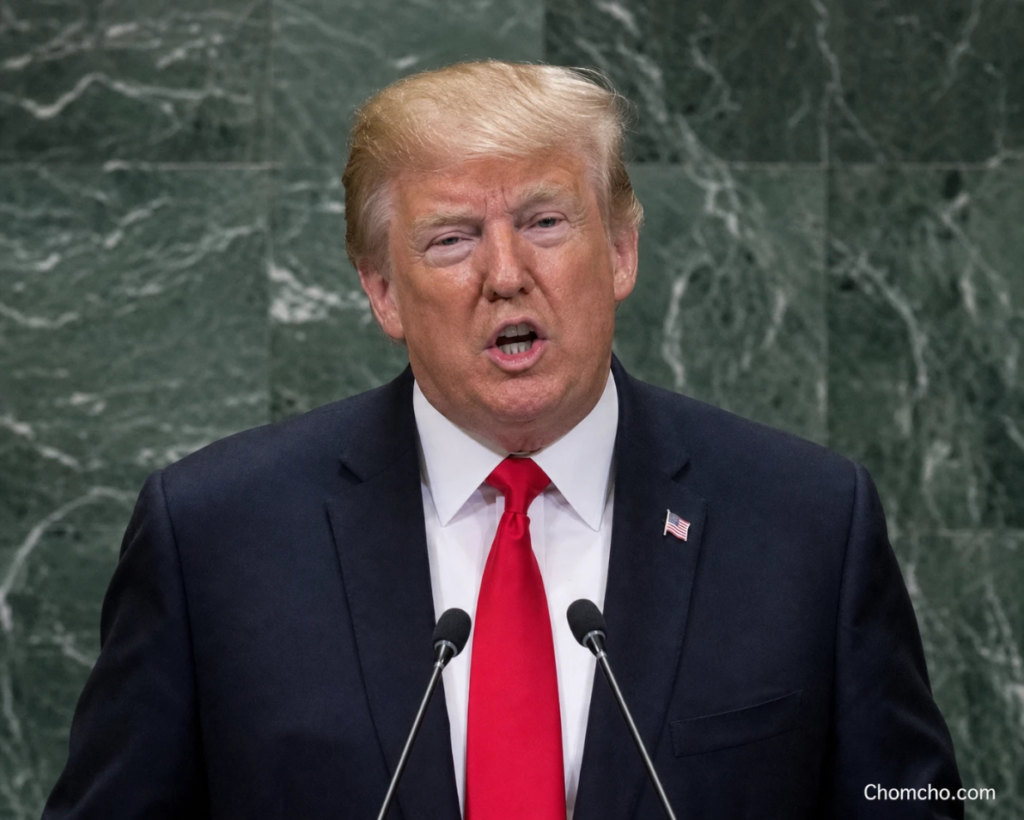
On Sunday the president listed three options for Iran. From the rostrum of the United Nations on Tuesday, he cut the list to two.
Addressing the 81st General Assembly, Trump put the choice in his own words: “Or do I annihilate the Islamic Republic and do it quickly?” The alternative, he said, is a deal that would let Iran rebuild into one of the greatest countries in the Middle East.
He called Iran the number one sponsor of terror, said the regime has spread carnage and chaos for 51 years, promised never to allow it a nuclear weapon, and urged other governments to join the United States in isolating Tehran economically.
Then came the timing, which is the real news of this Trump UN speech: “I believe we’ll make a deal right after the election.” Iran, he said, is waiting to see how he does in the November 3 midterms, and what Tehran does not grasp is that he is not on the ballot.
What happened while he spoke
The louder story was quieter.
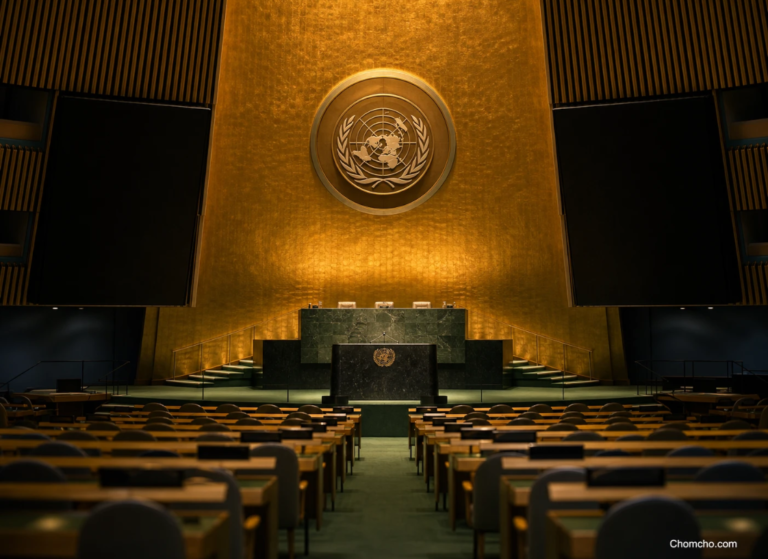
While the president threatened annihilation in the Assembly Hall, his envoys Steve Witkoff and Jared Kushner were sitting down with the Iranian delegation for three hours.
Trump confirmed it himself hours later, during his meeting with President Zelensky: “It was a very good meeting.” More meetings are planned. Witkoff wrote afterward that “we engaged in lengthy talks with the Iranian delegation.”
Secretary of State Rubio had said that morning that no meeting with President Pezeshkian was arranged: “I don’t think anything is scheduled at this point.” None was.
But the envoys met anyway, for three hours, on the same day their president threatened to annihilate the country they were talking to.
Direct contact is not new in this war: American and Iranian delegations negotiated face to face for twenty-one hours in Islamabad in April, led by Vice President Vance, and came away with nothing. What is new is that Tehran sat down again while the naval blockade it demands be lifted remains in place, and that both sides say more meetings are coming.
The market answered within hours
Oil traders watched both events and priced them separately.
Prices climbed while Trump spoke, because what the market heard in his prediction was that no deal arrives before November.
Then they fell back when the three-hour meeting was reported.
Brent settled at 99.25 dollars, down 1 percent, and West Texas Intermediate at 94.59. Brent has lost more than 4 percent this week and settled below 100 for the first time since it crossed that line earlier this month.
Two other things helped keep prices from climbing. Traffic through the Strait of Hormuz never exceeded twenty ships a day last week, so the market has already absorbed that loss.
And a report that Saudi Arabia’s East-West pipeline may return to service sooner than expected removed a large piece of supply risk: that line can carry about 7 million barrels a day to the Red Sea, bypassing Hormuz entirely, so every week it stays shut is a week the world’s largest oil exporter cannot move millions of barrels around the strait.
The war premium this Iran update has been tracking, roughly ten to fifteen dollars a barrel, is compressing in real time.
What annihilation would require
Meeting Gulf leaders the same day, Trump named the target: “We may have to blow up another one, Pickaxe Mountain,” adding that if activity resumes there, it gets destroyed immediately.
Pickaxe Mountain, Kuh-e Kolang Gaz La, sits a little over a mile south of Natanz, buried 80 to 100 meters under granite.
Iran began digging it after the sabotage of a centrifuge plant at Natanz in July 2020, declared it to the International Atomic Energy Agency (IAEA) as an assembly hall, then never answered the agency’s requests for access. Inspectors have never been inside. It went untouched in the twelve-day war of 2025 and in this one.
Analysts at the Center for Strategic and International Studies (CSIS) reported this month that construction picked up in 2026, that the site is probably not yet enriching, and that even the heaviest non-nuclear American bomb might not destroy it, concluding that “continuously bombing Iranian nuclear infrastructure is unsustainable.”
That is an assessment, not a fact, and it rests on what those analysts know about American munitions, which is not everything. But it explains why the mountain is the test of any agreement: a deal that leaves it sealed and uninspected settles nothing.
Tehran’s answer
Iran’s parliamentary speaker, Mohammad Bagher Ghalibaf, answered that his country will never surrender and will respond with power.
Tehran’s seven conditions still stand, and Pezeshkian speaks from the same podium on Wednesday.
The Houthi decision
One more decision this week deserves attention.
The New York Times reports that Trump has decided against striking the Houthis for now, despite appeals from Saudi Arabia, whose ports have been under blockade since July.
Read alongside Europe and Asia, this is consistent US foreign policy rather than a cold response to an ally.
Washington approved the sale of 48 F-35s to Riyadh last week, worth 24.3 billion dollars, subject to congressional review, and signed a burden-sharing agreement with the kingdom last year. America sells its partners the best weapons it makes and stands with them against common enemies. It does not fight their wars for them.
No country, however strong, can bomb everybody, and allies that know the limit can plan around it: Riyadh has signed defense pacts with Pakistan and Turkey and is building its own air defenses.
The line that does not move
The pressure brought Iranian envoys into a room with Americans; it did not change any minds in Tehran. That is worth keeping in view as the week continues.
Everything in this Trump UN speech was negotiable except one sentence: Iran never gets a nuclear weapon. Sanctions can be lifted, assets released, blockades ended. A verified end to enrichment, with inspectors inside the mountain, is what a real agreement looks like. Anything less is a pause.
Both options stay on the table. That is what keeps the better one within reach.