
This post is also available in:
 Português
  Español
  Français
  Deutsch
  Italiano
  Русский
  Nederlands
  日本語
日本語  Polski
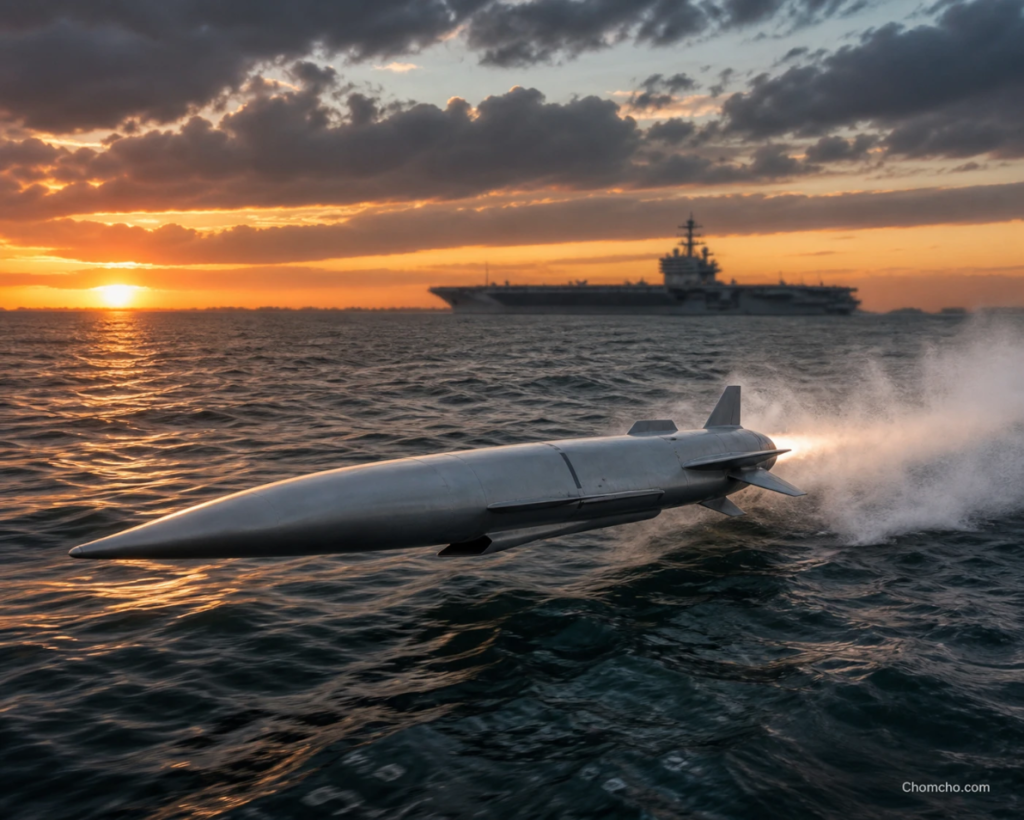
The Financial Times revealed a covert program, codenamed C430L, in which Russia’s best missile engineers help Iran build supersonic cruise missiles designed to threaten US warships.
This is not just a missile story. It is proof that Russia is arming Iran, and that two wars may be merging into one.
The program the Kremlin never wanted exposed
On September 1, the Financial Times published an investigation based on leaked Russian correspondence, travel records and military patents.
The findings are simple and serious. Since 2023, Russia has been secretly helping Iran develop supersonic cruise missiles under a program codenamed C430L.
The program was arranged by Rosoboronexport, the Russian state arms exporter, together with NPO Mashinostroyenia, one of Russia’s top missile design bureaus.
Senior Russian engineers traveled to Tehran repeatedly before a contract was signed with Iran’s Ministry of Defense in November 2023.
By 2025, Russian specialists were analyzing Iranian flight-test data and advising Tehran on fuel systems, combustion stability and engine nozzles.
The heart of C430L is a ramjet engine.
A ramjet uses the missile’s own forward speed to compress air before combustion, which lets a cruise missile fly at several times the speed of sound.
Experts say the technology is almost certainly meant for anti-ship and land-attack missiles.
Fabian Hinz, a senior analyst at Conflict Armament Research, left no doubt about who approved this: “A programme like this would require political clearance from the very top in Russia.”
The Kremlin, Rosoboronexport and the Iranian government all declined to comment. Silence is also an answer.
First drones, then satellites, now the crown jewels
For readers new to this story, the pattern matters more than any single deal.
First came the Shahed drones, which Russia bought from Iran and then learned to build at home for the war in Ukraine.
Then, during this year’s fighting, Western intelligence accused Russia of feeding Iran satellite imagery to help locate American forces.
The Financial Times also reported a separate secret deal worth 495 million euros for Russia to supply Iran with 500 Verba portable air-defense systems.
Now comes the deepest step of all: strategic missile technology that Iran has wanted for decades.
Each step goes deeper than the last. That is not opportunism; that is an alliance.
A weapon built for one target
Why does a supersonic cruise missile matter?
Speed plus altitude.
These missiles combine very high speed with very low flight, which cuts the time a ship’s defenses have to detect and intercept them from minutes to seconds.
Jim Lamson, a former CIA military analyst on Iran, said the finished weapon would give Tehran “a qualitatively new strategic weapon system that could threaten US Navy vessels.”
Honesty requires a caveat.
Iran has built and flight-tested a ramjet propulsion system, but there is no evidence that a finished Russian-assisted missile has been deployed.
The threat is coming; it has not arrived. That is exactly why the time to respond is now.
Sanctions are paper
Here is the detail that should end a whole school of foreign policy thinking.
NPO Mashinostroyenia has been under American sanctions since 2014. Nine years later, the same company signed a missile contract with Tehran and kept working through an active war.
Sanctions did not stop any of it. Sanctions are not a strategy; they are a substitute for one.
One axis, two wars, and a watching dragon
This is where the story gets bigger than Iran.
Russia arming Iran looks like retaliation in kind: America helps Ukraine defend itself, so Moscow helps Tehran shoot back at America.
Two separate conflicts are starting to behave like one war with two fronts, run by one axis.
Is America ready for that?
The honest numbers give reason for concern.
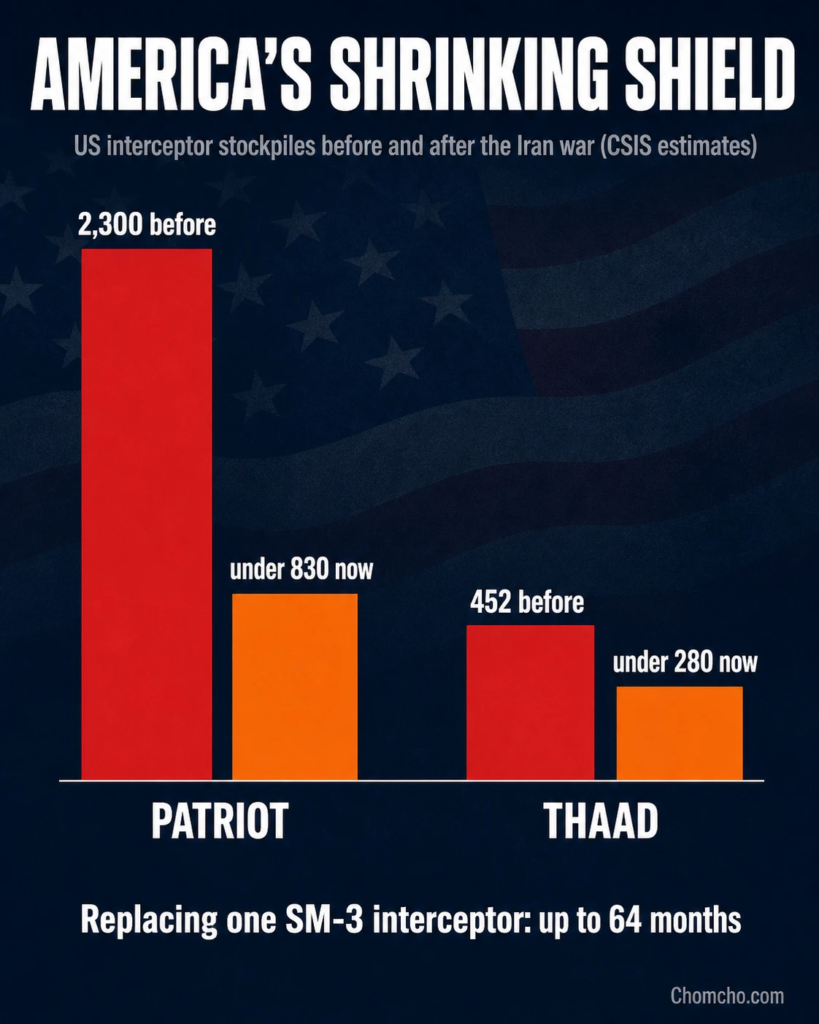
Analysts at CSIS estimate that US Patriot interceptor stocks fell from about 2,300 before the Iran war to under 830, and THAAD interceptors from 452 to under 280.
Roughly half of the Navy’s SM-3 interceptors have been fired, and replacing a single SM-3 can take up to 64 months.
The Pentagon has requested $67,000 million in emergency funding, including $18,200 million just to restock Patriots, Tomahawks and THAAD.
President Trump denies any shortage, and the chairman of the Joint Chiefs backs him: “We have sufficient precision munitions for the task at hand.”
That is the correct public posture. No commander announces his weaknesses to his enemies.
But a public denial and a quiet production surge can both be true at the same time, and the emergency budget suggests exactly that.
And China is watching all of it.
Analysts warn that Beijing may read depleted American stockpiles as a window of opportunity for a move on Taiwan. Every interceptor fired over the Gulf is one that cannot defend the Pacific.
Build, build, build
So what does America actually need more of?
Our answer has not changed since we wrote about the lessons of the Ukraine war: everything that runs out.
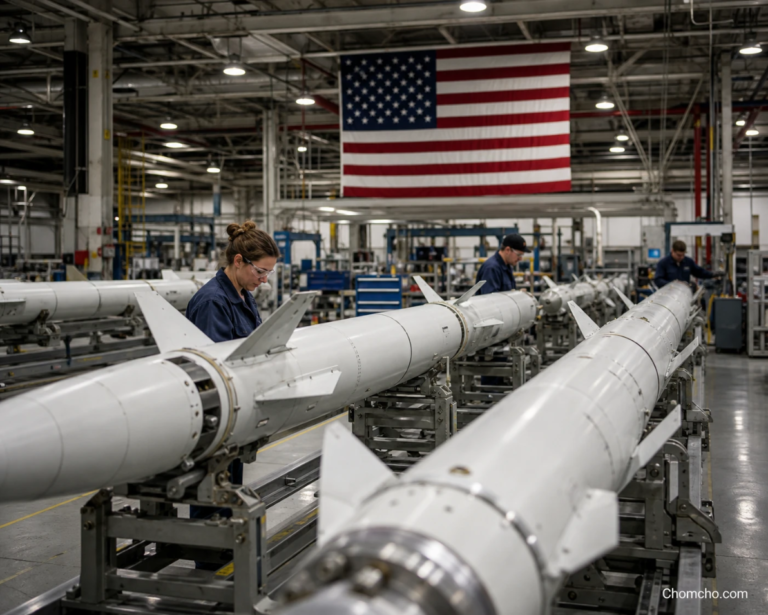
More Patriot and SM-3 interceptors, because defense wins time. More Tomahawks, because offense restores deterrence. More shipyard capacity, because a Navy that cannot build ships cannot replace losses, a weakness we documented in our AUKUS article.
And above all, more cheap drones and low-cost munitions, because Ukraine proved that mass production beats elegant scarcity.
A missile that costs $28 million and takes five years to build cannot be the only answer to a drone that costs $50,000.
Peace through strength is not a slogan; it is an inventory list. The axis is already building. America must simply outbuild it.
The free world stays free by staying strong.