
This post is also available in:
 Português
  Español
  Français
  Deutsch
  Italiano
  Русский
Summary
Puzder's target was the Buy European initiative, the EU's push to favor weapons made in Europe. Washington's alternative: "Made with Europe or Made in NATO."
Two EU programs, SAFE (Security Action for Europe) and EDIP (European Defence Industry Programme), already require that at least 65 percent of the value of each weapon's components come from Europe.
The Pentagon answered that it would likely review the Buy American waivers that let European firms compete for U.S. contracts. Europe cannot close its market and expect the U.S. market to stay open.
Politics also shapes which weapons countries buy: Spain dropped the F-35, Canada is reviewing its order, and France tried to keep American weapons out of Ukraine's EU loan.
The news outlet Politico reported a White House "naughty and nice" list of allies based on their support for the war with Iran, and Britain, France and the Baltic states were left out of a Pentagon-led NATO meeting in Poland.
The real problem is missiles: the war with Iran drained American interceptor stocks, and several allies were warned of delays of up to five years.
The answer is to build in the United States. Defense jobs pay about 40 percent above the national average, and foreign buyers are ready to pay.
Allies buy from the factory that delivers.
Geography or capability: the fight over Europe’s weapons
On September 30, U.S. Ambassador to the European Union Andrew Puzder stood before the Euronews Defence and Space Summit in Brussels and criticized the Buy European initiative, the EU’s push to favor weapons made in Europe.
When allies lose focus on having the most effective weapons, he said, “only our enemies benefit.”
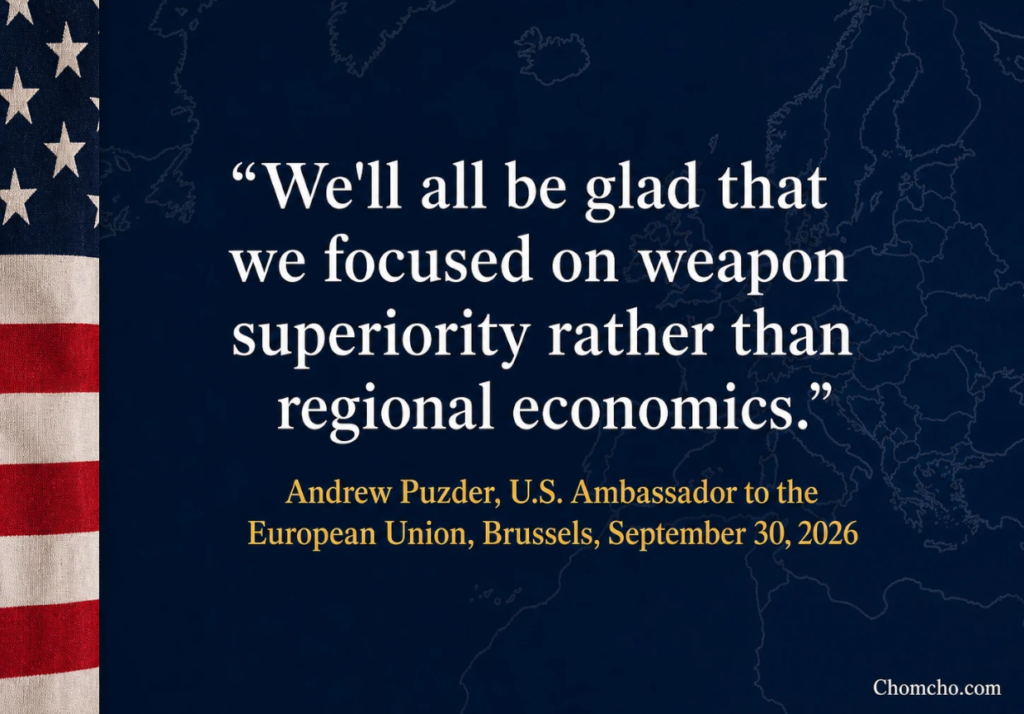
After one attack by a powerful adversary on a member state, he added, “we’ll all be glad that we focused on weapon superiority rather than regional economics.”
On September 29, NATO’s top commander in Europe, Gen. Alexus Grynkewich, told the European Parliament’s defense committee that “codifying preferences as to where military hardware is made” helps only Europe’s adversaries.
Washington’s alternative is both simple and fair: “Made with Europe or Made in NATO.”
Puzder still spoke in a friendly tone: “Sometimes we’re going to disagree. Generally, I believe we will agree.”
What the Buy European initiative is
The idea is already written into two EU laws.
SAFE, Security Action for Europe, is a 150,000 million euro loan program for joint weapons purchases, and EDIP, the European Defence Industry Programme, is a regulation for Europe’s arms industry.
Both require that at least 65 percent of the value of each weapon’s components come from Europe. A rewrite of the EU’s 2009 defense procurement rules is expected in 2026.
The target is American industry, and Brussels does not hide it.
EU Defence Commissioner Andrius Kubilius explained that if member states spend more on European products, “this will gradually mean less for American products.”
France has been the main supporter of the initiative. Today nearly two-thirds of the EU’s imported weapons come from the United States.
Europe’s argument deserves a fair hearing.
An EU white paper drafted in 2025 warned that Washington could restrict the use of American systems or halt key components, after the Trump administration stopped arms and intelligence to Ukraine in 2025.
Ulf Kristersson, Sweden’s prime minister at the time, said in 2025 that it was “strange that 80 percent of the arms in Europe are bought from the US.”
Every country has the right to protect its own industry. But a preference built on geography is a bet that Europe’s factories will deliver, and the record says otherwise.
Washington has tools too
The United States answered in writing.
In February, responding to a Commission consultation, the Pentagon warned that if member states adopt European preferences, Washington “would likely review all existing blanket waivers and exceptions” to the Buy American laws.
The Pentagon also argued that a Buy European clause would contradict the EU’s own pledge, in the trade agreement signed in the summer of 2025, to buy more American weapons.
Those waivers matter. The Buy American Act requires the Pentagon to prefer American-made products, with exceptions in defense for some EU countries, and those exceptions let European firms compete for U.S. contracts.
In mid-September, a new U.S. paper increased the pressure, threatening to cancel the waivers tied to agreements with 19 of the 27 member states.
America’s terms are very simple: Europe cannot close its market and expect the U.S. market to stay open.
When politics goes shopping for weapons
Some decisions have little to do with capability.
Spain dropped its F-35 purchase in August 2025, after Spain’s Prime Minister Pedro Sánchez clashed with Trump over NATO spending, and reportedly committed 85 percent of its new defense money to European programs.
Yet the F-35B is the only short-takeoff, vertical-landing fighter in production that can fly from Spain’s flagship, the amphibious assault ship Juan Carlos I.
In March 2025, Canada’s Prime Minister Mark Carney ordered a review of his country’s 88 F-35s, citing over-reliance on American industry in the middle of a trade dispute.
A leaked evaluation had scored the F-35 at 95 percent and the Swedish Gripen at 33. Ottawa may now buy about 60 Gripens and keep only 30 F-35s, with the announcement reportedly held until after the U.S. midterm elections.
France even pushed to stop Ukraine from buying American weapons with the EU’s 90,000 million euro loan. Germany and the Netherlands objected that there is no alternative to the Patriot air-defense system, and the final loan allowed American arms.
Meanwhile Europe’s flagship fighter project, the Future Combat Air System (FCAS), launched by France and Germany in 2017, collapsed in June after a long dispute between Airbus and Dassault. Germany is now weighing more F-35s.
The naughty and nice list
Washington remembers who helped in the war with Iran.
In April, the news outlet Politico reported that the White House had drawn up a “naughty and nice” list of NATO allies, a list to reward or punish them based on their contributions and their support for the war with Iran.
A Pentagon email named Spain and the United Kingdom among the allies that had not helped enough, complaining of “a sense of entitlement on the part of the Europeans.”
Spain refused its bases, and Sánchez called the war “illegal.” France let refueling planes use its bases but not the jets striking Iran, and when Paris refused overflights to planes carrying military supplies to Israel, Trump called it “VERY UNHELPFUL.”
Now the Pentagon’s policy chief, Elbridge Colby, has left Britain, France and the three Baltic states out of a NATO working meeting in Poland in November 2026.
The invited are Norway, Sweden, Finland, Poland, Germany and the Netherlands.
No official reason was given, but Colby has described his group as allies “rapidly meeting their Hague spending commitments” (the spending pledges made at the NATO summit in The Hague) with the scale to contribute.
The Baltic states seem to be left out because of size, not loyalty: a Lithuanian official noted his country never belonged to the group, and in April Lithuania was mentioned as a possible new home for U.S. bases.
For London and Paris, the likely reason is the war with Iran, and Paris also leads the push to set American firms aside. One diplomat warned against splitting NATO “into the good ones and the bad ones.”
Choosing Poland to host the Pentagon’s NATO meeting was no accident.
Warsaw spends 4.81 percent of its GDP on defense in 2026, the highest share in NATO, and buys mainly American and South Korean weapons. Its conservative president, Karol Nawrocki, won with Trump’s endorsement and calls Trump a “true friend of Poland.”
The honest problem: missiles
Washington must also admit its own weakness.
The war with Iran reportedly consumed nearly four-fifths of the Terminal High Altitude Area Defense (THAAD) interceptors and about half of the Patriot air-defense missiles, and Switzerland now expects its Patriot systems five to seven years late.
Switzerland is worth a mention. On March 20, Bern stopped approving new arms exports to the United States because of the war with Iran, citing its neutrality: “Exports of war materiel to the USA cannot currently be authorised.” Restrictions, it turns out, run in both directions.
Bloomberg News reported that several allies were warned of delays of up to five years.
Puzder’s own test, that “capability and availability should determine the solution, not geography,” applies to both sides.
Germany’s answer is to ask Washington for permission to build Patriot PAC-3 interceptors in Germany. German production would fill Europe’s gap, but it would move American jobs to Germany.

America’s interest: build in the United States
The September jobs report shows why the factories should stay home.
The economy added just 29,000 jobs in September and unemployment rose to 4.2 percent, while manufacturing grew for a fourth straight month.
Defense work pays well: aerospace and defense wages average more than 127,000 dollars, about 40 percent above the national average, and the industry’s exports reached 172,700 million dollars in 2025.
Washington is already moving.
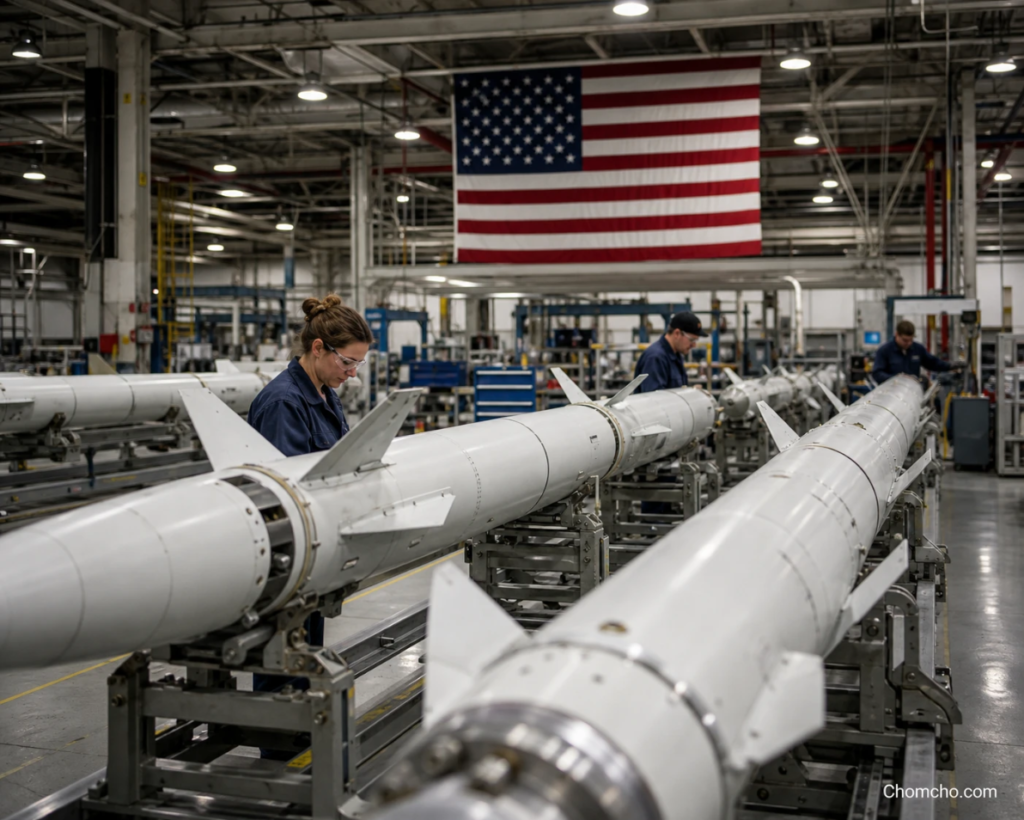
Trump invoked the Defense Production Act for munitions in June, Lockheed Martin won a 4,700 million dollar contract to speed up PAC-3 production, and General Motors Defense just delivered its first parts for the interceptor. Lockheed calls global demand for its systems unprecedented.
Foreign buyers are ready to pay.
Saudi Arabia reportedly used about 86 percent of its PAC-3 MSE stock against Iran, and Switzerland has already paid 650 million Swiss francs for Patriots it has not received.
America’s own stocks come first, with China and Russia watching, and every new production line serves deterrence, American workers and allied buyers at the same time.
Innovation is America’s advantage.
In 2024, U.S. institutions produced 40 notable AI models, China 15 and Europe three.
Kubilius himself told European lawmakers that Russia builds 900 ballistic missiles a year and the EU none, and he admits that Europe’s defense sector has “really no market and plenty of obstacles.”
The companies Amazon, Anthropic, Apple, Google, Microsoft, Nvidia, OpenAI, Palantir and SpaceX are all American, and the same culture builds the F-35 and the PAC-3.
Yes, Europe has a right to its own industry. But America’s answer is not to stop the Buy European initiative but to out-produce it. When U.S. factories deliver on time, “Made in NATO” becomes a sale, not a plea.
Allies buy from the factory that delivers.