
This post is also available in:
 Português
  Español
  Français
  Deutsch
  Italiano
  Русский
The nightly exchange reaches night fourteen
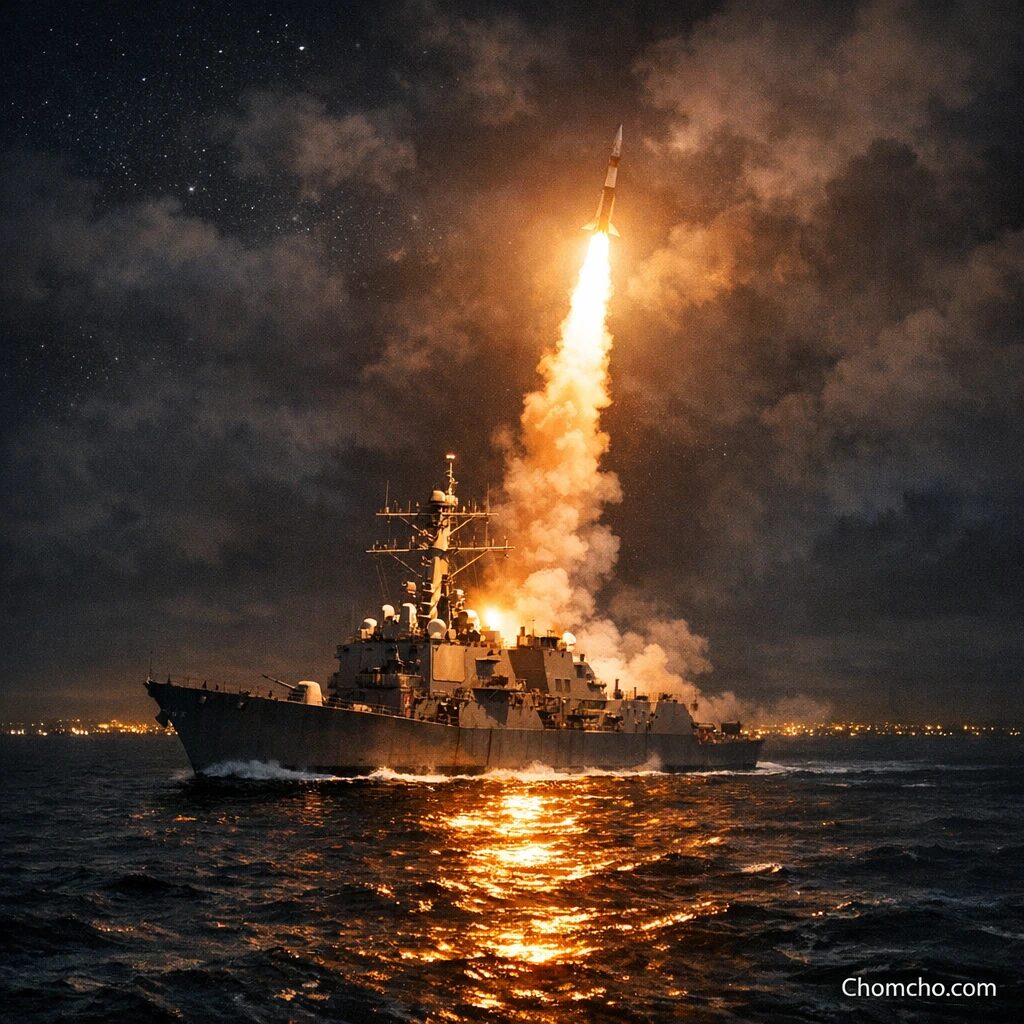
The war with Iran now follows a deadly nightly routine. The US Central Command completed its 13th consecutive night of attacks on targets inside Iran.
Iran retaliated with drone attacks on US bases in three countries: the Sheikh Isa Air Base in Bahrain, the Muwaffaq Salti Air Base in Jordan, and military targets in Kuwait.
Then came the 14th American night.
Iran also claims it destroyed an Amazon data center in Bahrain and killed US troops in Jordan.
Two necessary warnings for the reader: the United States has not confirmed these Iranian claims, and Iran has a long record of exaggerating its military results.
What is confirmed is painful enough: at least 18 American service members have died since this war began in February.
Remember the recent history. Washington and Tehran signed a memorandum of understanding in June and the attacks stopped. The ceasefire collapsed in the middle of July, and the nightly bombing returned, harder than before.
Kuwait pays the civilian price
The Gulf countries that host American bases are paying a high price because of Iranian aggression.
In Kuwait, Iranian attacks hit the Subiya power and water desalination plant twice in two days, starting a fire at a facility that produces drinking water for civilians. In Bahrain, air raid sirens sent families running to shelters.
The danger now reaches the sky itself.
The European Union Aviation Safety Agency warned airlines to avoid the airspace of Bahrain, Kuwait, Qatar, the United Arab Emirates, Iran, Iraq and Lebanon, and reported that the situation over Jordan is deteriorating fast.
An entire region is becoming a no-fly zone for civilians.
Two blocked sea straits and expensive oil
The economic map explains why the world is nervous.
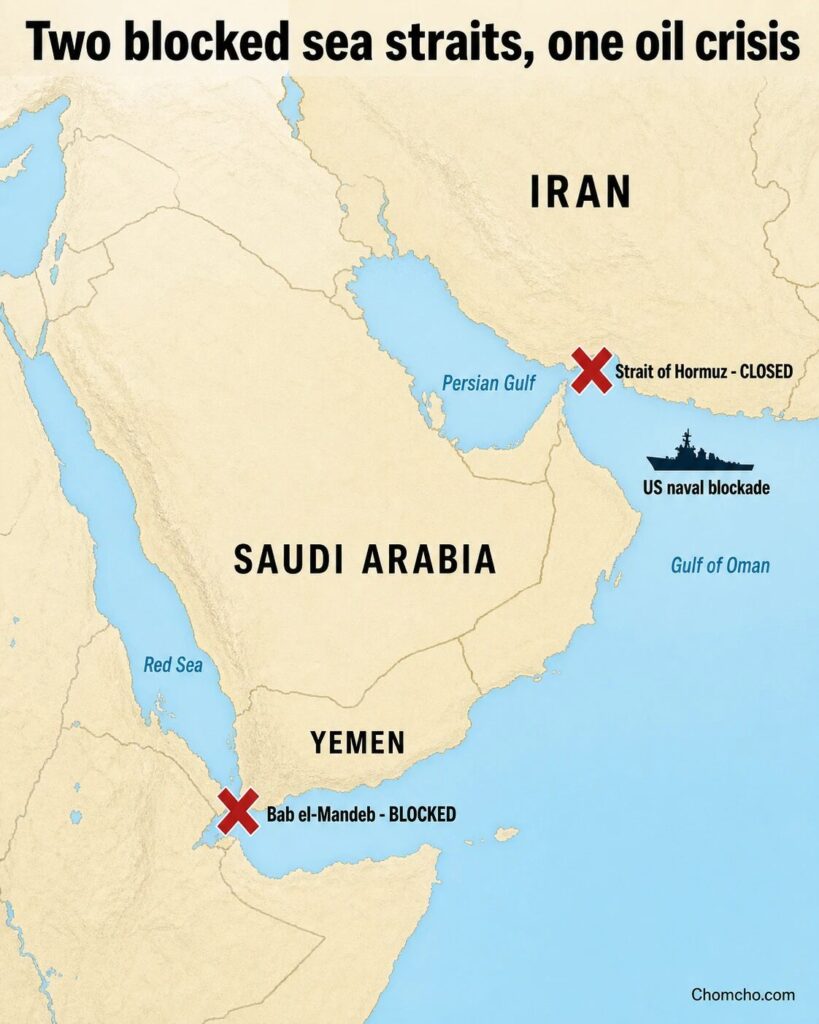
The Strait of Hormuz, the exit door of the Persian Gulf, is closed to normal shipping because of the war.
The Houthis, the armed group that Iran finances in Yemen, declared a naval blockade against Saudi Arabia at the Bab el-Mandeb Strait, the southern entrance of the Red Sea.
Two of the most important oil passages on the planet are blocked at the same time, and oil prices have touched 100 dollars per barrel.
The US Navy is also enforcing its own naval blockade against Iranian oil exports.
According to CNN reports, American forces disabled a tanker in the Gulf of Oman that tried to break the blockade.
A quick geography note: the Gulf of Oman sits just outside the Strait of Hormuz, the corridor every ship must cross before reaching the open ocean. The US Navy is guarding the exit door.
The Saudis finally defend themselves
Here is the development we have waited years to see.
The Saudi-led coalition confirmed attacks on Houthi military sites in Hodeidah, the Yemeni port city the Houthis use for their operations.
For once, a wealthy Gulf nation is answering an attack with its own aircraft instead of calling Washington first. The Houthis have vowed to retaliate against Saudi Arabia.
President Trump (@realDonaldTrump) warned that both Iran and the Houthis face major military punishment if the attacks continue.
This is shared responsibility in real time, exactly what America First has always demanded: allies who defend themselves.
Compare that with Europe.
Germany just ordered its two navy ships in the region, the minehunter Fulda and the supply ship Mosel, to leave the Red Sea area and relocate to the eastern Mediterranean.
Berlin had sent them to prepare for a possible mine-clearing mission in the Strait of Hormuz.
Now the German government admits it sees no end to this war coming soon, and it is pulling its ships back. The Saudis advance, the Europeans retreat.
China abandons Iranian oil
The quietest weapon in this war may be the most powerful one.
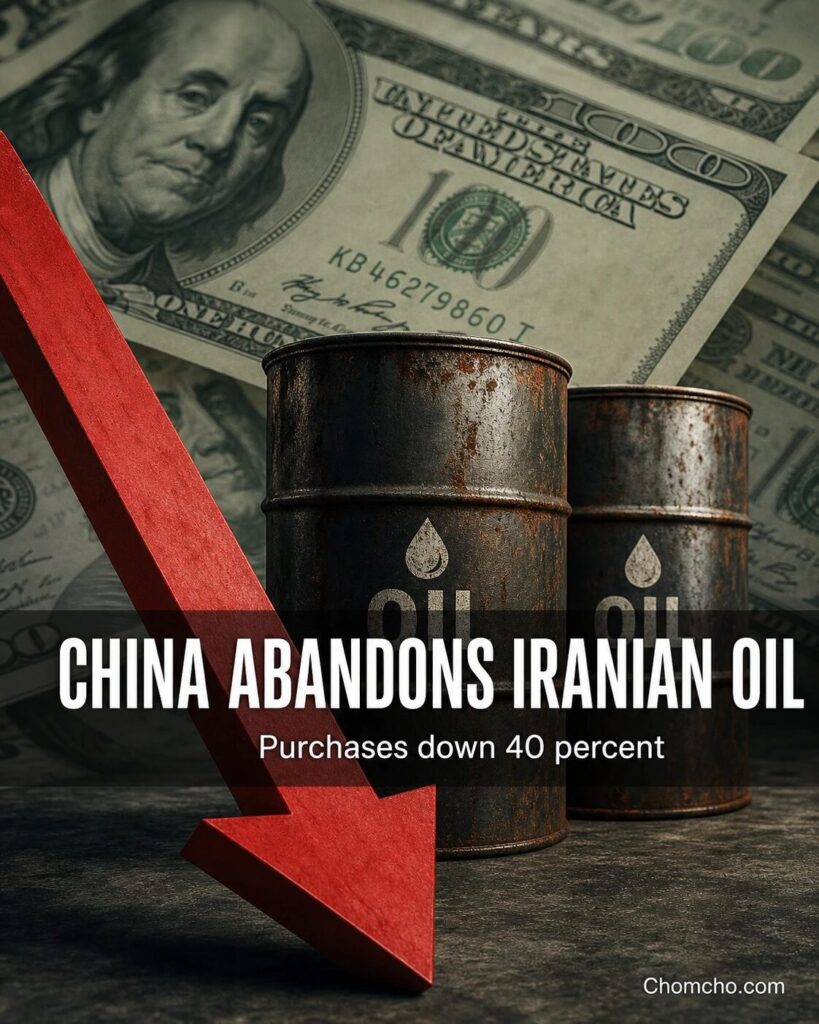
Treasury Secretary Scott Bessent said China has cut its purchases of Iranian crude oil by about 40 percent, and that the decline is “directly pressuring the Iranian regime.”
Washington sanctioned the small independent Chinese refineries known as “teapots” in Shandong province, the main buyers of discounted Iranian oil.
Chinese customs data confirms the trend: June crude imports fell to their lowest level since 2016.
Think about what this means. China buys about 90 percent of all the oil Iran exports, worth more than 32,000 million dollars in 2024. Tehran has essentially one customer.
And now that one customer, its communist protector, is quietly abandoning Iranian oil. Beijing will not fight for Tehran.
Military bombs make noise, but the economic bombs are the most powerful ones: no regime survives when its oil money disappears.
Pressure without invasion
Secretary of State Marco Rubio (@marcorubio) revealed in Manila that Tehran wants to end this war. “Iran is begging us, both directly and indirectly, ‘Let’s do a deal. Let’s talk,'” Rubio said.
He explained the problem: every time Iran makes a deal, its leaders break it or try to change it, so the price will keep rising every single night until they are serious.
Some in Washington keep demanding either full war or full retreat.
Vice President Vance, the administration’s most vocal skeptic of this war, gave his estimated number: a ground invasion to overthrow the regime would require at least 150,000 American troops, a repeat of the old failed wars.
His estimate serves his argument, but the conclusion stands on its own: nobody in this administration wants another military occupation abroad.
The current strategy is the opposite: precision attacks, a naval blockade, allies fighting their own battles, and economic strangulation, all without one American soldier invading Iran.
Congress debates while Trump applies pressure
Meanwhile, Democrats and a few RINO Republicans tried again to limit Trump’s war powers.
On Thursday, the Senate defeated their latest resolution, which would have forced the withdrawal of US forces from the conflict.
Senator Bill Cassidy changed his vote to no after a briefing from Vance, and Senator Rand Paul voted present to give the president space to negotiate.
Congress debates, but the pressure campaign continues.
One more distinction matters. Our conflict is with the theocratic regime, not with the Iranian people, who deserve freedom from the clerics who brought this ruin upon their country.
Let’s pray for our forces in the region, for the innocent on both sides, and for this Iran war update to be one of the last ones.