
This post is also available in:
 Português
 Español
 Français
 Deutsch
 Italiano
 Русский
 Nederlands
 日本語
 Polski
Summary
The Trump Xi Putin summit in Shenzhen was the first meeting ever of the three, and the climate was friendly. On November 18, Xi waited for Trump at the foot of the plane, and Trump greeted Putin with the words "He's my friend."
The three signed a declaration of four points: reform of the United Nations, more supply of refined petroleum products, a warning to the International Criminal Court, and a dialogue to reduce the nuclear risk.
The declaration does not mention Ukraine or Iran, and it brought no relief on tariffs.
We read that differently from the critics. Nobody serious expected Xi and Putin to abandon their foreign policy doctrines in two days.
The trade truce with China ends on January 10, 2027. China is close to its soybean commitment but behind on other farm purchases, and rare earths arrive late. Xi raised the question of Taiwan, and no concession was announced.
Hours after the summit, Russia launched more than 400 drones and more than 110 missiles against Ukraine. This attack is sad, and it shows how far away peace still is.
As we expected, the negative comments came from members of the Democratic Party and European leaders.
German Chancellor Friedrich Merz said, referring to the 1945 Yalta conference: "A Yalta format will not bring peace." But nothing about Ukraine or Europe was signed in Shenzhen.
In Manila, Trump announced deals for more than 17,000 million dollars, led by an order of Boeing aircraft. That is work for American factories.
We do not declare victory. We also reject the label of failure. Trump conceded nothing that we can see.
"Peace through strength" does not always mean agreement in one or two days. It means that the door stays open and the strength stays in place.
Three rivals at one table
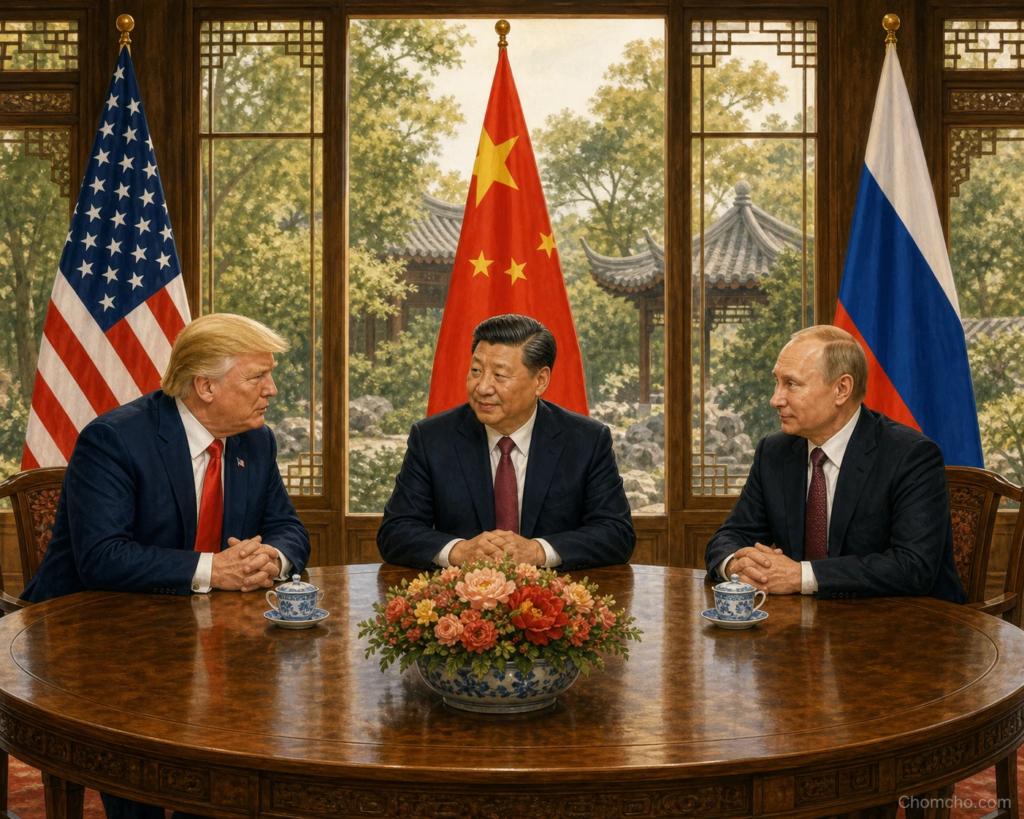
The leaders of the three largest nuclear powers sat at one table on Thursday, November 19.
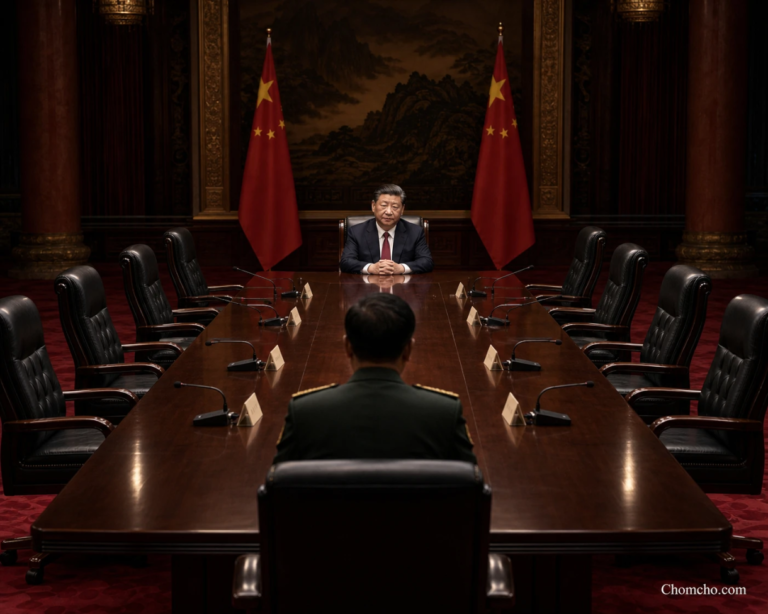
President Donald Trump, Chinese President Xi Jinping and Russian President Vladimir Putin met for about 90 minutes at the Kylin Villa in Shenzhen, in southern China. It was the first time the three had ever met together.
The Trump Xi Putin summit took the attention away from the event that hosted it, the yearly meeting of the Asia-Pacific Economic Cooperation (APEC) forum.
The climate was friendly. On Wednesday, November 18, Xi waited for Trump at the foot of the plane, a welcome he is not known to have given any other foreign leader since he became president in 2013, and the two men embraced.
Trump greeted Putin with the words “He’s my friend,” and he has called Xi a friend for years. Xi described the meeting as groundbreaking. Trump gave it a 12 on a scale of 10.
The three signed a declaration of four points.
They committed to reform the United Nations (UN). They plan to increase the production and supply of refined petroleum products, the fuels that move the world.
They also said that the International Criminal Court (ICC) and similar bodies must not abuse their jurisdiction. And they agreed that a nuclear war must never be fought, and opened a dialogue to reduce that risk.
What two days cannot change
The declaration does not mention Ukraine. It does not mention Iran. It brought no relief on tariffs. Critics count those absences as a defeat.
We read them differently. Xi and Putin have defended the same foreign policy doctrines for many years. Nobody serious expected them to abandon those doctrines in two days because an American president was friendly.
The honest summary of Shenzhen is short: friendly talks, and differences remain. The useful question is whether Trump made any concession to obtain the photograph. We do not see that he did.
There is also something new in the simple fact of the meeting. The three powers that can destroy the world have agreed to talk about that danger at the same table. That did not exist one week ago.
China and the January clock
This was the third meeting between Trump and Xi this year, after Beijing in May and Washington in September.
They agreed to prepare an action plan for what both governments call strategic stability. But the trade truce between Washington and Beijing ends on January 10, 2027, and nobody announced an extension.
There are reasons. China committed to buy 25 million tons of American soybeans per year and is close to that goal, but it has not bought everything it committed to in other American farm products.
American companies have waited months for some rare earths, according to David Perdue, the United States ambassador in Beijing. United States Trade Representative Jamieson Greer said that any extension depends on those minerals.
And on November 16, just before the trip, Washington issued wider export controls on advanced chips. That is not the conduct of a government that traveled to make concessions.
Xi raised the question of Taiwan, which remains the first priority for China. According to Chinese state media, he asked Trump to do what Beijing considers the right thing about the island.
China has pressed Washington for months to stop the arms sales to Taiwan. No concession was announced, and American policy toward Taiwan did not change in Shenzhen.
On Friday, November 20, Trump warned at the White House that China is building nuclear weapons fast: “They’ll catch us within 10 years.”
A note for the critics: a president who had surrendered would not talk like that.
Russia: words of peace, then missiles
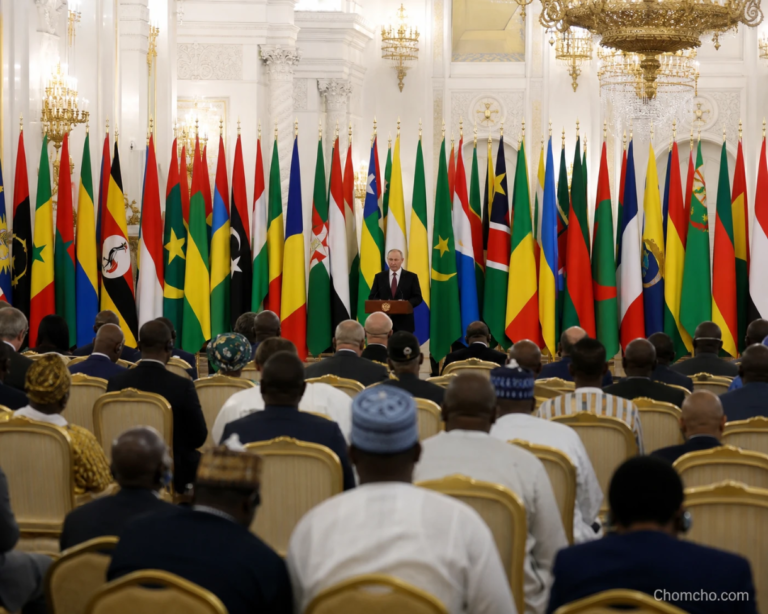
Trump met Putin separately for about 40 minutes before the three-way session.
The war in Ukraine was the main subject, according to the Kremlin. A Kremlin aide admitted that neither side said anything especially important.
Trump said later that Putin clearly expressed his wish to end the war by diplomatic means. Trump also said that he sees a good chance of an agreement.
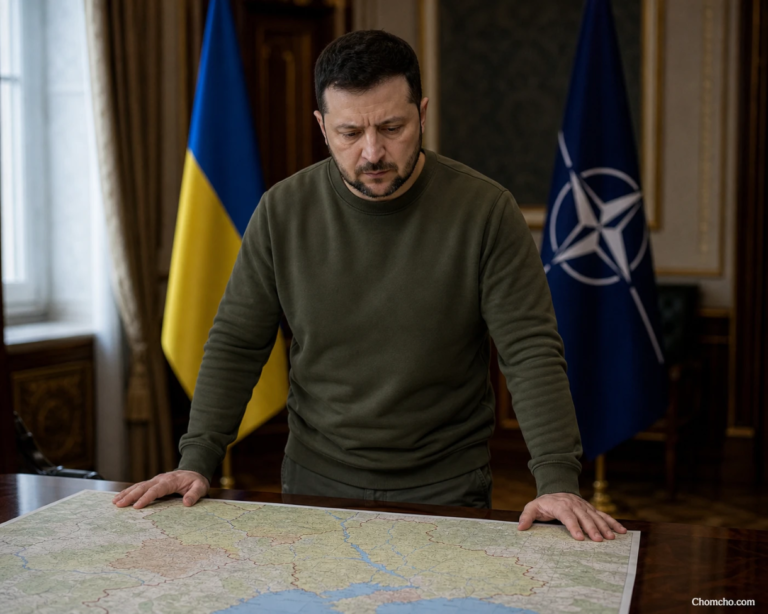
Hours after the summit, Russia launched more than 400 drones and more than 110 missiles against Ukraine, according to Ukrainian President Volodymyr Zelensky.
At least nine people died, three bridges in Kyiv were damaged, and earlier strikes on Thursday, November 19, had already damaged the embassies of Austria and the Netherlands. Poland reported that Russian missiles and a drone likely fell on its territory during the attack; one missile was confirmed. France asked for a meeting of the UN Security Council.
Putin had promised a painful answer to Ukrainian strikes on the bridge to Crimea. This attack is sad, and it shows how far away peace still is.
The psalmist knew that distance: “I am for peace: but when I speak, they are for war” (Psalm 120:7, KJV).
As expected, the usual suspects complained
As we expected, the negative comments came from two groups: members of the Democratic Party and European leaders.
Senate Democratic leader Chuck Schumer said that Xi and Putin “had Trump eating out of the palm of their hand.”
Democratic Senator Tim Kaine said that Putin is no friend, and that the photographs of the three leaders turned his stomach.
In Europe, Polish Prime Minister Donald Tusk wrote: “God, protect us from such friends.”
German Chancellor Friedrich Merz, who received the allies of Ukraine in Berlin on the same day, said: “A Yalta format will not bring peace.”
Yalta was the conference of February 1945 where Roosevelt, Churchill and Stalin decided the future of Europe, and nations like Poland were not in the room. Merz meant that the future of Ukraine and Europe must not be decided without the Ukrainians and the Europeans.
French President Emmanuel Macron was more careful and said that the declaration of Shenzhen is not a new Yalta. Zelensky, for his part, called the meetings in China weak.
The fear is understandable, but the facts do not support it.
Nothing about Ukraine or Europe was signed in Shenzhen. And the United States sat in both rooms: while Trump was in China, his envoys Steve Witkoff and Jared Kushner were in Berlin, and Trump called the European leaders from his plane.
His message to them, according to the news site Axios, was that Putin wants to end the war and that Europe should take the opportunity.
Trump answered his critics on Friday, November 20. He said that he has a very good relationship with both leaders and that he is taking a different course in foreign policy.
Before the meeting, some Republicans in Congress described it as an effort to keep the country out of a war.
APEC in the shadow
The APEC summit brought together 21 economies of the Pacific on November 18 and 19, but the three-way meeting was its real headline.
Xi used his opening speech to defend what he called free and open trade, a message aimed at the American tariffs.
The heads of the big American technology companies, so visible when Trump visited Beijing in May, had a much smaller role this time. Elon Musk traveled with the delegation and kept a low profile.
And North Korean leader Kim Jong-un never answered the proposal for a meeting that Trump made several times during the week. North Korean state media showed Kim at a ski resort and at a naval university. Trump said that the relationship is still there and that the meeting will happen another day.
Manila: the part that pays
Before China, Trump stopped in Manila for the summit of the Association of Southeast Asian Nations (ASEAN).
There he announced commercial deals and investments for more than 17,000 million dollars. The largest is an order of Philippine Airlines for Boeing aircraft with American engines, worth 12,000 million dollars.
That is work for American factories. It is the part of the trip that an American worker can count.
Defense arrangements with the Philippines and Thailand add more than 2,500 million dollars, including American rocket systems. Allies that pay for their own defense with American equipment are exactly what Trump has asked for since his first term.
One caution: the trade agreements with both countries are joint statements, and the final texts are still pending.
Differences remain, and so does strength
We do not declare victory. The Trump Xi Putin summit left three tests for the coming weeks.
The first is the truce with China, which ends on January 10: we will see if Beijing buys more American farm products and delivers the rare earths.
The second is the Strait of Hormuz, still not fully open even after Trump told Xi that “Iran cannot have a nuclear weapon.”
The third is Ukraine, where the missiles still fall: we will see if the wish for peace that Putin expressed becomes real.
But we also reject the label of failure, which came, as expected, from the people who would have used it in any case. Trump sat with two rivals, kept the climate friendly, and conceded nothing that we can see: not Taiwan, not the tariffs, not the pressure on the nuclear question.
That is what an “America First” foreign policy looks like when it talks to adversaries.
Scripture asks no more than that of any man: “If it be possible, as much as lieth in you, live peaceably with all men” (Romans 12:18, KJV).
Trump did what depended on him. The rest depends on Beijing and Moscow, and the January deadline will show their answer better than any declaration.
We also hoped for better results, but we did not really expect them.
“Peace through strength” does not always mean agreement in one or two days. It means that the door stays open and the strength stays in place.