
This post is also available in:
 Português
 Español
 Français
 Deutsch
 Italiano
 Русский
 Nederlands
 日本語
 Polski
Summary
It was a question, not a formal offer, and Zelensky repeated that Ukraine will not surrender land.
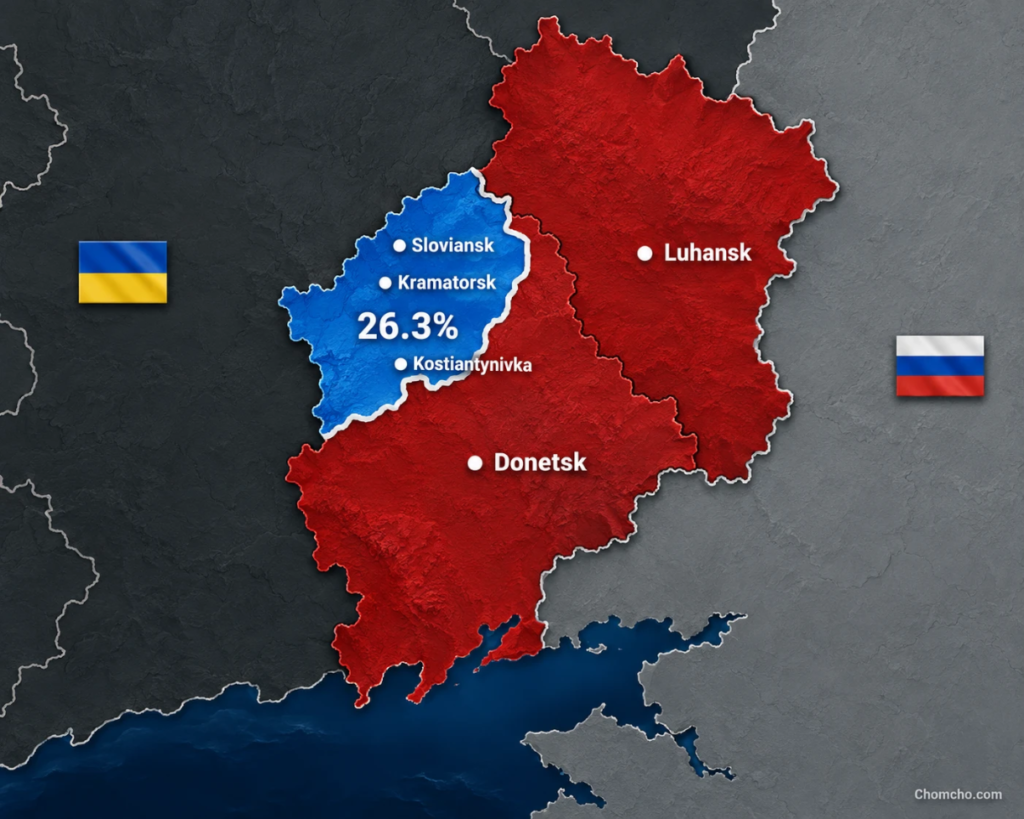
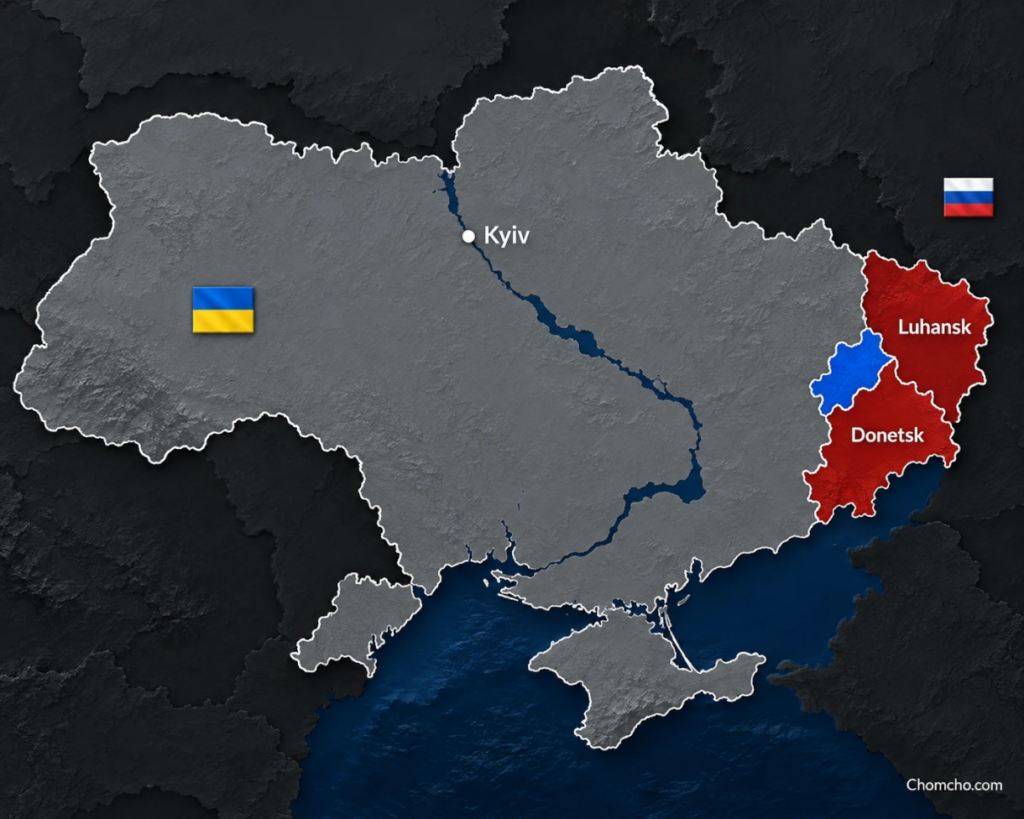
The Donbas is the industrial east of Ukraine, made of the Donetsk and Luhansk regions. Russia demands all of it, including the quarter of the Donetsk region that Ukraine still holds, with the fortified cities of Sloviansk and Kramatorsk.
The week brought three results: an agreement on what would be the largest prisoner exchange of the war, a seat for Europe at the next round, and no ceasefire.
Moscow is not opposing the European seat, but in our opinion it is not certain that more participants will make an agreement easier.
Moscow also revived its demand that NATO return to its positions of 1997, before 16 countries joined the alliance.
Is Washington favoring Russia? The facts say otherwise.
NATO membership for Ukraine is a "red line" for Vladimir Putin, and American negotiators have now returned NATO membership to the conversation as payment for land. That is pressure on Moscow, not a favor.
President Donald Trump wants this war to end, and Putin will not sign a peace that gives him nothing to show the Russian people.
Our reading: The real question is not whether Ukraine will give up land; it is how much, which regions, and in exchange for what. That is an opinion, not a preference.
Neither Kyiv nor Moscow can pay for this war much longer.
Donbas for NATO membership may never become a formal offer, but the question has moved the talks from slogans to concrete terms.
A hard peace is better than an endless war.
Zelensky reveals the American question
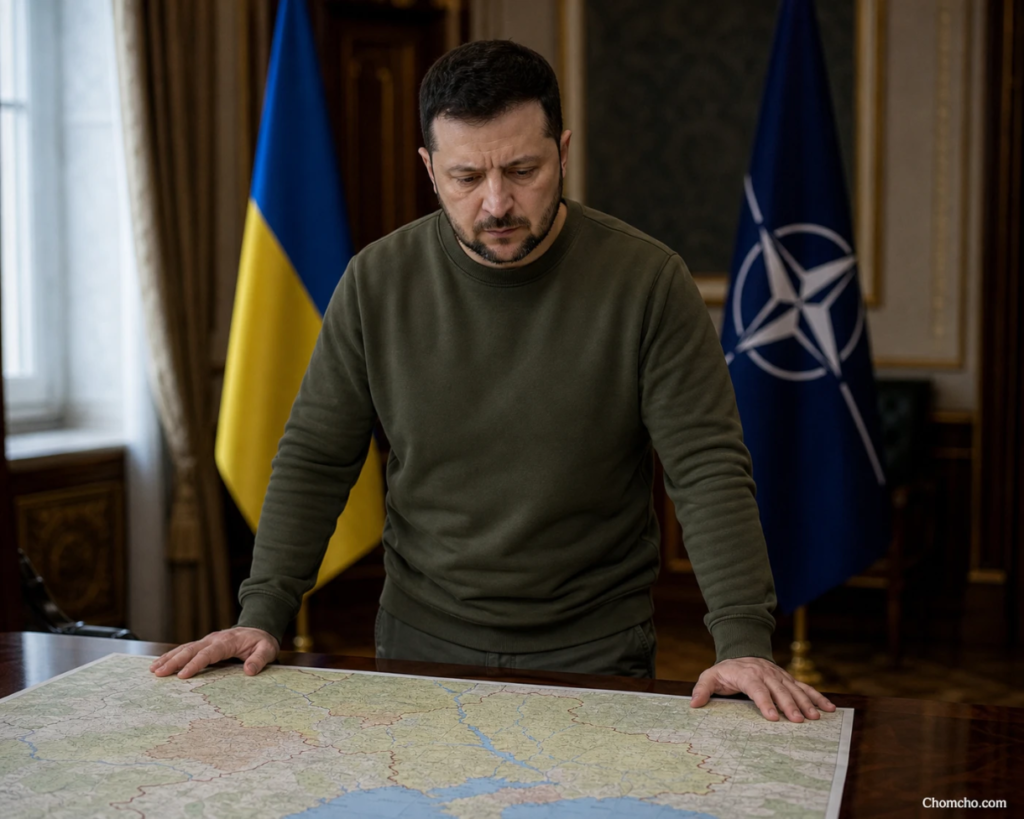
Ukrainian President Volodymyr Zelensky told reporters in Kyiv on Friday, November 13, that American negotiators had put a new question to him about the North Atlantic Treaty Organization (NATO).
His office released the remarks on Saturday, November 14. “What if Ukraine joins NATO? Would Ukraine withdraw from Donbas?” the Americans asked, according to Zelensky. He said it was the first time the question had been raised.
It was a question, not a formal offer. No document promises Donbas for NATO membership, and no concrete proposal exists yet.
Zelensky repeated that Ukraine will not surrender land. He also did not close the matter: if Washington and the other allies confirm a full security package, he will ask Ukrainian society to decide.
The Donbas and why Putin wants it
The Donbas is the industrial east of Ukraine. It is made of two regions, Donetsk and Luhansk, and both touch the Russian border. Most people there speak Russian, a result of the Russian workers who migrated there after World War II, in the Soviet era.
That is the base of the historical claim of Russian President Vladimir Putin, who presents his war as the protection of Russian speakers.
The claim has a weak point: before 2014, polls showed that most residents wanted to remain part of Ukraine.
The fighting there did not begin in 2022. Separatists backed by Moscow seized government buildings in 2014 and declared two “people’s republics.” Putin recognized the two “people’s republics” on February 21, 2022, three days before the full-scale invasion.
Russia now demands the whole Donbas, including the part its army has not taken.
Vadym Filashkin, the governor who leads the Donetsk regional military administration, said his region was still about 26.3 percent under Ukrainian control in early November.
That remaining quarter includes Sloviansk and Kramatorsk, the fortified cities that hold up the Ukrainian defense. This is the land Washington asked about.
One week, three meetings
The question came out of a busy week.
On November 10 and 11, delegations from the United States, Ukraine and Russia met in Abu Dhabi, the capital of the United Arab Emirates. It was the first round between Kyiv and Moscow in nine months, which is significant by itself.
On November 12, Steve Witkoff and Jared Kushner, the two men whom President Donald Trump sent as his envoys, sat with Putin in the Kremlin. The same day both men flew to Ireland and briefed Zelensky at Casement Aerodrome, west of Dublin.
Three results followed.
First, an agreement on what would be the largest prisoner exchange of the war: Zelensky expects 1,200 to 1,300 prisoners from each side.
Second, Europe will sit at the next round, and Moscow is not opposing Europe’s seat. European leaders agreed on a team of five military powers, Britain, France, Germany, Italy and Poland, together with officials of the European Union (EU).
“We cannot and do not want to set conditions for their negotiating group,” Kremlin spokesman Dmitry Peskov said on November 14, and he added that Moscow first wants to learn if the European position can help the peace process.
Third, there was no ceasefire, not even for power plants. The Russian delegates said they had no mandate to decide. “Putin personally does not support a ceasefire,” Zelensky said.
Putin did offer something smaller on November 12: a “humanitarian” pause in Kostiantynivka, a city that, according to Zelensky, the Russian army cannot take by force.
Zelensky answered that Putin only wants Ukrainian troops to leave so that Russian troops can occupy it.
Putin was less polite about Europe. He said that Russia had never opposed dialogue with the Europeans, and he asked the American envoys to work with the European allies until the Europeans decide “what they want: peace or war in Ukraine.”
The doubt is fair. Europe is now the main financial backer of Ukraine, and Europe will arrive with five governments and the European Union. In our opinion, it is not certain that more participants will make an agreement easier.
Why Moscow keeps saying 1997
The Russian side brought its own document to Abu Dhabi, and The New York Times obtained it.
The document, dated November 10, demands that NATO pull its troops and bases back to the positions of 1997, that Western weapons stop reaching Ukraine, and that nuclear guarantees in Europe be limited.
Why 1997? It was the last year before the alliance expanded to the east. In that year NATO and Russia also signed the NATO-Russia Founding Act, which said the two sides were not adversaries.
Since then the alliance has added 16 members, from Poland in 1999 to Finland in 2023 and Sweden in 2024. Finland alone brought a border of 1,340 kilometers (about 830 miles) with Russia.
Seen from Moscow, the alliance moved up to the Russian border.
Seen from Helsinki, Finland, a neutral country, joined NATO because Russia invaded Ukraine.
Finnish Defense Minister Antti Häkkänen said on November 13 that he considers such demands “in no way a matter for negotiation.”
Zelensky fears that a new security framework for Europe would reward Moscow. “In my view, this can be dangerous,” he said. His proposed sequence is a ceasefire, then the end of the war, then guarantees.
The sequence is logical, but Putin will not stop firing before he knows what he receives.
Two people involved in the talks told The New York Times that Putin may still show flexibility.
Putin has reasons. Records from the Russian state statistics agency, leaked by hackers, point to between 394,000 and 450,000 deaths on the Russian side by August 2026.
Is Washington favoring Russia?
Zelensky said the Americans drew the Russians into the talks with the agenda that Moscow wants, a new security order for Europe.
Some read that as Washington favoring Russia. The facts of the week say otherwise.
NATO membership for Ukraine is a “red line” for Putin, and he named it as one reason for the invasion.
On February 12, 2025, U.S. Secretary of Defense Pete Hegseth told allies in Brussels that his government did not consider NATO membership for Ukraine a realistic outcome of a negotiated settlement.
Now American negotiators have returned it to the conversation as payment for land. That is pressure on Moscow, not a favor.
Washington also brought Europe into the talks and arranged the agreement on the prisoner exchange. That exchange is a small victory, but it is a real one, and the American side left the week in a positive mood.
Trump wants this war to end, and he says so. “I think we’re going to be very close to settling Russia-Ukraine,” he told reporters on November 5.
In an interview with the CBS program “60 Minutes,” reported on November 9, he said that Ukraine will end with “a little bit different shape.”
Putin will not sign a peace that gives him nothing to show the Russian people.
In December 2025, Zelensky himself said he would withdraw troops from the part of the Donbas that Ukraine holds if Russia also pulled back and the area became a demilitarized free economic zone, approved by referendum.
Our reading: The real question is not whether Ukraine will give up land; it is how much, which regions, and in exchange for what. That is our forecast, not our wish.
Kushner said that both sides opened with their maximum demands, but that in private both understand that “practical compromises will be necessary to end this war.”
Before the talks, an American official told Reuters that the negotiators believe each president may cede a little.
Scripture described situations like these long ago: “Or what king, going to make war against another king, sitteth not down first, and consulteth whether he be able with ten thousand to meet him that cometh against him with twenty thousand?” (Luke 14:31, KJV).
Both kings have now counted. Neither Kyiv nor Moscow can pay for this war much longer, in money or in men.
Zelensky has said that Ukraine faces a gap of 70,000 million euros, about 79,000 million dollars, in its budget for 2027.
Russia posted a deficit of 5,230,000 million rubles, about 63,000 million dollars, in the first ten months of 2026, and its central bank has sold gold for ten months in a row.
However, it is understandable that each government must appear strong while it searches for a way to stop.
That is why an “America First” foreign policy looks for a trade. Here, “peace through strength” means a hard trade, not unconditional financial support.
Donbas for NATO membership may never become a formal offer, but the question has moved the talks from slogans to concrete terms.
A hard peace is better than an endless war.