
This post is also available in:
 Português
 Español
 Français
 Deutsch
 Italiano
 Русский
Summary
The speech came a week after U.S. President Donald Trump called the French school protests "out of control mass migration" and Musk called them "an invasion in slow motion."
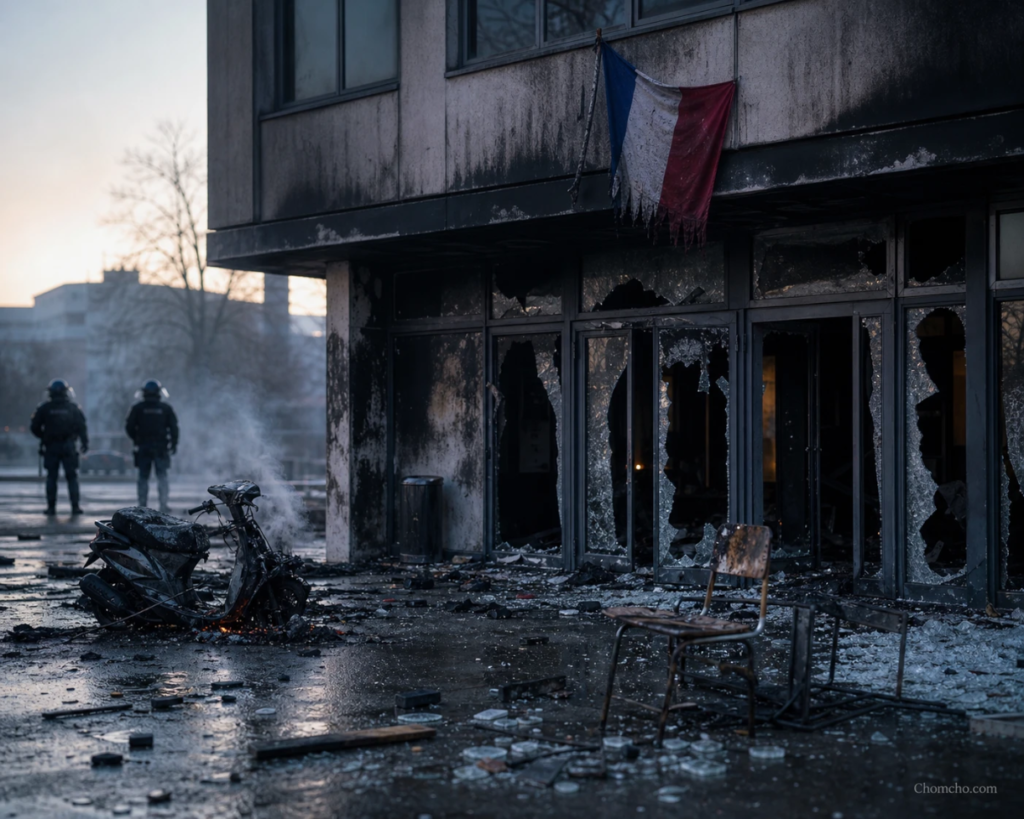
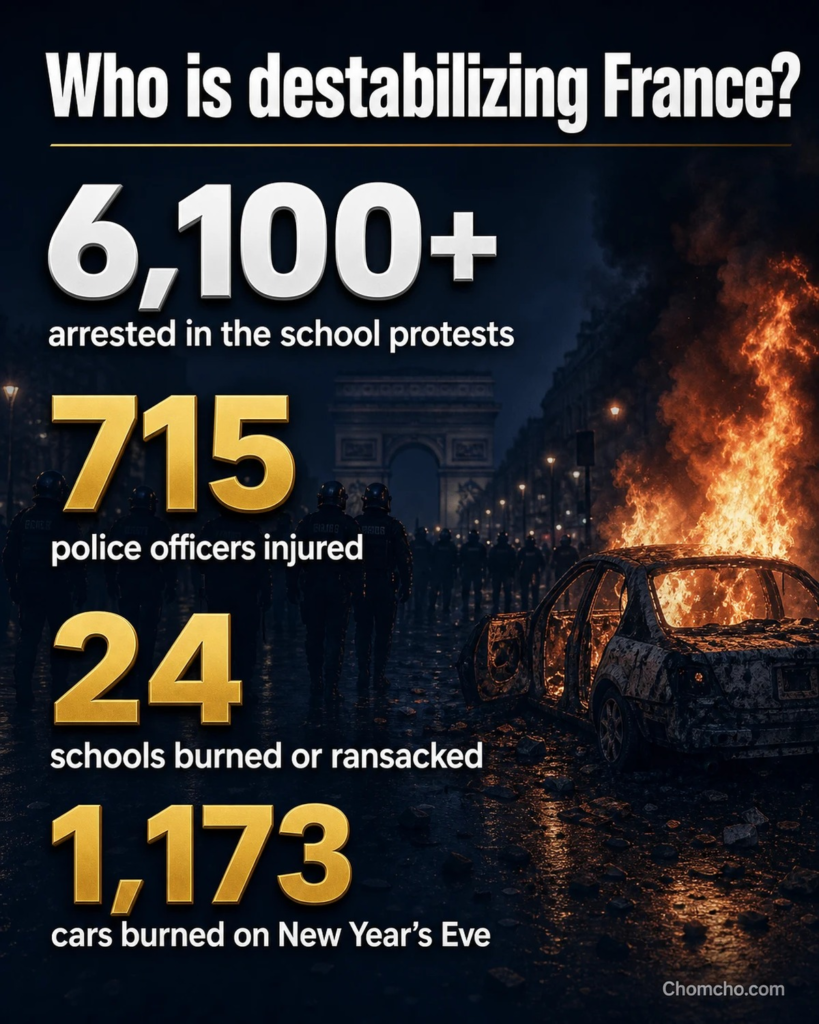
Critics read Musk's words as a threat. But the real violence is in France's streets: more than 6,100 arrested, 715 police officers injured and 24 schools "burned or ransacked," in the words of Education Minister Édouard Geffray.
Nobody has shown that Musk or MAGA organized anything.
This is not an isolated event. The 2023 Nahel riots brought about 3,800 arrests, the Champions League titles of Paris Saint-Germain (PSG) ended with deaths, injuries and hundreds of arrests, and 1,173 cars burned on the last New Year's Eve.
Nobody blamed Musk for those nights either.
Europe's immigration crisis is real: 41,472 Channel crossings in 2025, 843 anti-Christian acts in France, a priest murdered by the migrant who burned Nantes cathedral, Britain's grooming gangs, and Philippine, a 19-year-old female student killed by a man under a deportation order never carried out.
Barrot's list fits a pattern: a criminal investigation of X, a push to keep American weapons out of Ukraine, U.S. Ambassador Charles Kushner shut out of French ministries, and a Geneva post saying the US is no longer "a beacon of human rights."
What the French government fears is Marine Le Pen, at 36 percent in the polls, double her nearest rival. Prosecutors sought prison and an immediate ban; an appeals court cleared her to run.
Americans saw the same pattern in Trump's ballot removal, and Brazil saw it in Jair Bolsonaro's 27-year sentence.
The globalists are desperate.
Placing tens of millions of American voters beside Moscow, Beijing and Tehran is an insult to an ally.
Free speech is not foreign interference.
Russia, China, Iran and the MAGA community
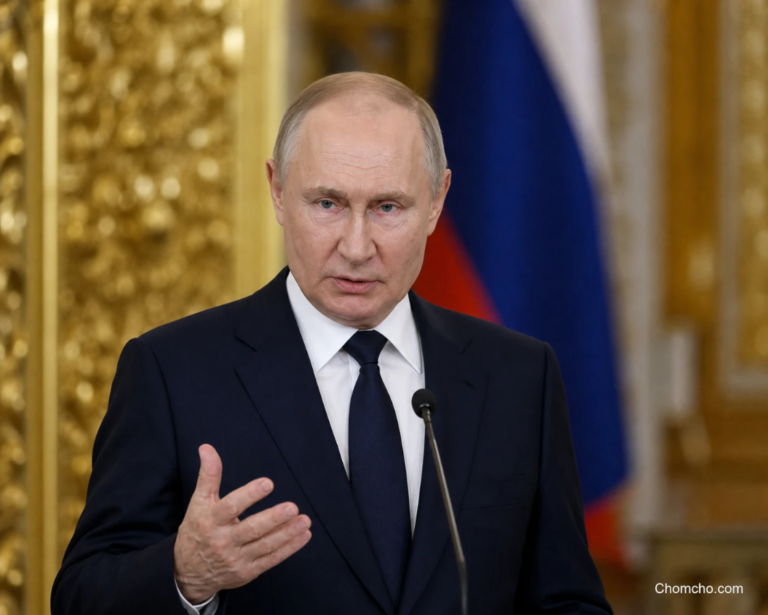
On October 13, at the Organization for Economic Cooperation and Development (OECD) in Paris, French Foreign Minister Jean-Noël Barrot used his speech to denounce “massive online harassment campaigns by Elon Musk against European leaders.”
Barrot then warned that online coverage of the school protests carried “hostile narratives originating from Russia and China, as well as Iran and the MAGA community.”
“The enemies of democracy will do everything to destabilize us,” Barrot said. “We do not tolerate any foreign interference, from wherever it may come. It is a matter of sovereignty.”
France blames Musk, and in the same speech Barrot places the movement that elected the president of the United States beside three of America’s main adversaries.
It is not the first time the French government has put the United States on a list like that. The speech is also a convenient way to change the subject while French schools burn.
What Trump and Musk said
The speech came one week after Trump and Musk commented on the violent high school protests in France.
On October 6, Trump wrote on Truth Social: “What’s happening in France is nothing less than out of control mass migration.” He added: “This isn’t about schools, this is about Islam wanting to take over a once great Country!”
Musk responded the same day, in a reply to British activist Tommy Robinson: “It’s an invasion in slow motion, but an invasion nonetheless.”
In the same post, Musk wrote that “those who support the invasion are traitors who deserve the fate of all traitors.”
Critics read that line as a threat. But the line does not target pupils in the street. It targets those who support what Musk calls an invasion: the officials and politicians behind Europe’s open-door policies.
Musk has condemned violence before.
When Tesla properties were firebombed in the United States in 2025, he called the violence insane and deeply wrong.
In September 2025, speaking by video to a London rally organized by Robinson, Musk said: “Whether you choose violence or not, violence is coming to you. You either fight back or you die.”
The British prime minister’s office called Musk’s language dangerous.
Read again, the words warn that violence is coming; they do not ask anyone to start it. Each reader can judge for themselves.
The violence France should condemn is not a post on X. It is the violence in its own streets.
Twenty-four schools burned or ransacked
In mid-September, high school protests began in Créteil and in the poorest suburbs of Paris, in Seine-Saint-Denis and Val-de-Marne.
The grievances were real: teacher shortages, classes of 32 to 36 pupils, crumbling buildings, heat and the stress of Parcoursup, the national university admissions platform.
A high school students’ union led the marches. University and labor unions joined in October.
Then the protests turned violent.
More than 6,100 people have been arrested, and by early October, 87 percent of those held in custody were minors.
Some 715 police officers have been injured, along with about 215 pupils and 85 school staff members. Rioters burned a fire engine in Marseille and set a bus on fire.
Damage in the Paris region passes one million euros, and on October 6, classes were suspended nationwide.
Education Minister Édouard Geffray said 24 schools have been “burned or ransacked,” and he described schools “taken hostage by ultra-violent groups.”
Twenty-four schools. That is not a protest for better classrooms; it is the destruction of classrooms.
Pupils were also hurt. A 15-year-old lost a hand to a police grenade in Lens, and a 16-year-old lost the use of an eye in Tours.
The government accused France Unbowed (La France Insoumise, LFI), the far-left party of Jean-Luc Mélenchon and his allies, of orchestrating the protest movement, an accusation the party denies.
A poll for the newspaper Le Figaro found that 78 percent of the French believe LFI is exploiting the protests. Nobody has shown that Musk or the MAGA community organized anything.
Seine-Saint-Denis, one of the two departments where the protests began, has the highest share of immigrants in France: 31.6 percent of its residents, according to the national statistics institute, INSEE.
Overcrowded classes and crumbling schools there are not an invention of Musk. They are what a social system under strain looks like.
No religious or identity link to the violence has been established by the authorities. But France does not collect statistics on ethnic origin; in 2007, the Constitutional Council ruled against such statistics.
A country that forbids itself from counting cannot claim to know.
Not an isolated event
France has seen this before.
In June 2023, after a police officer shot and killed a 17-year-old boy, Nahel Merzouk, at a traffic stop near Paris, riots spread across France for about a week.
About 3,800 people were arrested, with an average age of 17 to 18, and a third of them were minors.
Gérald Darmanin, then interior minister, said 90 percent of those arrested were French. Darmanin has also said he never liked ethnic statistics.
Soccer celebrations also bring riots. When Paris Saint-Germain won the Champions League on May 31, 2025, the celebrations left two people dead, more than 200 injured and 559 arrested.
In 2026, after PSG beat Arsenal in the Champions League final on May 30, police arrested 416 people across France as rioters burned cars, vandalized stores and tried to storm a police station in Paris.
Burning cars on New Year’s Eve has become a French ritual.
On New Year’s Eve 2025, 1,173 vehicles burned and 505 people were arrested, according to the Interior Ministry.
Nobody in Paris blamed Musk for those nights. The only step left is to blame Trump for the next soccer riot.
Europe’s immigration crisis is real
Trump’s words about France must be read in the context of Europe’s immigration crisis. That crisis is not an American invention.
Consider the English Channel. In 2025, 41,472 migrants crossed it in small boats to reach Britain, the second-highest total on record after 2022.
Crossings have fallen in 2026, but the total since 2018 has passed 200,000, and most of the boats leave from the beaches of northern France.
Consider the attacks on Christians. France’s Interior Ministry counted 843 anti-Christian acts in 2025, up 9 percent, and physical assaults on Christians doubled.
In 2020, a Rwandan migrant set fire to the Gothic cathedral of Nantes.
In 2021, the same man, still awaiting trial for the fire and impossible to deport while under judicial supervision, murdered Father Olivier Maire, the priest who had taken him in. In January 2026, a French court sentenced the man to 30 years.
In September 2025, Ashur Sarnaya, an Iraqi Christian refugee, was stabbed to death in Lyon while he livestreamed from his wheelchair, and anti-terrorism prosecutors charged a 27-year-old Algerian, who denies a terrorist motive.
Consider the grooming gangs that sexually exploited thousands of victims in British towns.
In June 2025, a national audit by Baroness Louise Casey found that the ethnicity of two-thirds of the perpetrators had not been recorded.
Where local data existed, Asian men, particularly men of Pakistani background, were overrepresented, Home Secretary Yvette Cooper told Parliament as she apologized to the victims. The government ordered a national inquiry.
In France, Philippine, a 19-year-old female student, was murdered in Paris in September 2024, and the man charged with her murder, a Moroccan, had served prison time for a rape committed in 2019 and was under an order to leave France that was never carried out.
Saying this is not hate. It is the reality Trump described, and the reality Paris prefers to blame on him.
A pattern of hostility toward Washington
Barrot’s list fits a pattern.
Since January 2025, Paris prosecutors have run a criminal investigation into X. The investigation covers suspected manipulation of the platform’s algorithm and content from Grok, its artificial intelligence chatbot.
Police searched X’s French offices in February 2026, and Musk was summoned for a voluntary interview in April. Musk did not attend, and no charges have been reported. “This needs to stop,” Musk wrote.
In January 2026, Macron’s government pushed to stop Ukraine from using a 90,000 million euro EU loan to buy American weapons.
Germany and the Netherlands objected, and the Dutch government wrote that “Ukraine also urgently requires equipment produced by third countries.”
In February 2026, after the beating death of nationalist activist Quentin Deranque in Lyon, the U.S. State Department’s counterterrorism bureau wrote that “violent radical leftism is on the rise.”
France summoned U.S. Ambassador Charles Kushner, and when he did not appear, Barrot announced that French ministers would no longer meet him until he explained himself. “We don’t accept that foreign countries can come and interfere,” Barrot said.
In July 2026, France’s mission to the United Nations in Geneva posted: “The US used to be a beacon of human rights. Not anymore.” The post added that the United States “stands alongside North Korea, Nicaragua, Mali & Russia, isolated.”
Two days later, American diplomats walked out of the UN Security Council as French Ambassador Jérôme Bonnafont spoke.
Then, on October 6, a naked golden statue of Trump called “The Orange Plague” stood outside the European Parliament in Strasbourg, on French soil.
The French government lectures the United States on human rights, tried to keep American weapons out of Ukraine and investigates an American platform. When Americans respond, the French government calls their response interference.
Who is destabilizing France?
Barrot says the enemies of democracy want to destabilize France. But France is already unstable, and the causes are at home.
Since December 2024, two governments have fallen in parliament, and in October 2025, Prime Minister Sébastien Lecornu resigned after 27 days before Macron named him again.
A poll published in October 2026 by the polling firm Ipsos BVA found that only 15 percent of the French view Macron favorably, the lowest of his presidency.
Foreign actors did not do that. Failing globalist policies did, together with mass immigration that strains the country’s social systems.
Burning schools and burning cars destabilize France. Trump and Musk do not.
One playbook, three countries
What the French establishment fears most is not Musk. It is Marine Le Pen and her lead in the polls for the 2027 presidential election.
In July 2026, Musk called Le Pen France’s last hope, and French politicians immediately called that interference.
Le Pen was charged with misusing European Parliament funds to pay party staff, and she denies wrongdoing.
In November 2024, prosecutors asked for five years in prison, two of them to be served, and a five-year ban from office applied immediately, even during an appeal.
In March 2025, a Paris court convicted her and imposed the immediate ban, which would have kept her off the 2027 ballot.
But then in July 2026, an appeals court upheld the conviction but shortened the ban, so she can run. The appeals court also sentenced her to a year of house arrest with an electronic ankle monitor, which she says would make a free campaign impossible.
She appealed to France’s highest court, which suspends the sentence until it rules in early 2027.
Americans have seen this pattern before.
In December 2023, Colorado’s Supreme Court removed Trump from the state’s ballot, until the U.S. Supreme Court reversed the ruling 9-0 in March 2024.
A Manhattan jury convicted him on 34 felony counts in May 2024, and the judge later sentenced him to an unconditional discharge. Voters answered by electing him president.
Brazil’s courts went further.
Brazil’s electoral court barred Jair Bolsonaro from running until 2030, and its Supreme Court sentenced him to 27 years and 3 months for what it called a coup plot. Then, in March 2026, after a bacterial pneumonia, he was moved to humanitarian house arrest.
On October 4, 2026, Bolsonaro’s son, Flávio Bolsonaro, finished first in the presidential election’s first round with 47.45 percent, against 44.66 percent for President Lula da Silva. The runoff is on October 25.
These tactics are not working.
Le Pen polls around 36 percent, double her nearest rival. To American readers used to two parties, 36 percent may sound weak, but France’s 2022 first round had 12 candidates.
In Germany, where 29 parties were on the 2025 ballot, the Alternative for Germany (AfD) party leads one recent poll with 30 percent, 11 points ahead of Chancellor Friedrich Merz and his CDU/CSU bloc.
In Britain, Nigel Farage and his Reform UK party led the polls for about a year and a half.
The globalists are desperate, and desperate elites look for foreign villains.
American voters are not the enemy
The MAGA community is not a foreign government. It is the movement that elected the president of the United States, the leading power of NATO, which has defended Europe for 77 years.
Placing tens of millions of American voters on the same list as Moscow, Beijing and Tehran is not foreign policy. It is an insult to an ally.
Barrot called the views of MAGA supporters “hostile narratives.” In a free country, a narrative is called an opinion. France has every right to protect its elections from hostile regimes, but it has no right to treat American speech as an attack.
In February 2025, Vice President JD Vance told the Munich Security Conference that “the threat that I worry the most about vis-a-vis Europe is not Russia, it’s not China, it’s not any other external actor.” “And what I worry about is the threat from within,” he said.
Barrot’s speech proved Vance right: the French government looks for enemies abroad while its schools burn at home.
France blames Musk because blaming Musk is easier than fixing France.
The way back for Macron’s government is clear: restore order in the schools and the streets, enforce the deportation orders France already issues, and treat American allies as allies.
Free speech is not foreign interference.