
This post is also available in:
 Português
  Español
  Français
  Deutsch
  Italiano
  Русский
  Nederlands
  日本語
日本語  Polski
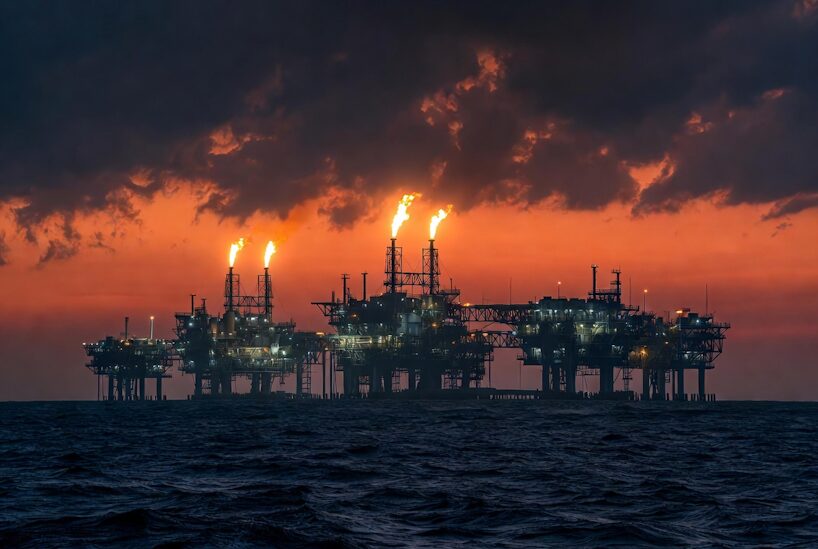
The Hormuz blockade isn’t just cutting oil supply today — it’s destroying it permanently.
Mature Gulf oil wells in Iran, Iraq, Kuwait and UAE require precise gas injection to maintain pressure.
Once that flow stops, water encroachment traps oil behind saltwater barriers that petroleum engineers call nearly impossible to reverse.
Paraffin wax and asphaltenes clog the wellbore tubing with solid deposits. This is basic petroleum physics — not speculation.
Israel’s March 18 strike on South Pars, the world’s largest gas field, accelerated the damage.
Iran retaliated by hitting Qatar’s energy hub of Ras Laffan — costing an estimated $20,000 million in annual revenue and up to five years to repair.
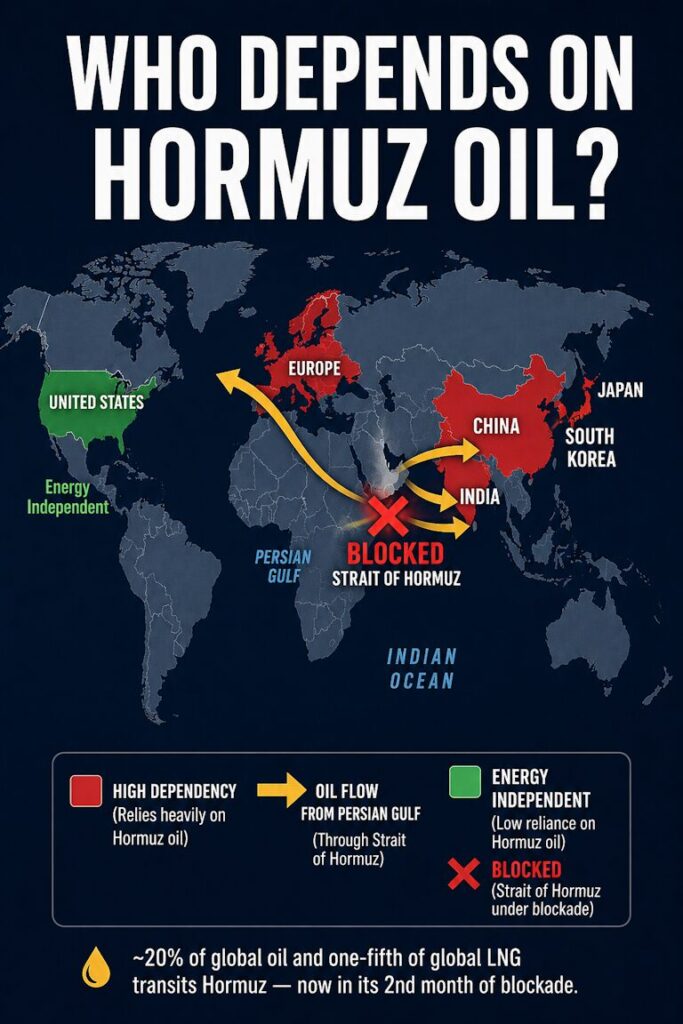
South Pars Air Raid — Energy War With No Reset Button
Qatar supplies roughly one-fifth of global LNG. Nearly all of it flows through Ras Laffan — now severely damaged.
Industry data shows even five-day shutdowns cause 20–30% permanent flow rate losses.
Kuwait’s wells never fully recovered after Desert Storm. Now we are looking at months of simultaneous shutdowns across multiple Gulf producers.
Energy analysts professionally estimate the world could lose 4 to 6 million barrels per day of permanent capacity — even after Hormuz reopens.
Trump (@realDonaldTrump) has been consistent: “Iran must never be allowed to possess nuclear weapons — they are being squeezed hard and their situation will only get worse.”
The squeeze is now geological as well as economic.
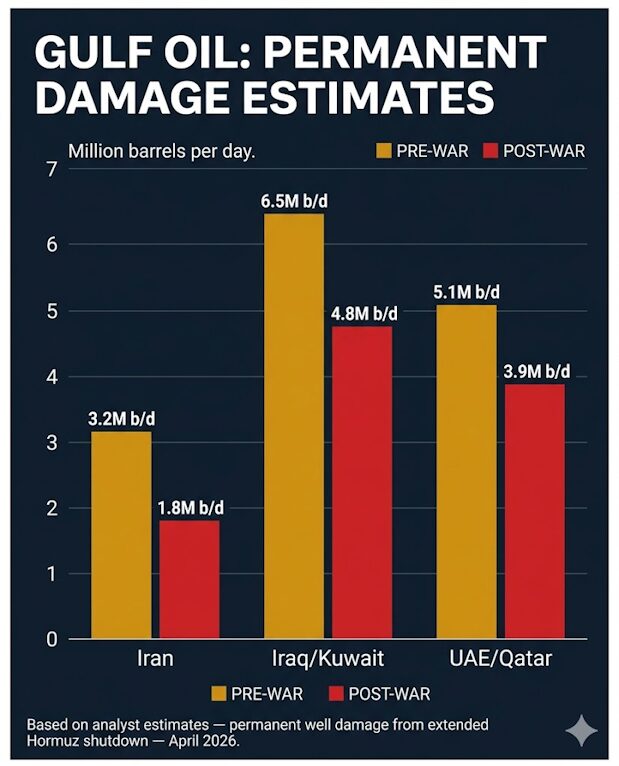
Higher Energy Prices for Years — Not Months
Europe and Asia built decades of energy policy around Middle Eastern oil transiting Hormuz. That globalist gamble is now punishing their citizens at the pump and on their heating bills.
America, by contrast, is exporting crude at record highs above 6 million barrels per day.
Energy independence wasn’t just a slogan. It was a lifeline.
Strategic patience reshapes the map.
Response to @HealthRanger [Replying to: https://x.com/HealthRanger/status/2049557519647830479?s=20]