
This post is also available in:
 Português
  Español
  Français
  Deutsch
  Italiano
  Русский
Ecuador gang wars: eight bodies in bags — and America is already there
On June 3, 2026, Ecuadorian police found eight bodies stuffed in plastic bags on the outskirts of Babahoyo — including two minors who were farmers, not gang members.
Eight people had disappeared on Sunday while traveling between two small towns.
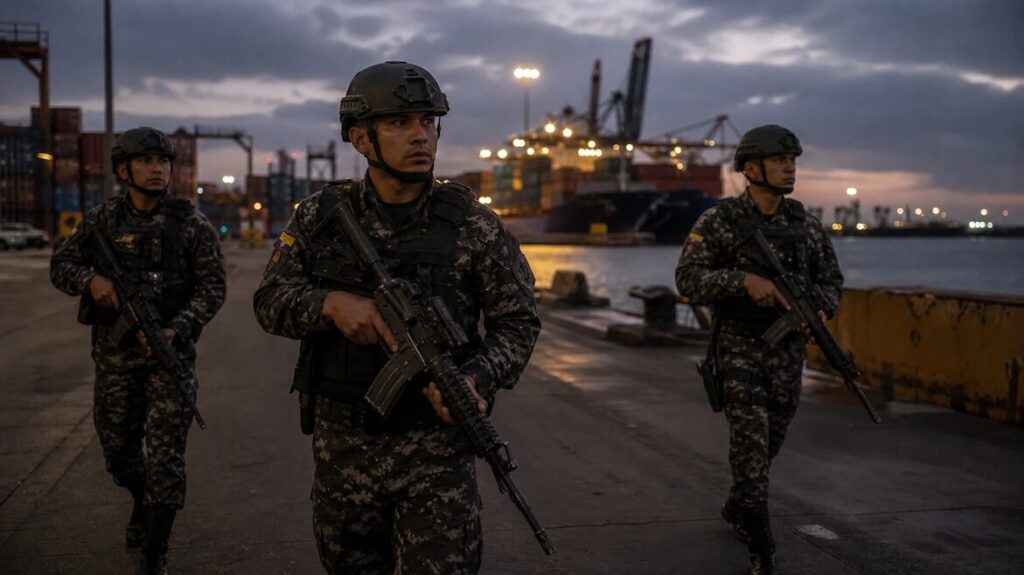
This is the face of the Ecuador gang wars in 2026. And it is happening in the middle of an active US-Ecuador joint military operation.
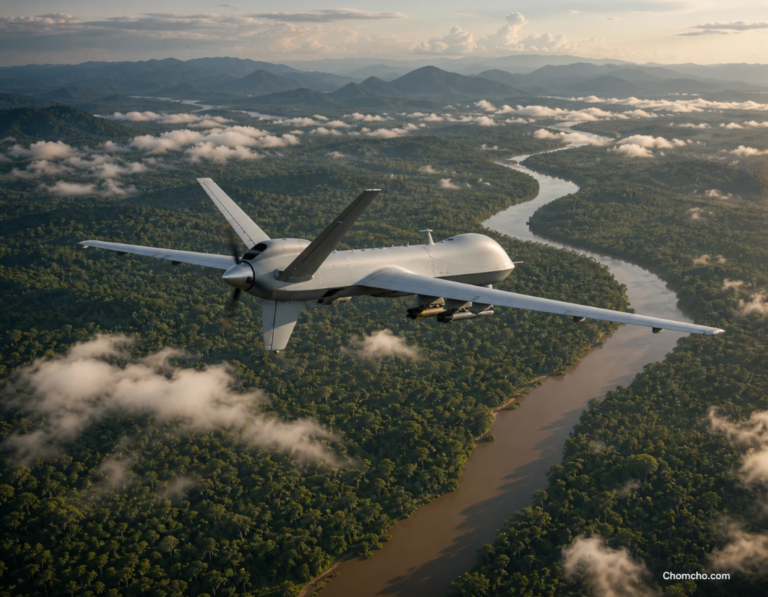
In March 2026, the United States and Ecuador launched “Operation Total Extermination” — joint raids targeting narco-terrorist organizations along Ecuador’s northern border with Colombia.
American commandos provided intelligence, logistics, and direct military support. US Southern Command confirmed the operation officially.
The US acting assistant secretary for Americas security affairs told Congress these strikes were “just the beginning” of a much broader campaign involving 17 partner nations across the Western Hemisphere.
The Ecuador gang wars have become an American military priority.
How a peaceful country became the murder capital of South America
Ecuador was once one of Latin America’s safest nations. As of June 2026, it ranks as the most violent country in South America.
Ecuador closed 2025 with a historic high of 50.9 homicides per 100,000 residents — over 9,200 violent deaths — a 31% increase from 2024 alone.
In 2018 that number was 6 per 100,000. That is a nearly ninefold increase in seven years.
The collapse began with the fragmentation of prison gangs after the 2020 splintering of Los Choneros — the dominant criminal organization at the time.
But the moment that shocked the world came in January 2024, when armed gang members stormed a live television broadcast in Guayaquil, forcing journalists and staff to the floor at gunpoint while shots rang out on air. The images went global instantly.
Ecuador was no longer a hidden crisis — it was a live war broadcast in real time.
That same week, gang leader Adolfo Macías, known as “Fito,” escaped from a maximum-security prison, triggering President Noboa to declare a state of emergency and formally label the gangs as terrorist organizations.
The assassination of presidential candidate Fernando Villavicencio in August 2023 — shot leaving a campaign rally in Quito — had already signaled that no one was safe, not even those running for office on an anti-gang platform.
The main factions driving Ecuador’s gang wars
Three main factions now control the Ecuador gang wars.
Los Lobos, linked to Mexico’s Cartel Jalisco Nueva Generación, known as CJNG, is the fastest growing criminal organization in Ecuador.
Founded as a prison gang, Los Lobos has transformed into a military-grade operation controlling ports, border zones, and entire neighborhoods under extortion regimes.
CJNG provides weapons, financing, and tactical training in exchange for exclusive access to Ecuador’s Pacific export corridor.
Los Choneros, backed by Mexico’s Sinaloa Cartel, controls Ecuador’s older and more established trafficking networks.
Named after the coastal city of Chone, Los Choneros once dominated Ecuador’s entire criminal landscape before their 2020 internal split triggered the current war.
As we mentioned above, their leader, Adolfo Macías, known as “Fito,” escaped from a maximum-security prison in 2024 — his escape was the event that pushed Ecuador to declare an internal armed conflict.
He was recaptured in June 2025, but Los Choneros’ networks remain deeply embedded in Ecuador’s ports, prisons, and political structures.
Los Tiguerones control the coastal maritime trafficking routes, making them the third major player in the Ecuador gang wars.
Smaller factions — Águilas, Lagartos, and Fatales — operate as violent subcontractors, fighting for scraps of territory while the major groups battle for the ports.
The US Treasury Department designated Los Lobos a terrorist organization in September 2025 — the same designation applied to ISIS and Hezbollah.
These are not street gangs. They deploy car bombs, drone-dropped explosives on police stations, paramilitary uniforms, and coordinated prison uprisings with hostages.
Ecuador declared an “internal armed conflict” in 2024 — essentially a war against its own territory.
Ecuador now handles 70% of all cocaine exported from Colombia and Peru — the world’s two largest producers — to global markets.
In November 2024, Spanish authorities seized 13 tonnes of cocaine hidden in Ecuadorian banana boxes at the port of Algeciras — the largest drug seizure in Spanish history.
Regional spillover — Colombia, Peru, and the hemispheric threat
The Ecuador gang wars do not stop at Ecuador’s borders.
Colombia now faces two unstable frontiers simultaneously — Venezuela to the north and Ecuador to the south — forcing Bogotá to stretch its military resources dangerously thin.
Colombian FARC-EP dissidents and the National Liberation Army (ELN) use Ecuador’s northern border as a safe rear base, while their cocaine labs in the Nariño and Putumayo regions feed Ecuadorian ports.
In Peru, the spillover hits the VRAEM — the Valley of the Apurímac, Ene, and Mantaro Rivers — a remote jungle region that is home to the last remnants of the Shining Path, Peru’s Maoist terrorist organization.
VRAEM networks have begun cooperating with Ecuadorian gangs for weapons and logistics, giving a dying insurgency new revenue streams and a longer lifespan.
Arms trafficking routes now run through Peru’s northern border provinces of Tumbes and Piura.
Meanwhile, Albanian and Balkan criminal networks have moved operatives inside Ecuador to manage Europe’s cocaine supply chain.
Fentanyl precursor chemicals from China move through Ecuadorian ports toward US markets.
The DEA has expanded its presence in both Quito and Guayaquil, working alongside Ecuadorian intelligence to dismantle the same Sinaloa and CJNG networks that flood American cities with cocaine and fentanyl.
Trump’s America First strategy is responding — “Operation Total Extermination” is proof. But the cartels have a head start measured in years.
The Ecuador gang wars are no longer a regional problem. They are a hemispheric one.