
This post is also available in:
 Português
  Español
  Français
  Deutsch
  Italiano
  Русский
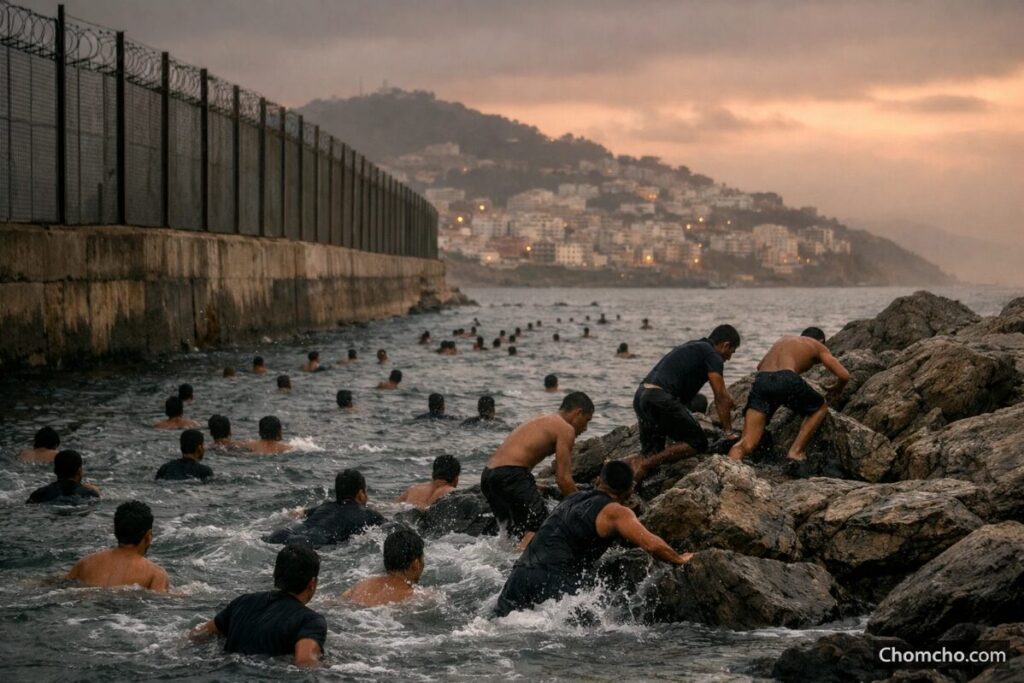
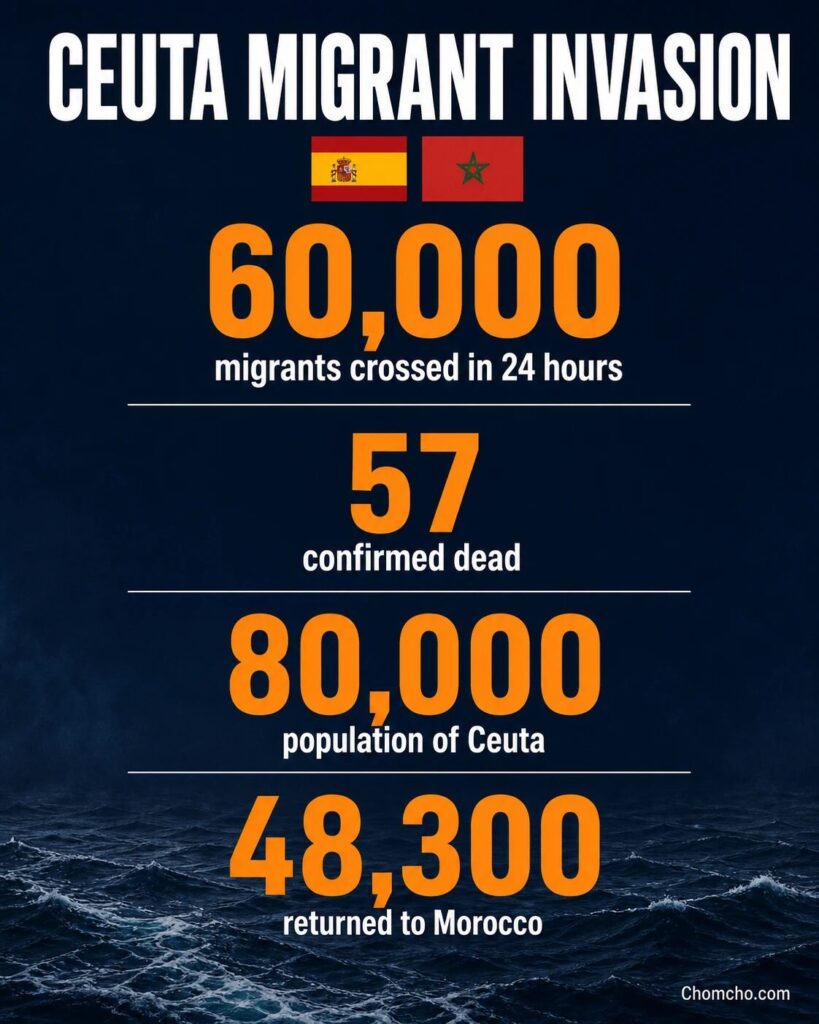
Nearly 60,000 people crossed from Morocco into Ceuta since Thursday, and the Ceuta migrant invasion has already left at least 57 dead.
Ceuta shows what happens when a nation abandons its borders
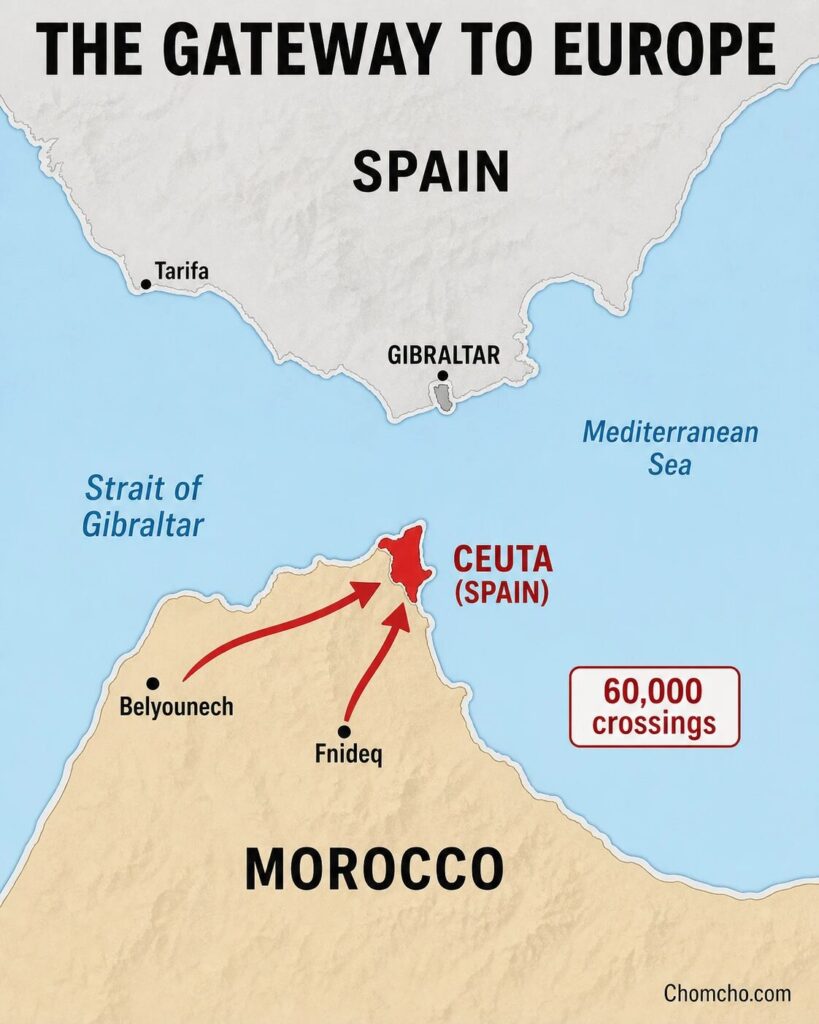
The Ceuta migrant invasion began Thursday, when nearly 60,000 people crossed from Morocco into the Spanish territory.
Spanish authorities confirmed at least 57 people died during the crossing.
Video footage circulating widely on social media does not show desperate refugees crawling ashore. It shows young men running through the streets, laughing, and flashing victory signs.
Shops across the enclave shut their doors. Bread and basic supplies grew scarce within a day.
Residents reported migrants attempting to force their way into private homes. Video circulating online showed men climbing building exteriors toward apartment windows.
Ceuta’s 80,000 residents were overwhelmed by the large number of new arrivals. Many were left afraid to leave their houses.
A coordinated invasion, the organizers unknown
This was no spontaneous tragedy. Anonymous social media accounts organized much of the migrant surge for weeks.
Instructions told migrants to carry nothing but swim trunks and leave their belongings behind. Videos told them to swim in groups of at least seven people to slow down border patrols.
Diagrams and satellite images pointed to exact entry points along the Tarajal breakwater and the cliffs near Belyounech.
Moroccan cybersecurity officials tried shutting the accounts down. New accounts kept appearing faster than officials could remove them.
Spain’s government blames migrant smuggling networks for orchestrating the mass crossing, and nobody has confirmed anything beyond that.
Whoever ran the campaign, the result speaks for itself.
Tens of thousands of illegal migrants moved toward Europe in a single day, and weak policies in Madrid made it possible.
Nobody has confirmed who is really behind these social media accounts yet.
Morocco’s economy is growing, not collapsing
The World Bank reported that Morocco’s economy grew 4.9 percent in 2025, its strongest performance in a decade.
Inflation sits at just 0.8 percent, and Morocco holds one of the best investment ratings in Africa.
This is not a nation collapsing into famine or war.
However, hardship does exist in Morocco’s informal job market, where wages stay low and protections stay thin.
That hardship is an economic problem, not political persecution.
Migrants leaving Morocco are chasing higher wages in Europe, encouraged by viral videos of others who already made the crossing and now celebrate their “success” online.
The borders are closed by law, open in practice
Spain’s socialist Prime Minister Pedro Sánchez pushed an amnesty plan earlier this year that could regularize hundreds of thousands of undocumented migrants.
Spain’s Supreme Court then ruled that migrants intercepted while swimming toward Ceuta could not be turned back immediately.
Sánchez insists Spain’s borders are already legally closed, and technically he is right.
However, this court ruling stopped authorities from sending back the migrants who swim across. In practice, it works almost the same as an open border.
Smuggling networks spread the idea that “Spain opened its border,” and thousands of migrants believed them.
Sánchez blamed the smuggling networks for the disaster.
Other Western leaders often do the same, blaming smugglers while their own courts and policies create the same conditions.
The president of the autonomous city of Ceuta requested the declaration of a national emergency. Madrid denied it.
Europe isolates Madrid
Italy, Finland, Denmark and Sweden have all called for suspending Spain from the Schengen zone.
Schengen is the passport-free travel area covering most of the European Union.
Italian Prime Minister Giorgia Meloni called the images from Ceuta “shocking.” She ordered Italy to reintroduce border checks with Spain for 30 days.
No formal mechanism exists to expel a member state from Schengen. But the political pressure against Sánchez is real.
Spain accused Italy of “demagoguery” and rejected the criticism.
European leaders who spent years defending open migration policies are now turning against one of their own.
Trump says America is watching
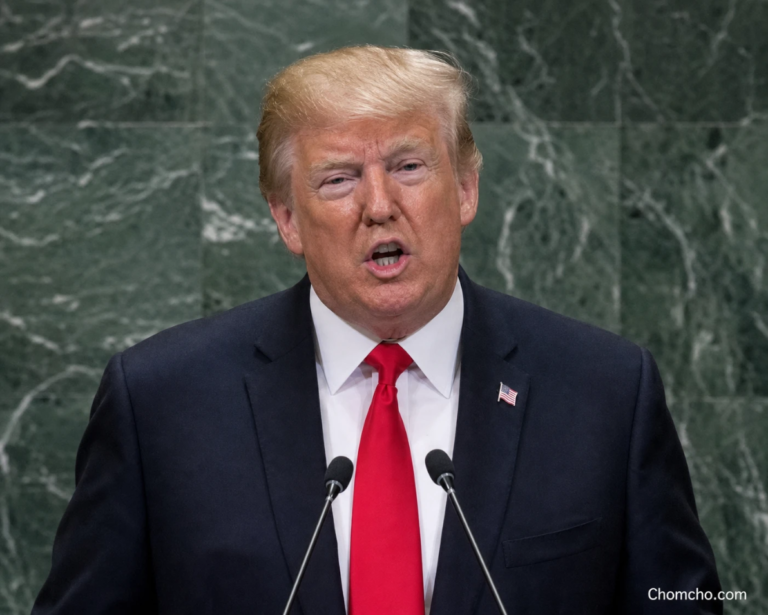
White House deputy press secretary Anna Kelly said, “President Trump has long warned Europe what would happen if they continue to implement far-left, globalist policies, including enabling mass migration.”
Spain and other countries “who have adopted this destructive philosophy should immediately reverse course,” she added.
President Trump (@realDonaldTrump) called the images from Ceuta “terrible.”
He warned that the same scene could happen in the United States within three years if the wrong political side wins the next election.
The migrant invasion of Ceuta is not only a Spanish problem. It is a preview of what open border policies produce anywhere they take hold, including in the United States.
Ceuta is a warning, not a mystery.
Weak borders invite chaos, and strong borders save lives and nations.