
This post is also available in:
 Português
  Español
  Français
  Deutsch
  Italiano
  Русский
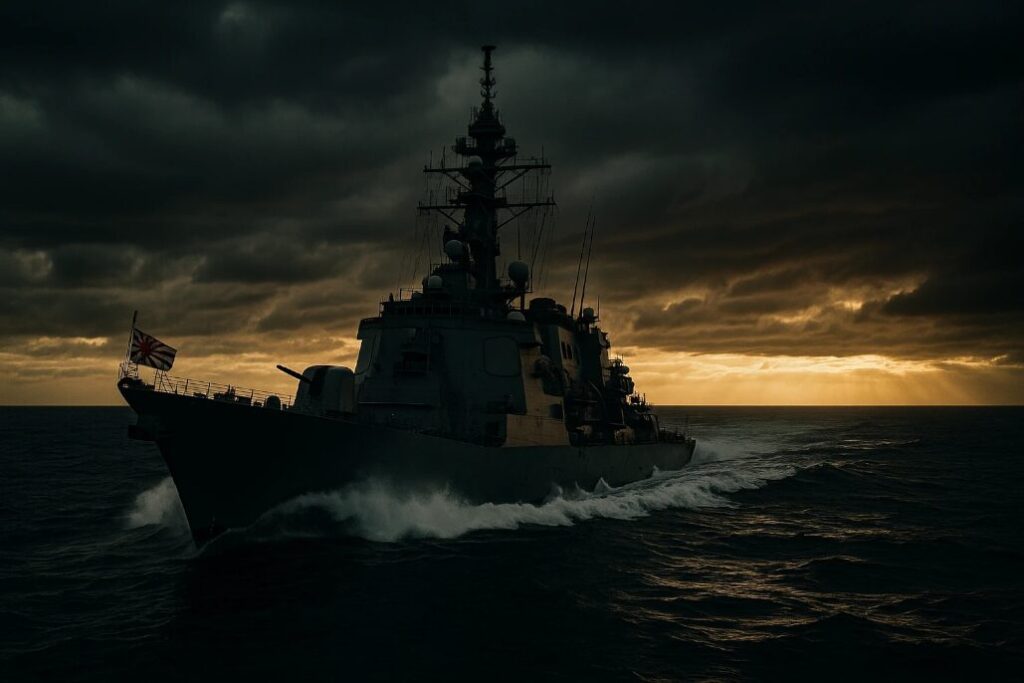
China calls it Japan remilitarization. The world calls it self-defense
On June 26, 2026, China’s Defense Ministry spokesman Zhang Xiaogang publicly warned Japan to “abandon its dangerous path toward remilitarization,” claiming Tokyo’s revival of its military-industrial complex posed a “significant threat to regional stability.”
The accusation came in response to Japan’s proposed revisions to its three key national security documents and US-Japan extended deterrence dialogue.
The timing and the source make this one of the richest geopolitical ironies of 2026.
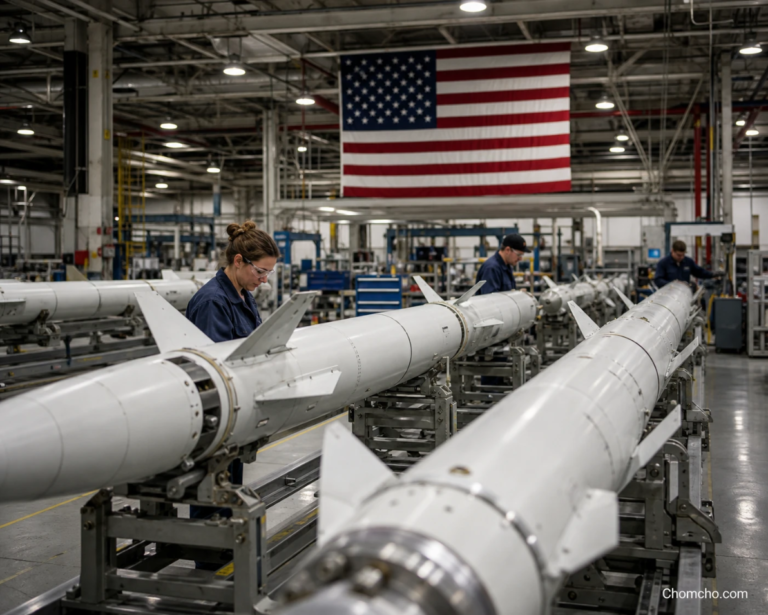
China, which operates the world’s largest navy by ship count, has the fastest-growing nuclear arsenal on Earth, and whose shipbuilding capacity is 232 times that of the United States as we documented in a previous article, is lecturing Japan about militarization.
China’s defense budget, while officially listed at below 1.5 percent of GDP, is widely considered significantly understated by Western intelligence agencies.
Japan remilitarization, to the extent it exists at all, is a direct and rational response to China’s own expansion.
Why Japan was pacifist, and why that era is ending
To understand Japan remilitarization in 2026, you need to understand what came before it.
After Japan’s devastating defeat in World War II, Article 9 of Japan’s 1947 constitution, written under American occupation, explicitly renounced war as a sovereign right and prohibited Japan from maintaining war potential.
For decades, Japan kept its Self-Defense Forces small, its defense budget capped at roughly one percent of GDP, and its strategic posture deliberately passive, relying almost entirely on the US security umbrella.
This postwar pacifism was not just constitutional, it was cultural.
The atomic bombings of Hiroshima and Nagasaki, the memory of wartime destruction, and deep public opposition to military entanglement made defense spending politically toxic for generations.
The Three Non-Nuclear Principles, adopted in 1967, formalized Japan’s commitment to never possessing, never producing, and never permitting the introduction of nuclear weapons.
Japan’s Nihon Hidankyo, the atomic bomb survivors’ organization, even won the Nobel Peace Prize in 2024, a reminder of where the country came from.
That era is now ending, not because Japan has become aggressive, but because the strategic environment it was designed for no longer exists.
Takaichi’s diplomatic offensive and the new Japan
Prime Minister Sanae Takaichi (@SanaeTakaichi), Japan’s first female prime minister and holder of a commanding two-thirds supermajority in the Japanese parliament (Diet) after the LDP’s historic February 2026 landslide, is executing the most consequential transformation of Japan’s defense posture since 1947.
The Economist has called her “the world’s most powerful woman.”
She traveled to Washington in March 2026, Australia in late April for defense and critical minerals talks, Vietnam in May to promote the Free and Open Indo-Pacific framework, and hosted Philippine President Ferdinand Marcos Jr. in Tokyo in May. Her India visit is scheduled for July 1-3, 2026.
Japan’s defense budget has reached ¥9 trillion for FY2026, above the Defense Buildup Program targets, with a goal of sustaining 2 percent of GDP going forward.
Japan is also developing the Hyper Velocity Gliding Projectile with Mitsubishi Heavy Industries, a hypersonic boost-glide system that moves Japan from missile-defense client to co-producer of prompt strike capability.
In April 2026, Japan’s Diplomatic Bluebook downgraded China from “one of the most important bilateral relations” to merely “an important neighboring country,” the first such downgrade in a decade.
Japan remilitarization is not reckless nationalism. It is a measured response to a changed world, backed by a democratic mandate from a people who voted for it overwhelmingly.
The numbers tell the real story: China’s military hypocrisy
Here are the numbers Beijing does not want discussed when it lectures Japan about militarization.
China’s shipbuilding capacity is 232 times that of the United States, making it the dominant naval industrial power on earth by a margin without historical precedent.
China’s People’s Liberation Army Navy is already the world’s largest by ship count.
China has been constructing artificial islands in the South China Sea, installing missile batteries, radar systems, and military runways on disputed territory, in direct violation of the 2016 Permanent Court of Arbitration ruling.
The Obama administration extracted a promise from Xi Jinping in 2015 not to militarize those islands. That promise was broken almost immediately.
China’s nuclear arsenal is the fastest-growing of any recognized nuclear power. The Pentagon estimates it will reach 1,000 warheads by 2030 and 1,500 by 2035.
China’s official defense budget for 2026 stands at approximately 245,000 million dollars, but US intelligence assessments consistently suggest the real figure is significantly higher due to hidden military expenditures.
Meanwhile China has been actively bullying its smaller neighbors.
Chinese coast guard vessels have used water cannons against Philippine supply boats near the Spratly Islands.
Chinese ships have harassed Vietnamese fishermen in waters Vietnam has fished for centuries.
China declared an illegal “air defense identification zone” over disputed East China Sea territory in 2013 and has enforced it aggressively ever since.
Japan’s per capita defense spending, which China’s own spokesman cited as three times China’s, is simply a result of China having 11 times Japan’s population, not Japan having an outsized military.
China’s expansion goes far beyond weapons
China’s challenge to the existing world order is not only military. It is political, economic, and technological, and it is global in scope.
Secretary of State Marco Rubio (@marcorubio) has made clear that nearly every major US foreign policy decision now runs through the lens of countering China, which Washington considers America’s most serious long-term adversary.
On the economic front, China is flooding global markets with artificially cheap industrial goods, from electric vehicles to steel to solar panels, in volumes that analysts describe as deliberately designed to price Western private companies out of existence.
The European Union has launched anti-dumping investigations. The United States has imposed tariffs. But the scale of Chinese industrial overcapacity is so vast that even combined Western countermeasures have struggled to contain it.
China is also actively promoting the international use of the yuan and building non-dollar payment systems through BRICS and bilateral currency swap agreements, a financial expansion we covered in our articles on BRICS dollar alternatives and the digital euro.
China’s political influence operations reach deep into Western institutions.
We documented in a previous article how Beijing pressured Argentina’s Universidad de Belgrano to cancel a presentation critical of China, a small but revealing example of how far Beijing’s reach extends into academic and civil society spaces far from its borders.
China controls or has significant stakes in ports across Africa, Latin America, and the Pacific, including the Chancay megaport in Peru that we covered in our recent article on the Chancay port ruling.
The Pentagon has formally designated COSCO, the Chinese state shipping company that operates Chancay, as a Chinese Military Company.
And in Ukraine, Western intelligence assessments have documented China’s hidden support for Russia, including the supply of dual-use technologies and components that sustain Russian military production despite Western sanctions.
This is not the behavior of a nation concerned about regional stability.
It is the behavior of a nation methodically dismantling the rules-based order it never agreed to and replacing it with one it controls.
What this means for America and the Indo-Pacific
Trump has been right to push allies to take their own defense seriously.
A Japan that can defend itself reduces the burden on American taxpayers, strengthens the overall deterrent against Chinese aggression, and anchors the Quad alliance, the four-nation grouping with the United States, Australia, and India that is the Indo-Pacific’s most credible counterweight to Beijing.
Takaichi has responded to that call.
Japan is investing in its own defense, deepening ties across the region, and doing so with a democratic mandate that China’s own pressure campaigns have only strengthened.
The irony of China’s June 26 statement is complete.
The nation with 232 times America’s shipbuilding capacity, a nuclear arsenal growing faster than any other power, artificial military islands built on broken promises, and a global influence operation spanning ports, universities, currencies, and dual-use weapons supplies to Russia is warning Japan about militarization.
Japan remilitarization is not the threat. China’s expansion is.