
This post is also available in:
 Português
 Español
 Français
 Deutsch
 Italiano
 Русский
 Nederlands
 日本語
 Polski
Summary
A Russian nuclear satellite is still a report and not a proven fact, and Russia denies it. But the report cites Western intelligence services, and it may show where the war in Ukraine is going.
The week around that warning was tense.
Three Kh-101 cruise missiles fell in southeastern Poland on November 20. Russia accused Estonia of actions "on the verge of triggering open war." Ukraine carried the war far from its territory: a Russian cargo ship burned in the Baltic Sea, and sea drones sank the Russian corvette Merkury in Benghazi, Libya.
According to three German outlets, the satellite is called Sputnik-S and could be launched within 60 days.
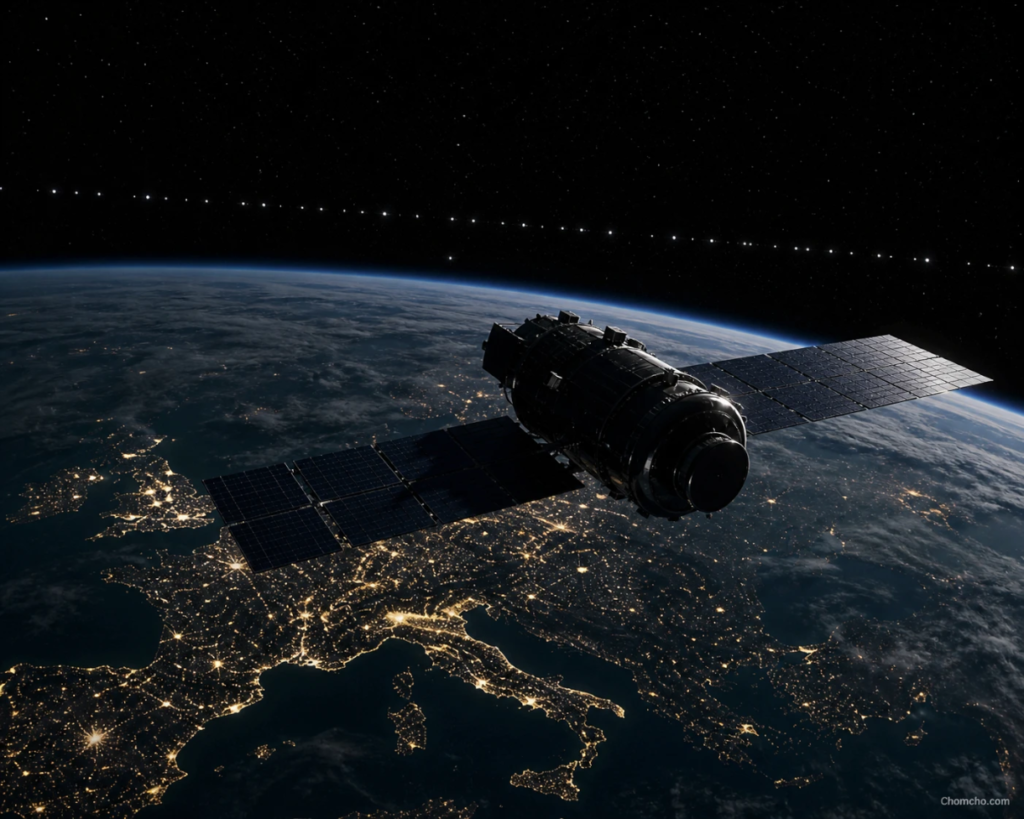
It would not run on nuclear power. It would carry a nuclear weapon to explode in orbit and disable other satellites. The United States tested such an explosion in 1962, and it damaged or destroyed eight of the 24 satellites then in orbit. The Outer Space Treaty of 1967 forbids nuclear weapons in orbit.
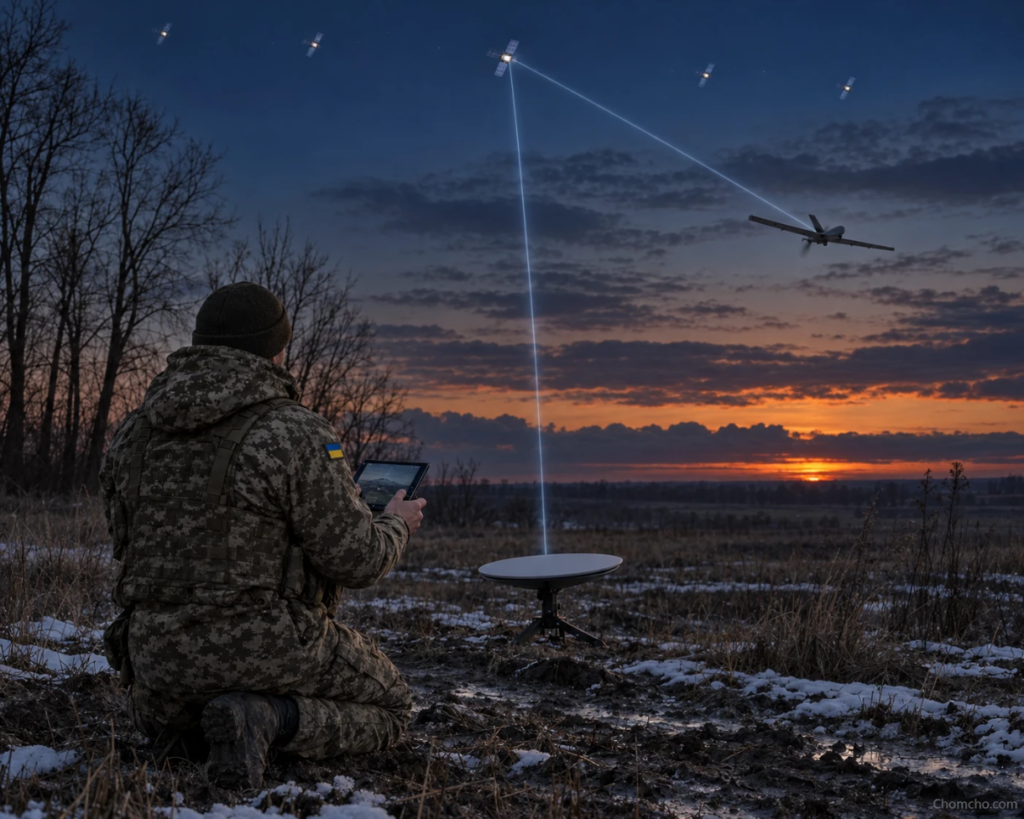
Satellites now decide wars, because drones depend on them. Ukraine communicates through Starlink and guides its drones through Starshield. Europe has nothing equal to them.
President Donald Trump saw the importance of space early and created the Space Force in 2019.
The report of a Russian nuclear satellite deserves to be taken seriously. The next war may be decided in space, above us, and the United States should not wait for the launch to prepare.
Merz sounds the alarm in Berlin
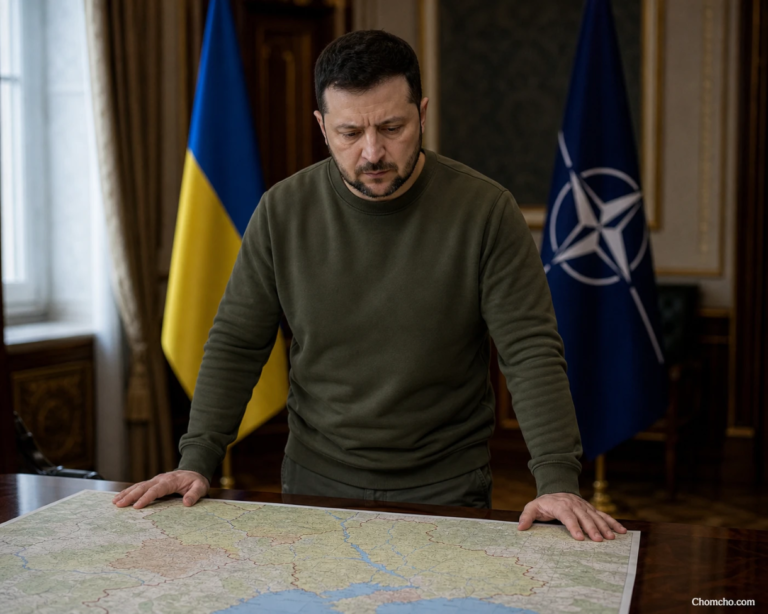
German Chancellor Friedrich Merz stood beside Mark Rutte, the secretary general of the North Atlantic Treaty Organization (NATO), on Monday, November 23, and gave two warnings to Moscow.
The first was about the Russian missiles that fell in Poland three days earlier. Merz called on Russia to stop its “dangerous provocations” and said that Poland can count on the full solidarity of Germany. No member of NATO, he added, has any interest in an escalation in the Baltic Sea region.
The second was about space. German media had reported that morning that Russia is preparing to put a nuclear weapon into orbit. Merz called those reports “shocking,” and said they show how far Russia is prepared to escalate.
Rutte added a sentence that NATO has rarely needed to say. The alliance, he said, will “defend every inch of NATO territory,” and that promise includes safety in space.
A Russian nuclear satellite is still a report and not a proven fact. But the report, the missiles and the week around them deserve a careful reading, because they may show where this war is going.
One week after Shenzhen
On November 19, in Shenzhen, Russian President Vladimir Putin signed a declaration with President Donald Trump and Chinese President Xi Jinping.
One of its four points says that a nuclear war must never be fought, and the declaration opened a dialogue to reduce that risk. We wrote then that the talks were friendly and that differences remain. The week that followed showed how large those differences are.
That same day, in an interview with Fox News, Trump answered criticism from Poland. He said that Putin had landed in Poland “a couple of little missiles, by mistake.”
He was speaking of earlier incursions. We read that answer as an effort to lower the tension, although we cannot be sure. Events contradicted it within hours.
On November 20, during a massive attack on Ukraine, three more Russian missiles fell in southeastern Poland.
Polish prosecutors said on November 22 that all three were Kh-101 cruise missiles, and that the wreckage points to production in the last quarter of 2026 at a plant in Dubna, near Moscow. They were new.
A Swedish pilot flying under NATO command received conditional permission to fire at one of the missiles, but bad weather prevented him from identifying the target, and no shot was fired.
Polish Prime Minister Donald Tusk called the incident an intentional provocation, timed with European military exercises nearby.
Rutte put the responsibility on Moscow, but he was more careful and said it is still unclear whether the missiles entered Poland on purpose.
NATO’s North Atlantic Council met in Brussels on Monday, November 23. After the meeting, General Alexus Grynkewich, who commands NATO forces in Europe, authorized an early-warning aircraft to move forward to Poland.
Poland also asked its allies to study shooting down Russian missiles over Ukraine when they are heading toward NATO territory, Bloomberg reported. No decision was made.
The same Monday, the Russian Foreign Ministry accused Estonia, another NATO member, of hostile actions “on the verge of triggering open war.”
Estonia had announced that it will close its border crossings with Russia from December 1, after accusing Russian security services of an attempted arson attack on an Estonian defense company. Russia denied any involvement.
The war spreads beyond Ukraine
Ukraine is also carrying the war far from its own territory.
On Saturday, November 21, a sanctioned Russian cargo ship was hit in the Baltic Sea by what is suspected to be a Ukrainian sea drone. It caught fire and drifted into Finnish waters before it was towed back toward Russia.
On Sunday, November 22, Ukrainian sea drones struck the Russian navy corvette Merkury while it was docked in Benghazi, Libya, more than 1,000 miles from the front. Ukrainian President Volodymyr Zelensky confirmed the attack and called it “an exemplary Ukrainian operation.”
This is not a claim made only by Ukraine.
The government of eastern Libya said the ship appeared to have been hit by a sea drone, and a commercial satellite image shows it capsized in the harbor. Libya’s government in Tripoli condemned the attack on its territory.
Missiles in Poland, a threat to Estonia, a burning ship near Finland and a sunken warship in Africa: the war no longer stays inside Ukraine.
What is the Russian nuclear satellite?
The report came from three German outlets, the public broadcasters NDR and WDR and the newspaper Süddeutsche Zeitung. They cite Western intelligence services, among them the German foreign intelligence service, known as the BND.
According to the report, the satellite is called Sputnik-S. It was assembled several years ago and is stored in the Moscow region. Warnings shared in early November said it could be launched within 60 days, possibly in December.
The word “nuclear” needs an explanation.
The report does not describe a satellite that runs on nuclear power. It describes a satellite that carries a nuclear weapon.
And the target would not be a city on the ground. The purpose would be to explode the weapon in orbit and disable other satellites.
We know what such an explosion does, because the United States tested it. On July 9, 1962, in a test named Starfish Prime, the United States exploded a nuclear warhead about 250 miles above the Pacific Ocean. It damaged or destroyed eight of the 24 satellites then in orbit.
Today more than 14,000 satellites work in low orbit. General Stephen Whiting, the head of United States Space Command, has estimated that a nuclear explosion there would disable about a third of them within hours or days, and the rest in the following months.
That experience produced a law. Article IV of the Outer Space Treaty of 1967 forbids placing nuclear weapons in orbit. Russia signed it, and so did the United States and China.
Russia denies everything. The Kremlin spokesman, Dmitry Peskov, said the report is full of claims that are “hardly worth taking seriously,” and the Russian embassy in Berlin called it propaganda.
The caution is fair in one respect: no government has shown public proof that Sputnik-S carries a warhead.
What Washington knew, and when
The idea is not new for U.S. intelligence.
In February 2022 Russia launched a satellite named Kosmos 2553, which U.S. officials later linked to this program.
In February 2024 the White House confirmed in public that Russia was developing a “troubling” weapon against satellites.
Credit is due here. Trump saw the need to take space seriously before most of Washington did. He created the United States Space Force on December 20, 2019, the first new branch of the armed forces in 72 years, more than four years before that public warning.
This week, the White House asked Congress to keep funding the Golden Dome missile shield at a rate of 5,000 million dollars per year.
Elon Musk, the founder of SpaceX, also saw the need early. His company began to launch Starlink satellites in 2019, and more than 11,000 of them are in orbit today.
Does the United States have a nuclear satellite of its own? We could not find any report of a U.S. satellite armed with a nuclear weapon, and the 1967 treaty, which the United States signed, forbids one.
China is also moving. The Space Force describes China as the main challenge in space.
China destroyed one of its own weather satellites with a missile in a 2007 test, and it is building two large networks in low orbit, Guowang and Qianfan, planned for thousands of satellites each.
Russia began to launch its own network, named Rassvet, in March 2026.
Satellites now decide wars
Why would Russia want a weapon that would also destroy its own satellites? Because the other side depends on them more.
This war has also shown the importance of drones, and drones depend on satellites.
Ukraine communicates through Starlink, the commercial network of the U.S. company SpaceX. It guides its drones through Starshield, a military version that uses the same satellites and is controlled by the U.S. military.
Russia was cut off from Starlink in February 2026, and it is now building its own.
Europe has satellites, but nothing equal to Starlink. No European space system can support drone warfare today, and the network that the European Union is preparing, named IRIS², is not expected to launch its first satellites before 2029.
The foreign policy chief of the European Union, Kaja Kallas, admitted in October that Europe cannot replace Starlink soon.
The same is true far from the battlefield. Drones, aircraft and much of civilian life depend on the signals of the Global Positioning System (GPS) and of similar satellites.
The country that keeps its satellites working, and can blind those of its enemy, may decide the wars of the future.
A nuclear explosion in orbit is the crudest way to blind everyone at once. It is the weapon of the side that has less to lose in space.
A warning for the United States
In two earlier articles about the lessons of the wars in Ukraine and Iran, we said that the U.S. military should concentrate on energy independence, on industrial capacity and on drones.
We now add a fourth lesson: satellites.
The United States has two advantages that Europe lacks: Starlink, and a Space Force that was created in time.
An advantage is not a guarantee. An “America First” foreign policy does not need to police every border in Europe, but it must protect the systems that every U.S. citizen uses each day without seeing them.
There is a second front that we will examine in a future article.
The Associated Press reported on November 24 that an unclassified system of the Central Intelligence Agency (CIA) was breached in a cyberattack, and that the Federal Bureau of Investigation (FBI) is investigating an apparent intrusion into a national police database.
It is not clear who was responsible. Satellites and networks are two parts of one question: who controls the signals.
Scripture gives the duty of those who see a danger coming: “But if the watchman see the sword come, and blow not the trumpet, and the people be not warned” (Ezekiel 33:6, KJV), the watchman answers for it.
Merz blew his trumpet in Berlin.
The report of a Russian nuclear satellite deserves to be taken seriously. The next war may be decided in space, above us, and the United States should not wait for the launch to prepare.