
This post is also available in:
 Português
  Español
  Français
  Deutsch
  Italiano
  Русский
Trump to sign his biggest achievement: US Iran ceasefire deal
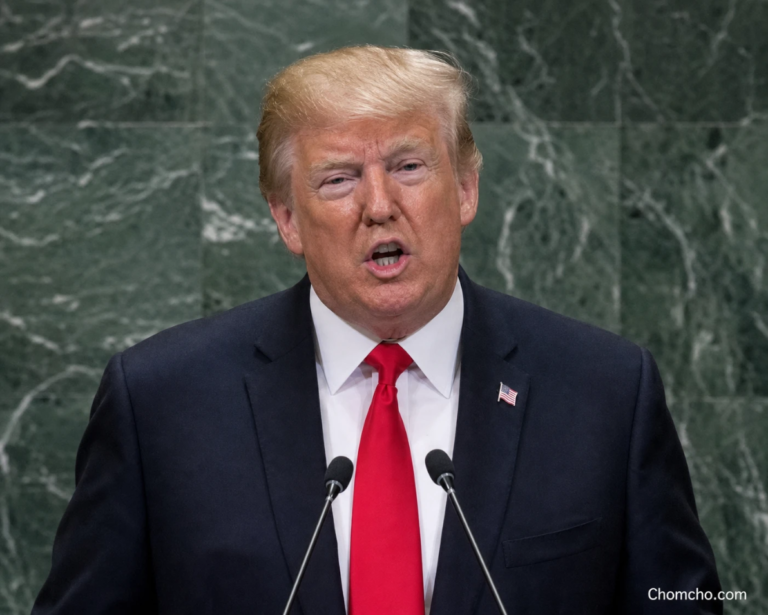
On Sunday, June 15, 2026, at 3:57 AM European time, President Donald Trump announced from France on Truth Social that the United States and Iran had reached a ceasefire agreement, ending more than three months of active conflict that began on February 28, 2026.
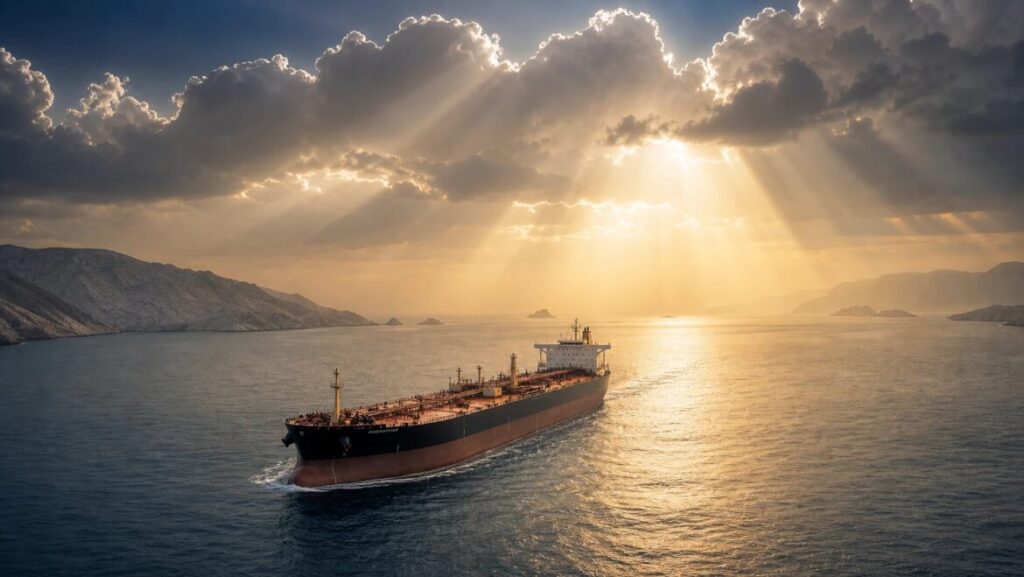
Trump’s post was characteristically direct: “I hereby fully authorize the toll free opening of the Strait of Hormuz, and, simultaneously herewith, authorize the immediate removal of the United States Naval blockade. Ships of the World, start your engines.”
Pakistani Prime Minister Shehbaz Sharif, the key mediator, posted on X within minutes that the deal “has been REACHED,” adding that “both sides have declared the immediate and permanent termination of military operations on all fronts, including in Lebanon.”
Iran’s Supreme National Security Council confirmed the agreement, and Iranian Deputy Foreign Minister Kazem Gharibabadi told Iranian media that the text of the memorandum of understanding had been finalized.
A formal signing ceremony is expected on June 19 in Switzerland.
This is not a permanent peace treaty. It is a Memorandum of Understanding, or MOU, that extends the existing ceasefire by 60 days and could be renewed by mutual consent.
During those 60 days, the Strait of Hormuz reopens without tolls, Iran clears the mines it deployed in the strait, the U.S. lifts its naval blockade of Iranian ports, and some sanctions waivers are issued allowing Iran to sell oil freely.
Nuclear talks begin during the same 60-day window.
The MOU is composed of 14 points according to Iranian state media, though the White House has not addressed the specific details publicly.
The formal US Iran ceasefire deal is the biggest diplomatic breakthrough since the war began.
But the details are still emerging, the gap between the American and Iranian versions of events remains significant, and the next 60 days will determine whether this is the beginning of a lasting peace or just another pause before escalation.
What both sides agree on, and where the versions diverge
On the broad strokes, Washington and Tehran agree: hostilities cease, the Strait reopens, Iran sells oil again, nuclear talks begin.
Treasury Secretary Scott Bessent confirmed there would be no sanctions relief until “Iranians agree that they have to turn over the highly enriched uranium.”
Trump himself said on Truth Social that Iran’s “nuclear dust” could be turned over to the U.S. or destroyed entirely.
But the Iranian version of events, as reported by state-affiliated Mehr News, includes points that go significantly further.
Their 14-point MOU reportedly includes U.S. military withdrawal from around Iran, the lifting of oil and financial sanctions, and — critically — an Iranian claim that Tehran’s armed forces had made threats that “helped facilitate progress in the negotiations” and “contributed to finalizing the text.”
In other words, Iran’s narrative is not one of surrender. It is one of strategic victory achieved through military pressure.
Iran’s Supreme National Security Council also previously claimed that the U.S. had accepted Tehran’s 10-point plan in earlier ceasefire negotiations. The White House denied this.
The pattern is consistent: both sides signed the same document and are describing two different outcomes to their domestic audiences.
That gap is not just a public relations problem. It is a signal of how difficult the next 60 days of nuclear talks will be.
How the world is reacting
Markets responded immediately and decisively.
Japan’s Nikkei 225 surged more than 5% in early Monday trading. South Korea’s Kospi jumped 5.7%. Taiwan’s Taiex climbed 2.7%. Australia’s ASX200 rose 1.5%.
U.S. stock futures were up 1% on the S&P 500 and 1.6% on the Nasdaq. Brent crude fell more than 4% on top of the nearly 3.4% drop from Friday.
Oil prices have now fallen nearly 20% from their peak during the conflict.
ANZ’s head of Asia research Khoon Goh told Al Jazeera: “The fall in oil prices will provide some relief for central banks around the world who were worried about the inflation outlook.”
Even European leaders, who have spent much of 2026 cataloguing what they see as Trump’s failures, found kind words.
French President Macron posted on X: “I welcome the agreement reached between the United States and Iran, the result of a diplomatic effort to which several partners contributed. I call for its rapid and complete implementation by all belligerents.”
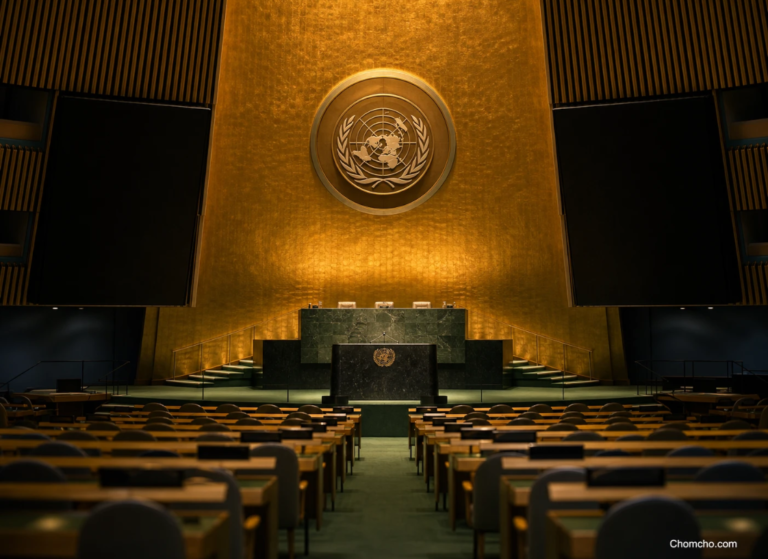
UN Secretary-General Antonio Guterres called it “a critical step” toward resolving the conflict, and expressed hope that the parties would “build on this new momentum.”
The New York Times framed the story around Trump praising Russia and China’s leaders while calling Netanyahu “a very difficult guy,” focusing on the diplomatic awkwardness rather than the achievement itself.
Whether that reflects legitimate skepticism or ideological opposition to Trump is a question readers can answer for themselves.
Israel disagrees. Iranian patriots disagree. Democrats demand details.
Israel is the most significant dissenting voice.
Prime Minister Benjamin Netanyahu said publicly that Israel is “not party” to the emerging deal.
Israeli officials told reporters the deal “endangers Israel’s security” and “fails to resolve the war’s key goals.”
Israeli Defense Minister Israel Katz previously stated that Israel will not withdraw from Lebanon, Syria, Gaza, or the West Bank, directly contradicting Iranian claims that the deal requires such a withdrawal.
On Sunday, even as Trump was announcing the deal, Israeli forces struck a Hezbollah command center in Beirut.
This attack prompted Iranian Parliamentary Speaker Mohammad Bagher Qalibaf to warn on X, referring to Hezbollah’s stronghold in southern Beirut: ‘The Zionists’ incursion into Dahiyeh has once again shown that America either lacks the will to fulfill its commitments or the ability to do so.’
Trump responded sharply, posting that the Israeli strikes “should not have happened, particularly on a special day when we are so close” to a deal.
Inside Iran, the regime’s decision to negotiate has not gone unchallenged.
Many Iranian patriots and secular opposition figures have publicly opposed any agreement that legitimizes the current regime rather than ending it.
Their view: a deal that keeps the Islamic Republic in power is not a peace deal for the Iranian people. It is a survival deal for a theocracy that has oppressed them for decades.
Their voices are largely absent from Western mainstream media but active on X and social platforms.
In Washington, Democratic skepticism was immediate.
Senator Tim Kaine and other members of Congress demanded to see the full details of the MOU, citing the lack of congressional notification.
“The American people deserve to know what commitments were made in their name,” Kaine posted on X.
The calls reflect a genuine constitutional debate about war powers, but also a pattern: Democrats have been skeptical of Trump’s Iran diplomacy since before the war began.
What could go wrong in the next 60 days
The risks are still real and multiple.
Iran’s revolutionary guard hardliners have not disappeared. A rogue commander could order an attack on a U.S. base or vessel, intentionally or through miscalculation, and collapse the agreement overnight.
Iran has already shown, repeatedly, that it can agree to a ceasefire and violate it within hours. The April 8 ceasefire was followed within days by renewed incidents.
Israel remains the wild card.
If Israeli forces strike Hezbollah in Lebanon again, Iran has both a political and military incentive to declare the U.S. has failed to control its ally and withdraw from the MOU.
Iranian proxy groups in Iraq, Syria, and Yemen retain the capacity to attack American bases even without Tehran’s direct order, and any such attack would immediately reopen the question of whether the ceasefire holds.
The nuclear talks themselves carry enormous risk.
Iran has consistently moved its position on enrichment, inspection access, and stockpile disposal.
Sixty days may not be enough time to resolve questions that have defeated diplomats for two decades. We’ll see about it as events unfold.
Finally, the risk is that the MOU expires without a nuclear framework in place, returning both sides to the edge of renewed conflict with oil markets, global shipping, and American credibility all hanging in the balance again.
What will likely change, and what probably will not
If the deal holds and nuclear talks make progress, the consequences for the global energy order will be significant and some will be irreversible.
The Strait of Hormuz crisis has already accelerated what was already a trend: the world’s largest energy consumers are investing heavily in infrastructure that reduces Hormuz dependency.
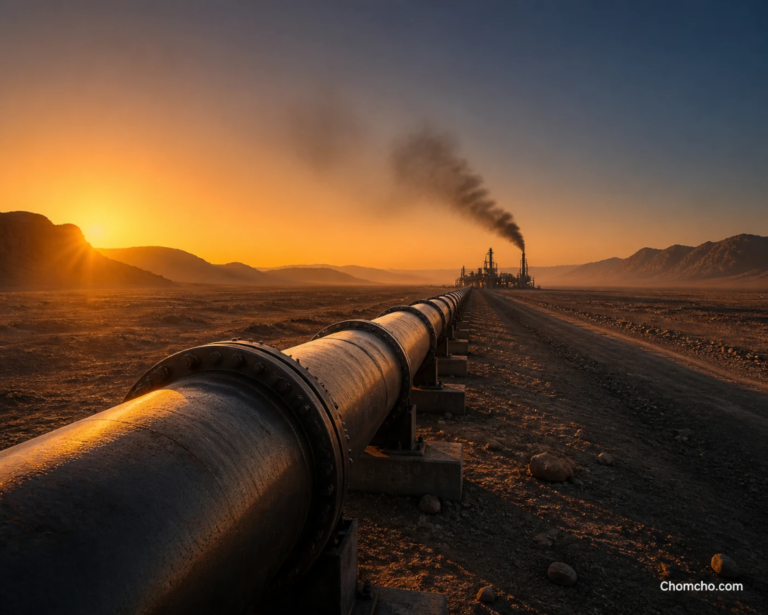
Gulf states, particularly Saudi Arabia and the UAE, are accelerating pipeline and overland corridor projects that route oil to the Red Sea and Mediterranean without passing through the strait.
Countries in this hemisphere, including the United States, Venezuela under its new interim government, and Guyana, whose offshore oil fields are among the fastest-growing in the world, are increasing production to fill the gap.
OPEC’s monopoly on global oil pricing took an arguably irreversible hit during this conflict.
When the strait was closed, buyers who could not get Gulf oil turned to American producers, Norwegian fields, West African suppliers, and Latin American alternatives.
Some of those supply relationships will not reverse even when Gulf oil flows freely again.
Saudi Arabia remains the dominant player, but the cartel’s leverage over prices has been permanently reduced.
China’s strategic calculus has also shifted.
Beijing bought Iranian oil at a deep discount during the conflict, but the crisis exposed China’s vulnerability to Hormuz disruption and accelerated its push for both domestic energy alternatives and expanded naval capacity to protect its sea lanes.
Expect China’s naval modernization program to accelerate further, with particular attention to force projection in the Indian Ocean and Persian Gulf.
For the United States, a successful deal would represent a major increase in international prestige.
America ended a war through military force and diplomatic skill, reopened the world’s most important energy corridor, and extracted commitments on nuclear non-proliferation, all without a ground invasion and all in roughly 100 days.
No European multilateral process achieved anything comparable.
As John 16:33 reminds us: “In this world you will have trouble. But take heart! I have overcome the world.”
Trump’s peace through strength strategy was built on that same conviction: that strength, clearly demonstrated, opens doors that weakness never could.
The next 60 days will test whether the door that just opened leads somewhere lasting.
Now let’s hope our president gets some sleep to deal with those European leaders at the G7 summit!