
This post is also available in:
 Português
  Español
  Français
  Deutsch
  Italiano
  Русский
Summary
Marco Rubio explained the order the next day. "We don't just want free and fair elections, we want a durable republic." Debt restructuring and institutions first, the vote when a winner can actually govern.
Lula says Venezuela's sovereignty is over. The facts say otherwise. Rodríguez is still in charge, with the same party and the same interior minister, and the sovereignty Venezuela lost years ago went to Beijing, Moscow and Tehran, not to Washington.
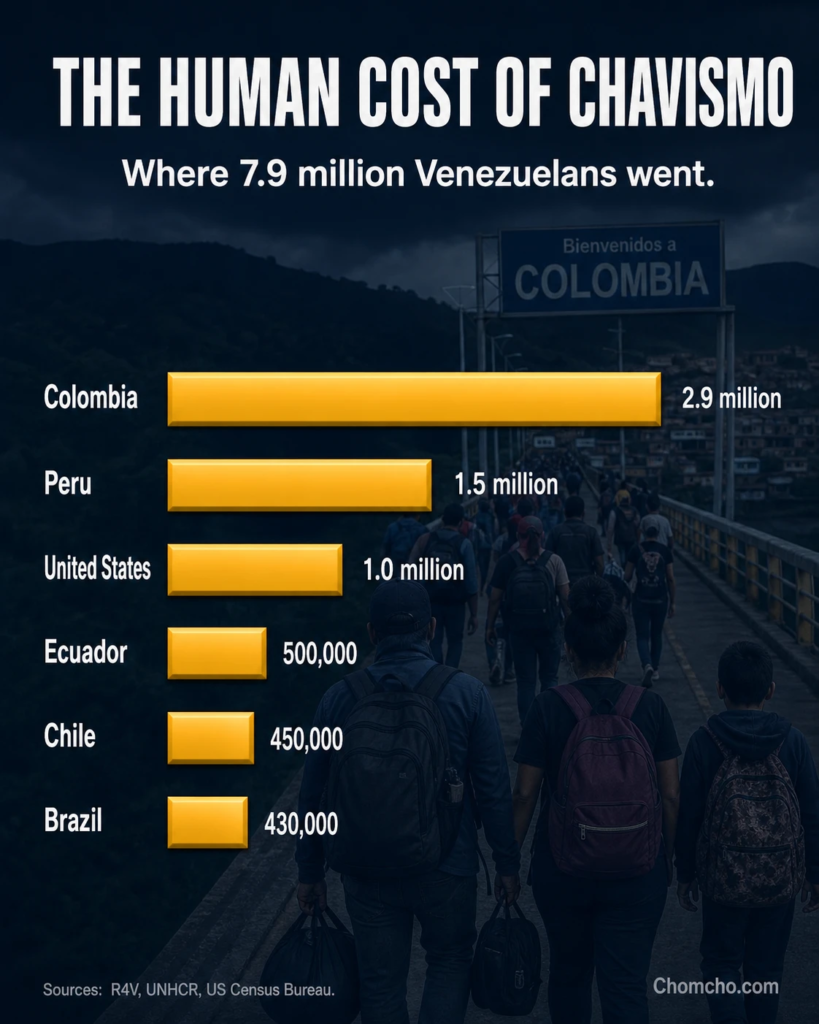
Eight million Venezuelans live abroad. Colombia holds 2.9 million, Peru 1.5 million, the United States about 1 million. They will only come home when there is an economy to come home to.
Colombia has changed sides in the drug war. Abelardo de la Espriella will deal with Venezuela through Washington, and every country on Venezuela's western flank is now aligned with the American position.
With Hormuz shut, Texas refineries built for heavy crude are running on Orinoco oil. Chevron is investing 7,000 million dollars, and the gold frozen in London is coming under US Treasury custody.
China is owed up to 15,000 million dollars and gets no oil. Russia admits its companies are being pushed out. Iran lost its best partner in the hemisphere. That is the Donroe Doctrine at work.
Rubio's three phases, stabilization, recovery, transition, are holding. Elections matter, but they can wait while the foundations are laid. American foreign policy has bigger fights in Iran and China.
Rebuild the house. Then choose who lives in it.
Fifteen minutes with Trump, and one sentence about elections
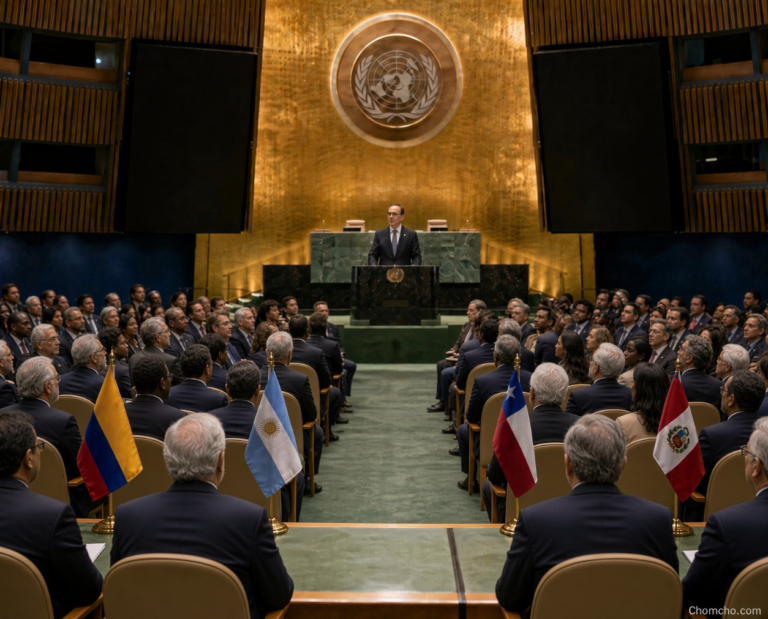
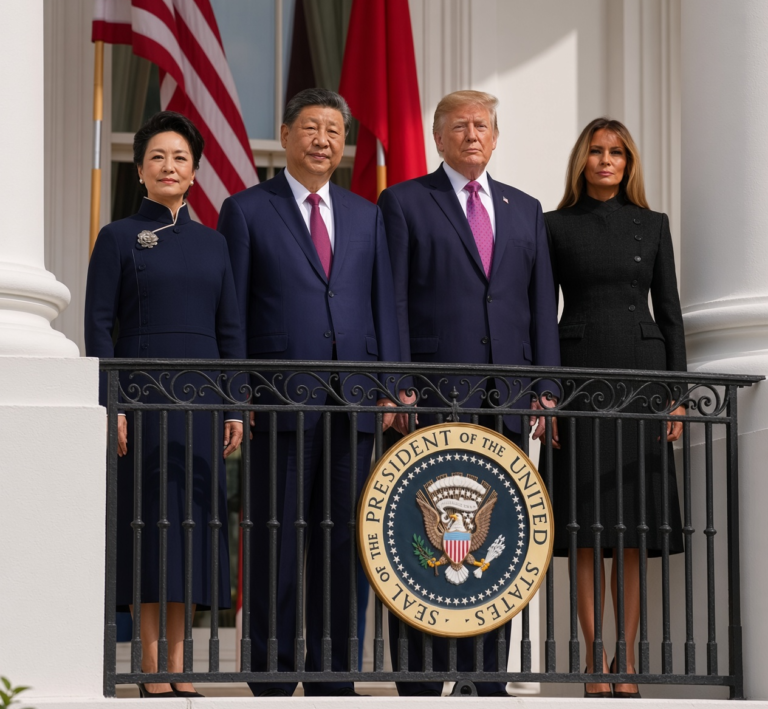
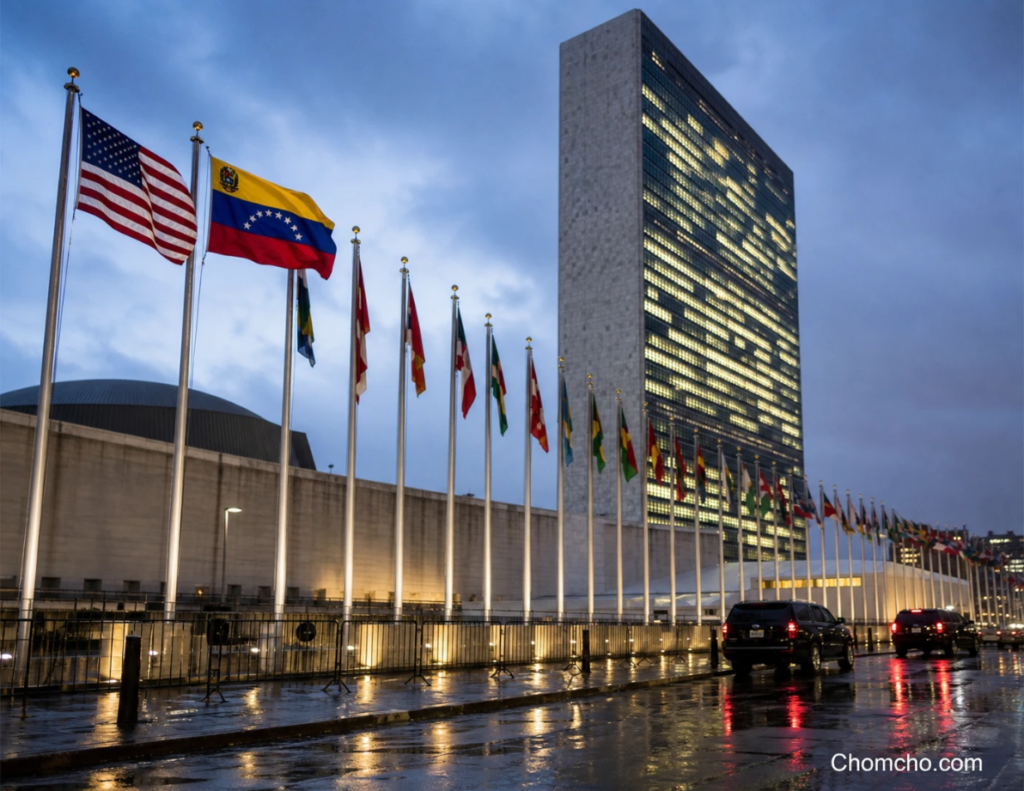
On Tuesday night, during a reception for foreign leaders at the UN General Assembly, President Donald Trump met Venezuela’s interim president Delcy Rodríguez for about fifteen minutes.
She called the meeting historic.
It was the first time the two had met since American forces captured Nicolás Maduro in Caracas on January 3 and flew him to New York, where he sits today in a Brooklyn detention center a few miles from the UN building.
Secretary of State Marco Rubio, Treasury Secretary Scott Bessent, Chief of Staff Susie Wiles and Deputy Chief of Staff Stephen Miller were in the room.
According to White House sources quoted by Axios, Trump did most of the talking and did not demand an election date.
He did say one thing that matters: “You have to have elections at the end of the day.” One of the sources described the tone: “It was warm. It was friendly. But it was also direct.”
Rubio’s order for the Venezuela transition
Rubio filled in the rest on Wednesday.
In remarks reported by the Spanish news agency EFE, he said the two leaders discussed debt restructuring, economic stabilization and the political transition, and he explained the order Washington wants.
“We don’t just want free and fair elections, we want a durable republic. What would threaten a durable republic in Venezuela is someone getting elected and inheriting an absolute economic and social catastrophe.”
He added that after many years of destruction and the June earthquakes, “debt restructuring is fundamental” and must come before a vote is called.
That is the whole American plan for the Venezuela transition in three sentences.
Rebuild the economy and the institutions first. Hold the vote when a winner can actually govern.
Rubio also said leaders of the 2015 National Assembly are already in talks with the interim authorities, and that the political parties themselves must be rebuilt because so many of their leaders are still abroad.
Rodríguez, for her part, told the General Assembly on Wednesday, “there will be elections in Venezuela,” without a date, and added that “democracy is not measured by the mere existence of elections.”
She also said, “This is the time to build the nation that many people want to return to.”
The State Department was quick to say the meeting does not legitimize her government and that “the strategy stays in place.”
Representative María Elvira Salazar of Miami put it more bluntly on CBS: “Delcy is just a necessary evil for now to stabilize.”
Lula’s sovereignty complaint does not survive the facts
Brazil’s president Luiz Inácio Lula da Silva told CNN this week that “Venezuela’s sovereignty is over” and that Trump plays a “very dominant role” in Caracas.
He repeated the theme from the UN podium.
The simplest answer is that Rodríguez is still in charge. A country whose sovereignty is over does not keep the same ruling party, the same interior minister and the same Assembly speaker, her brother Jorge Rodríguez.
Trump would very likely have preferred someone else in Miraflores. He is working with the government that exists.
The second answer is that Venezuela lost its sovereignty years ago, and not to Washington.
Under Maduro, oil revenue flowed into an account controlled by Beijing to service loans, Russian and Iranian advisers sat inside the state, and Cuban intelligence officers worked inside the barracks.
Every agreement signed since January was signed by Venezuelan officials in Caracas under laws passed by the Venezuelan Assembly.
The third answer is Lula’s own record. He never asked Maduro to hold a real election after the stolen vote of 2024.
He asks Rodríguez now, when the government in Caracas is no longer his friend.
Sovereignty, in this argument, means only one thing: who is allowed to be influential in Venezuela.
Eight million reasons to get the order right
Rubio said Wednesday that eight million Venezuelans live abroad and want to go home, but need “confidence” that they will be able to live, invest and build their lives there.
The UN refugee agency’s planning figure for 2026 is 7.9 million. That number is the human cost of Chavismo, and it is also the map of the region’s foreign policy problem.
The destinations, according to the UN-led R4V platform and the US Census Bureau, are these. Colombia, about 2.9 million. Peru, about 1.5 million. The United States, about 1 million, with 474,000 in Florida alone. Ecuador, about 500,000. Chile, about 450,000. Brazil, about 430,000.
Spain is the largest destination outside the Americas. In the first half of 2025, Venezuelans filed more asylum claims in Europe than Syrians or Afghans.
Those countries absorbed the schools, the hospitals, the labor markets and, in some cases, the criminal networks that came with the exodus.
The Tren de Aragua gang was born in a Venezuelan prison and now operates from Santiago to New York.
Mass migration on this scale is not only a humanitarian story. It shaped Chile’s last election, it strained Colombia’s border departments, and it became a US border issue when hundreds of thousands of Venezuelans reached the Darién Gap and the Rio Grande.
More than 600,000 held Temporary Protected Status in the United States before the program ended in 2025.
The exodus started with an economic collapse. It will only reverse with an economic recovery, which is exactly why Rubio puts the economy before the ballot.
The returnees should also have a role in the new republic. Many of the professionals, engineers and small business owners Venezuela needs are in Bogotá, Lima, Miami and Madrid today.
A transition designed only for those who stayed would leave out the people best able to rebuild the country.
Colombia changes sides in the drug war
The most important neighbor is Colombia, and Colombia has a new president.
Abelardo de la Espriella took office on August 7 after defeating Gustavo Petro’s candidate by less than one point.
As a candidate he said he would never sit down with Rodríguez and would handle Venezuela “through the United States.” In July, before taking office, his team and Caracas already clashed over who would lead earthquake reconstruction.
This matters for the drug war.
Under Petro, Washington decertified Colombia as a counternarcotics partner in September 2025, the first time since 1997, and Petro publicly fought Trump over the strikes on drug boats in the Caribbean.
De la Espriella campaigned on the opposite line.
The open question is whether Bogotá will now share intelligence and coordinate with Washington on the Venezuelan border, where the ELN and the remnants of the FARC run cocaine into the Cartel de los Soles networks.
Ecuador and Peru are already there. Daniel Noboa’s government declared the Cartel de los Soles a terrorist organization in 2025, and Peru, Argentina and Paraguay followed.
With Colombia joining that column, every country on Venezuela’s western flank is aligned with the American position for the first time in a generation.
Inside Venezuela, progress is harder to measure.
The capture of Maduro removed the man Washington indicted as the head of the Cartel de los Soles, with a 50 million dollar reward on his head. The boat strikes of late 2025 cut some routes.
But Diosdado Cabello, the interior minister who denies the cartel exists, is still in his job. Until that changes, the drug war in Venezuela is unfinished.
Oil, gold and minerals in the middle of an oil crisis
The Trump-Rodríguez meeting happened while the Strait of Hormuz remains a war zone.
The Iran war pushed Brent above 118 dollars in March and back to 109 in early September.
Gulf Coast refineries lost their Saudi and Iraqi barrels and turned to Venezuela, and there is a reason that works. Texas refineries were built to run heavy sour crude, and Orinoco Belt oil is exactly that grade.
“You need whatever barrel of heavy crude you can get,” S&P Global analyst Debnil Chowdhury told the Texas Tribune.
In April alone Venezuela exported about 1.1 million barrels a day, worth about 3,700 million dollars, according to the Council on Foreign Relations.
In this crisis, Venezuelan oil is not a luxury for the United States. It is a supply line.
Washington has moved fast.
In late August the two governments announced a joint venture over seventeen Orinoco fields holding an estimated 65,000 million barrels, with the US Defense Department taking a 35 percent stake.
Chevron, the only American major that never left, followed with a plan to invest 7,000 million dollars over five years and reach about 600,000 barrels a day.
Not everyone is convinced. Exxon’s chief executive Darren Woods called Venezuela “uninvestable” in January, and his company says nothing has changed.
Regional capital is following, though: Colombia’s Grupo Gilinski signed its own agreement in Caracas this month.
Gold is the other file. Venezuela’s 31 tons at the Bank of England, worth about 4,300 million dollars at today’s prices and about 15 percent of the country’s reserves, have been frozen since 2018.
In August, the interim government and the opposition’s 2015 Assembly agreed in US-brokered talks to seek the gold jointly, to be held in a US Treasury account with outside audits and used as collateral for reconstruction after the June earthquakes that killed more than 6,000 people.
A new mining law opens gold, diamonds and rare earths to foreign companies, though rare earth deposits in Venezuela remain unconfirmed.
Extraction or leverage, the think tank debate
Some critics call all of this extraction. The Washington Office on Latin America asks whether the Venezuela transition is a “democratic transition or authoritarian adaptation.”
The International Crisis Group describes a “Donroe Doctrine” built on access to oil and minerals.
On the other side, the Atlantic Council argues that Washington “retains significant leverage and can use it,” proposes benchmarks for Rodríguez at three, six, nine and twelve months, and warns that she “will likely resist a full-scale transition to democracy.”
The Center for Strategic and International Studies notes a practical problem: China’s oil-backed loans put Beijing “ahead of the bondholders in any restructuring.”
Rubio’s point is simpler than all of them: a government elected on top of an empty treasury, with an external debt of 150,000 to 200,000 million dollars, would fall within months.
China, Russia and Iran lose the foothold
The day before his capture, Maduro met China’s special envoy for Latin America. Beijing’s assurances, as the Center for Strategic and International Studies noted, “resulted in zero meaningful protection.”
China is owed somewhere between 10,000 and 15,000 million dollars, repaid in oil through an account it controlled, and Venezuelan exports to China fell to zero after January.
Beijing’s foreign ministry now insists that China’s “lawful rights and interests in Venezuela must be protected.” The RAND Corporation warns that China can still play spoiler in any debt restructuring.
Russia has already conceded. Foreign Minister Sergei Lavrov said in February that Russian companies were being “quite openly forced out” of Venezuela.
Iran, which signed hundreds of agreements with Caracas over two decades, lost its most important partner in the Western Hemisphere at the same moment its own regime came under American fire.
This is the Donroe Doctrine in practice, the White House’s Monroe Doctrine corollary of late 2025.
Its stated aims include a hemisphere free of hostile foreign ownership of key assets.
Panama left China’s Belt and Road in 2025, and in January its Supreme Court annulled the Hong Kong operator’s concession over the canal ports.
Venezuela is the larger prize. Whatever one thinks of the methods, the result is that China is less influential in Latin America today than at any point in fifteen years, and that outcome belongs to this administration’s foreign policy.
Rubio’s order is the right order
Rubio laid out a three-phase plan on January 7: stabilization, recovery, transition.
Nine months later the plan is holding. Diplomatic relations were restored in March. Human rights groups counted 659 political prisoners released in the first two months. The opposition sits at a negotiating table. The oil flows north instead of east.
Elections matter. María Corina Machado, the 2025 Nobel Peace laureate, was refused entry to her own country three times this week, and that is not acceptable for long.
But an election held in a bankrupt country with rebuilt parties still in exile would hand the winner a catastrophe, and possibly hand Chavismo a comeback. Rubio is right that they can wait, if necessary, while the foundations are laid.
American foreign policy has bigger fights. Iran is at war. China is the strategic rival of the century.
The Venezuela transition is one front in the geopolitics of the hemisphere, and it is going well. Keep the pressure on Caracas, keep the neighbors aligned, and let the Venezuelans come home to something worth voting for.
Rebuild the house. Then choose who lives in it.