
This post is also available in:
 Português
  Español
  Français
  Deutsch
  Italiano
  Русский
Trump Escalates Against Cuba — And CARICOM Is Nervous
Rubio CARICOM Cuba strategy sharpens as US sanctions Díaz-Canel personally and Visa and Mastercard cut off the island.
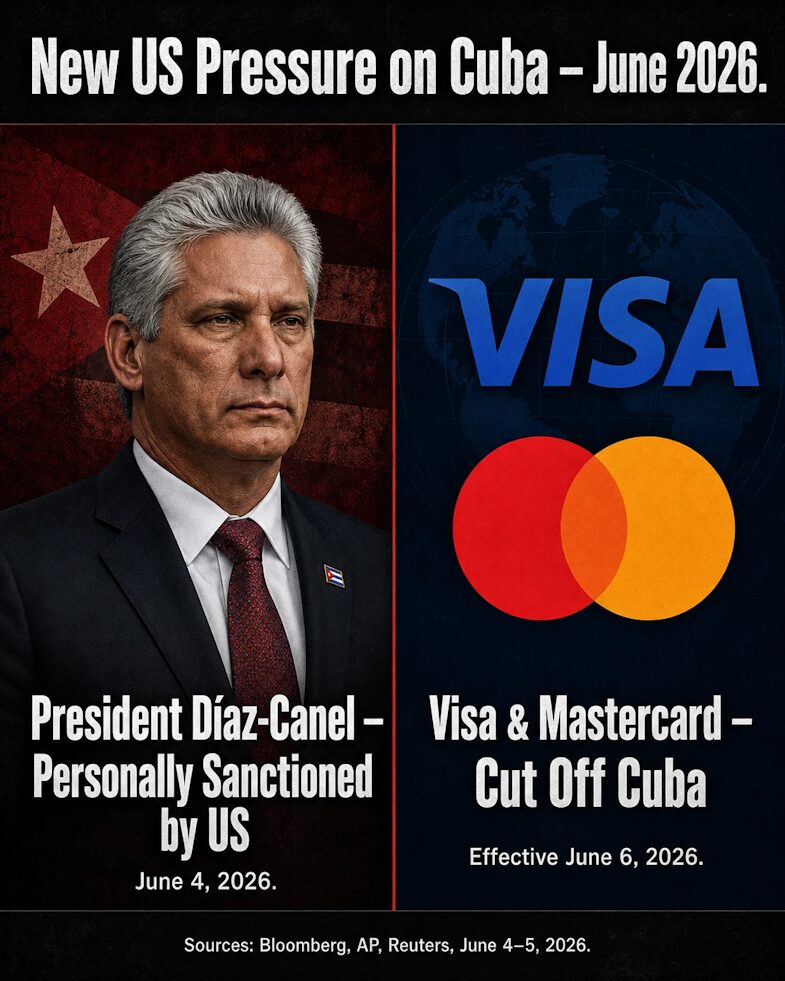
The latest Trump sanctions Cuba move hit hardest on June 4, 2026 — when Washington sanctioned Cuban President Miguel Díaz-Canel and members of his own family personally — just hours ago.
That is not a warning shot. That is a declaration that the United States is done tolerating the Castro regime’s successors.
Effective June 6, Visa and Mastercard will also stop processing transactions in Cuba entirely. Major corporations have already fled the island under US pressure. The oil blockade tightens.
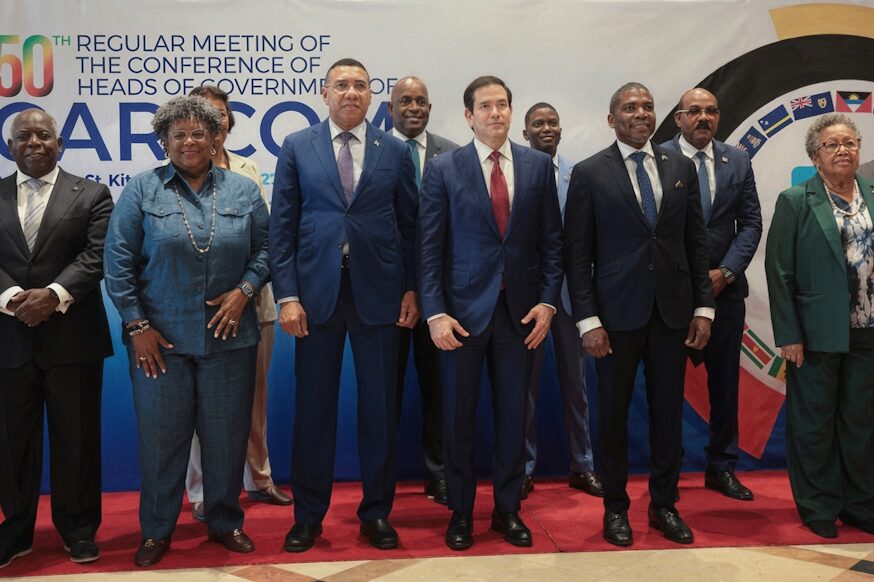
And just three months ago, Secretary of State Marco Rubio flew straight from the State of the Union address to Saint Kitts and Nevis — skipping sleep — to personally attend the 50th CARICOM Heads of Government Summit on February 25, 2026.
That trip was not a coincidence. It was preparation.
What CARICOM told Rubio — and what keeps them up at night
The Caribbean Community, known as CARICOM, is a 15-member bloc that includes Jamaica, Barbados, Trinidad and Tobago, the Bahamas, Guyana, Haiti, and nine other small island states.
Cuba is not a member but it dominates every conversation.
At the February summit in Basseterre, Caribbean leaders delivered a direct warning to Rubio: a Cuban humanitarian collapse would destabilize the entire region.
They are right to worry.
Cuba currently has medical brigades operating in at least seven CARICOM states. If Havana’s economy implodes, those doctors go home.
Cuban rafters would also flood the Bahamas, Jamaica, and the Cayman Islands. Regional disaster response and shipping lanes would be disrupted.
Cuba’s Health Minister has warned that US sanctions now threaten the medical treatment of 5 million Cubans with chronic illnesses, 16,000 cancer patients needing radiotherapy, and 12,400 on chemotherapy.
The US position, correct in our view, is that Havana prioritizes military spending and tourism over its own people.
The regime, not the embargo, is the problem.
Narco-boats, gang wars, and the Caribbean security crisis
Drug trafficking was the other urgent item on the CARICOM agenda — and it just got more urgent. This week, US forces struck an alleged narco-boat in the Caribbean Sea, killing three.
That brings the total killed in US maritime drug interdiction strikes to at least 181 since last year.
CARICOM leaders are nervous. They want rules of engagement. They want to know where the next strike will happen. And they want intelligence cooperation — not surprises.
Another concern is how Haiti hangs over everything.
Gang violence has turned Port-au-Prince into a war zone despite the arrival of a Kenya-led security mission backed by Washington.
CARICOM has been the lead mediator on Haiti for years. Rubio needs them engaged and cooperative. Without CARICOM’s political cover, the Haiti mission collapses.
That is leverage these small nations have, and they know it.
What Washington really wants — and China’s shadow over the Caribbean
Energy security, illegal immigration, and China.
Those are Washington’s three non-negotiable priorities in the Caribbean right now.
On immigration, the message is simple — the Trump administration does not want a new wave of Cuban and Haitian migrants reaching Florida.
On energy, the US wants CARICOM states to wean themselves off Venezuelan and Cuban dependency.
Venezuela’s PetroCaribe program once supplied cheap oil to 14 Caribbean nations at its peak — roughly 100,000 barrels per day.
That program is finished. Maduro is gone. The vacuum is real.
And into that vacuum, China has moved aggressively.
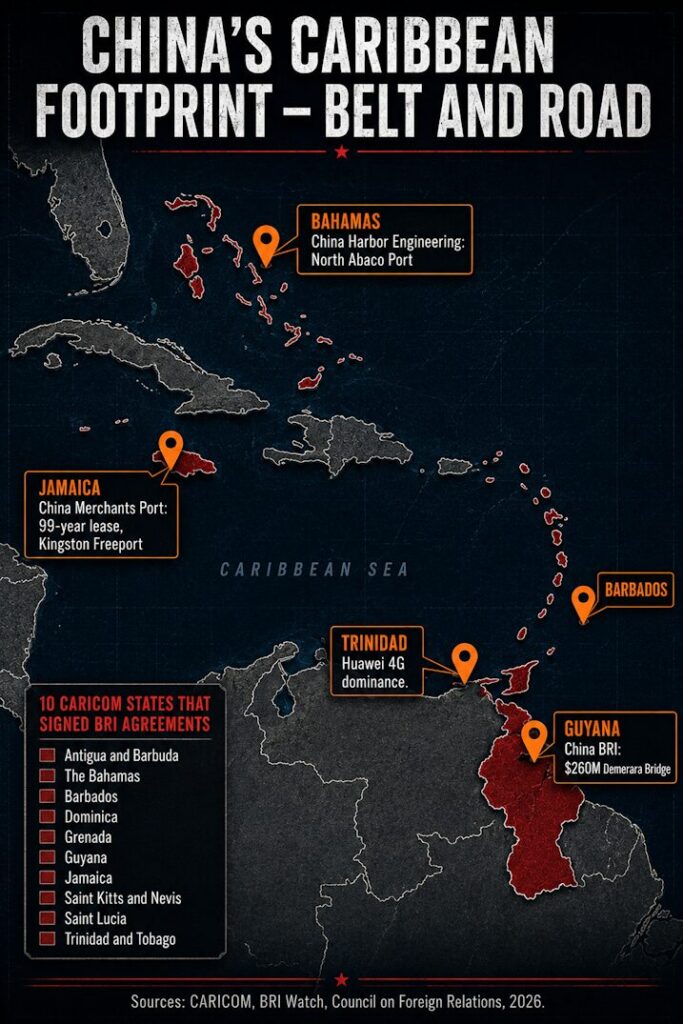
China Merchants Port holds a 99-year lease on Kingston Freeport in Jamaica. China Harbor Engineering built the North Abaco Port in the Bahamas.
Ten of 15 CARICOM states have signed Belt and Road Initiative agreements with Beijing.
Guyana received $260 million in Chinese financing for its Demerara bridge. Huawei dominates 4G telecommunications in Jamaica, Trinidad, and Guyana.
China is already in the Caribbean — and Washington knows it
Rubio told the Senate Foreign Relations Committee just two days ago — on June 2 — that “competition with China now touches nearly every aspect of American foreign policy.”
He is not exaggerating. The Caribbean is Exhibit A.
Chinese dual-use ports, Chinese telecommunications infrastructure, and Chinese diplomatic influence in America’s own backyard are exactly what keeps the State Department awake.
Each CARICOM state has its own priorities to ask: Trinidad wants a US sanctions waiver to develop cross-border gas with Venezuela. Jamaica wants energy help to replace lost PetroCaribe. Barbados wants climate finance and banking access.
None of them are getting everything they want. But all of them are getting a clear message from Washington — you are either with America First or you are drifting toward Beijing.
And Beijing is not a friend.
The Trump sanctions Cuba strategy keeps tightening around Havana. The Caribbean watches. And Rubio’s trip to Saint Kitts was just the beginning.