
This post is also available in:
 Português
  Español
  Français
  Deutsch
  Italiano
  Русский
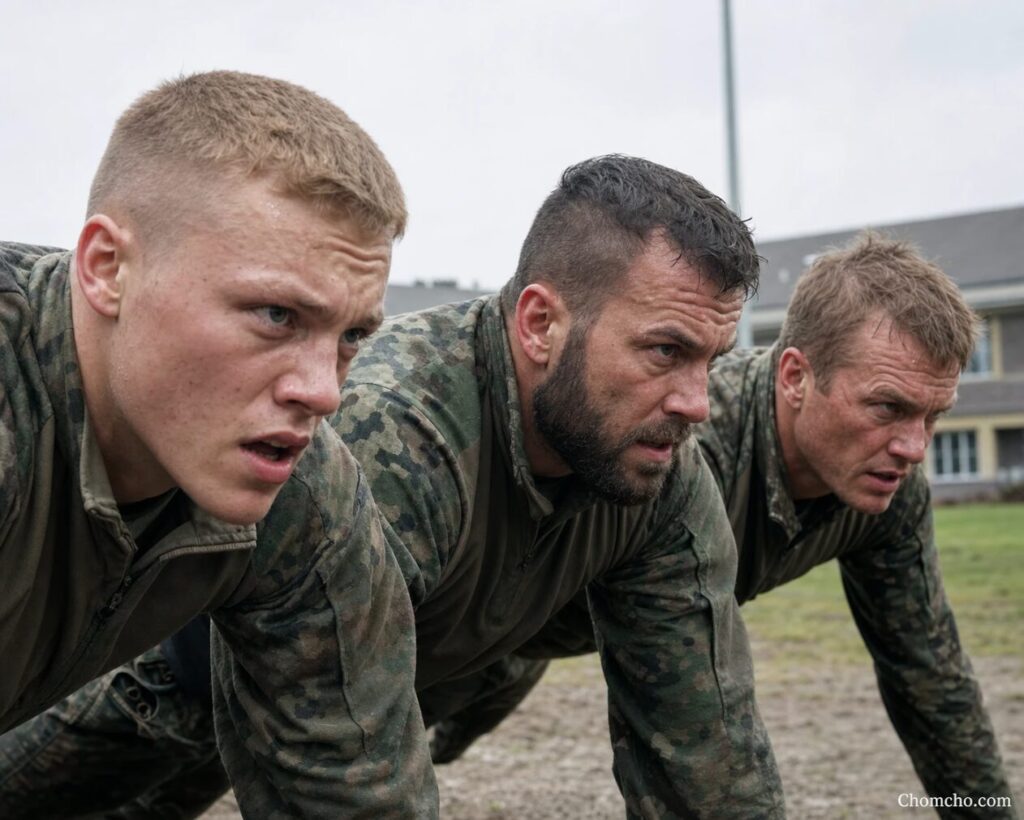
Record objector numbers reveal the true size of the Germany rearmament crisis.
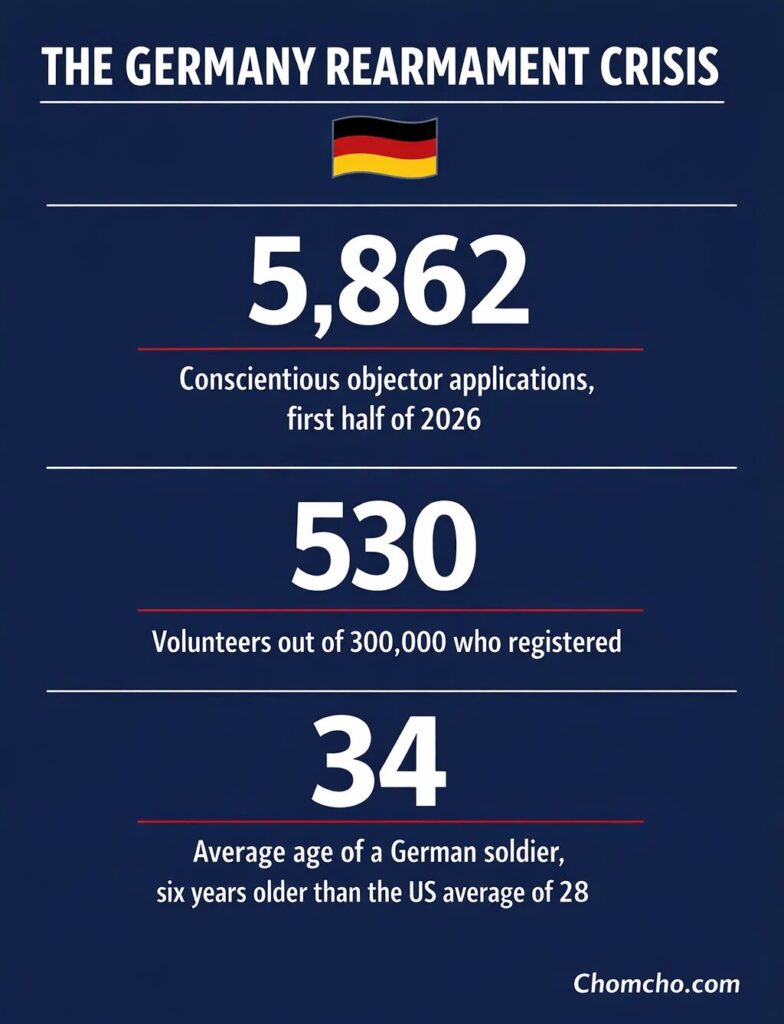
This week, The Guardian reported official figures from Berlin: 5,862 young Germans applied for conscientious objector status in the first six months of 2026.
That is more than in all of last year, and roughly double the total from 2024.
The timing could not be worse for Chancellor Friedrich Merz. He took office promising to turn the Bundeswehr, Germany’s armed forces, into “Europe’s strongest conventional army.”
Thousands of his young countrymen are answering with paperwork that says: count me out.
A right born from Germany’s own history
Conscientious objection is not a legal trick in Germany. It is a constitutional right, written into Article 4 of the Basic Law of 1949.
The text guarantees that no person can be forced into armed military service against his conscience.
The founders of modern Germany wrote that protection on purpose. After the Nazi catastrophe, the new republic wanted a permanent guarantee that the state could never again push its youth into war.
Here is the historical irony. The constitutional shield created because of German militarism is now blocking German rearmament. An applicant only needs to send a signed letter and a personal statement explaining his reasons.
The numbers behind the crisis
The objector wave is only one symptom of a much deeper problem.
The Bundeswehr has about 185,000 active soldiers. Berlin wants 260,000 by the middle of the next decade, plus 200,000 reservists.
The force is not growing fast enough, and it is aging: the average German contract soldier is now 34 years old. For comparison, the average American active duty member is under 29.
The new service law shows the same weakness.
Since January, every 18-year-old German man must complete a questionnaire about his willingness to serve.
According to figures reported by the AFP news agency, roughly 300,000 young men completed the forms between January and May. Only about 530 volunteered, roughly one volunteer for every 600 who registered.
Even NATO’s frontier exposes the problem. Defense Minister Boris Pistorius admitted this month that Germany’s first permanent foreign brigade, based in Lithuania, is still about 1,000 soldiers short of its planned 4,800.
The response from Berlin?
A YouTube reality show about life in the barracks, produced in streaming style to attract young recruits.
When an army needs television producers to fill its ranks, the problem is not marketing.
The youth rebellion
The resistance started early. In May, German school pupils organized strikes and boycotts against the rearmament policy itself, protesting before they were even old enough to serve.
The generational divide is measurable.
A Forsa survey found that 54 percent of Germans favor compulsory military service. But among those aged 18 to 29, the people who would actually wear the uniform, 63 percent oppose it.
Older citizens approve wars that the young must fight.
The socialist opposition is open about its role. Jan van Aken, co-leader of The Left party, publicly advised young men to smoke marijuana before the medical exam in order to be declared unfit.
His party is now preparing a full guide on how to avoid military service.
To be fair, there is a small counter-current. According to German press reports, 233 Germans reversed their previous objector status in the first quarter of 2026, choosing to become available for service again.
Some young Germans are willing to serve their country. But their numbers remain too small.
A warning sign of state control
One episode this year deserves its own warning.
The new service law quietly required all German men aged 17 to 45 to request Bundeswehr permission before any foreign stay longer than three months.
Think about that. A free citizen of a democracy asking the army for permission to travel. That is not defense policy. That is a step toward the practices of the police states Germany claims to oppose.
To Germany’s credit, the public reacted with outrage, and the defense ministry issued a general exemption within days.
The rule now applies only if conscription formally returns. Free societies correct themselves. But the fact that the rule was written at all should worry every German.
The countries that take defense seriously
Now compare Germany with its smaller neighbors.
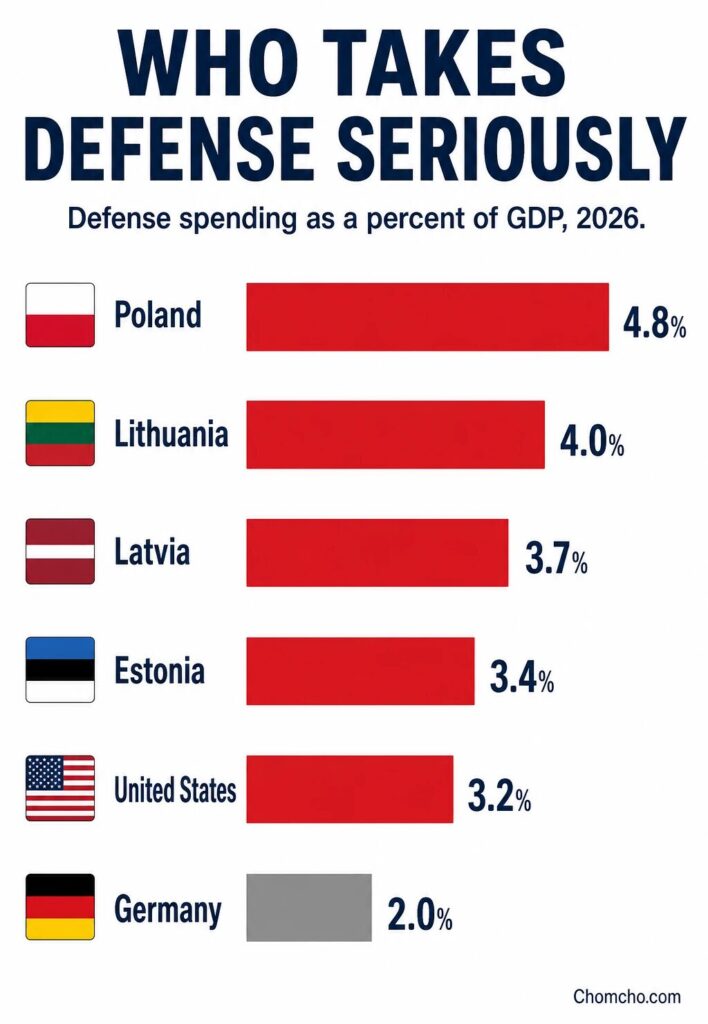
Poland will spend 4.8 percent of its economy on defense in 2026, about 55,000 million dollars, the highest share in all of NATO and well above the United States at 3.2 percent.
Lithuania spends 4 percent, Latvia 3.7, and Estonia 3.4. Germany spends about 2 percent.
Croatia restarted compulsory military service in March after a break of 17 years. The results embarrass Berlin. Of the first 354 conscripts, only 10 declared conscientious objection, a rate of 3 percent. Demand was so strong that the second training class was expanded.
The pattern is impossible to miss.
The small nations closest to Russia act with seriousness and sacrifice.
Meanwhile, the rich Western European countries that deliver constant moral lectures to America and to the world cannot convince their own sons to defend them.
Conscription may return in 2027
The final act is predictable.
Senior lawmaker Thomas Röwekamp, from Merz’s own party, told the AFP news agency that Germany could reinstate compulsory conscription as early as 2027, because the volunteer system has failed.
The new law already allows the state to select recruits by lottery if numbers fall short.
The circle is closing. A government that cannot persuade its youth will eventually compel them.
Everything reported so far in this article comes from verified facts and official figures. What follows is different: our evaluation of what this crisis actually means, for Germany, for NATO, and for America.
Our evaluation: a moral crisis before a military one
Here at Chomcho, we believe Germany’s problem is not money, equipment, or recruiting videos. It is the lack of moral clarity.
Two generations of Germans were educated to feel embarrassment about their own nation, taught that patriotism itself is dangerous.
A young man will not risk his life for a country he was trained to apologize for.
Germany is finally acting, and that deserves recognition.
However, the attitude behind the objector wave looks less like Christian conviction and more like comfortable anti-war liberalism, the kind socialist politicians encourage when they treat the duty of defense as a joke about marijuana.
The conservative Heritage Foundation warned in a report on German security policy that Berlin’s rearmament “needs to move quickly,” precisely because America must concentrate its forces against the far larger threat of China.
Every German soldier who does not exist is a burden that falls, sooner or later, on an American soldier and an American taxpayer.
President Trump spent years demanding that Europe carry its own weight, and he was mocked for it.
The objector statistics from Berlin prove his point better than any speech.
Germany’s military weakness and its economic decline, which we have covered in its auto industry crisis, are symptoms of the same disease: a society that lost confidence in itself.
America should encourage its allies, but never again pay for their defense.
The nations worth imitating are Poland, the Baltic states, and Croatia, small countries with clear eyes.
Strength, faith, and love of country still win!