
This post is also available in:
 Português
  Español
  Français
  Deutsch
  Italiano
  Русский
Chile offers its Pacific ports to Argentina in a new Chile-China corridor race
This month, Chile’s government, led by President José Antonio Kast, the first true Conservative president the country has had in 35 years, proposed a new Patagonian-Pacific energy corridor to neighboring Argentina, a move that also speaks directly to the wider Chile China corridor competition reshaping the continent.
Chilean Energy Minister Ximena Rincón and Foreign Minister Francisco Pérez Mackenna traveled to the Vaca Muerta gas field in Neuquén Province, the world’s second-largest reserve of unconventional natural gas, and made the offer directly.
“Argentina can reach the Pacific through our ports and connect with Asia. We can take advantage of our infrastructure and interconnect energetically with this country,” Rincón said.
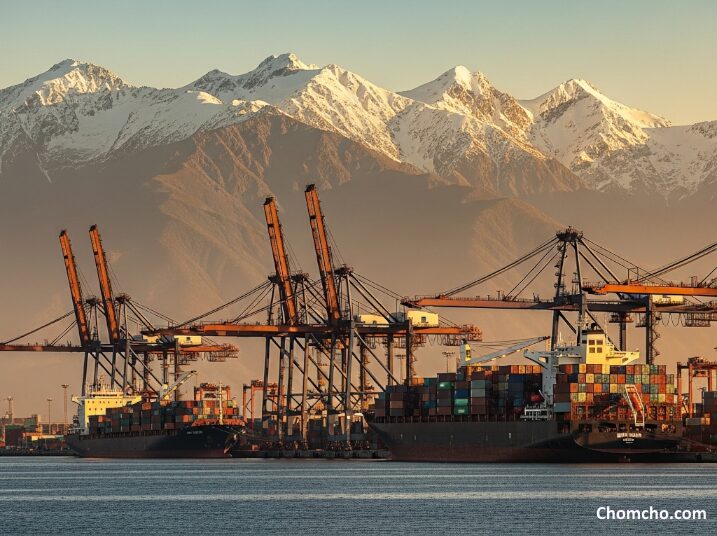
The plan would use Chilean port and LNG terminal infrastructure in the Biobío region to ship Argentine gas and oil across the Pacific to Asian markets, cutting logistics costs compared to the traditional Atlantic shipping routes.
Kast met with Argentina’s Javier Milei to discuss the proposal, a notable moment of cooperation given that Argentina cut gas exports to Chile abruptly during a crisis in the 2000s, a wound that took years to heal.
Vaca Muerta’s operator YPF is already restoring a pipeline connecting Neuquén to ENAP’s refinery in Biobío, with a single-point mooring export terminal expected to be operational by late 2026.
Why Chile needs this deal: Peru’s Chancay port and the Chile China corridor competition
This proposal is not just an act of regional generosity. It is partly defensive.
Peru’s Chinese-built Chancay megaport, a 1,300 million dollar Belt and Road Initiative project operated by China’s COSCO Shipping, opened in November 2024 and has already begun reshaping Pacific trade in South America.
Chancay offers a direct Shanghai route that cuts shipping time to just 23 days, down from 35 to 40, and slashes freight costs by up to 20 percent.
Chinese goods now account for 68 percent of imports through the port, and COSCO expects 19,000 Chinese vehicles to pass through Chancay in 2026 alone, many headed onward to Chile, Ecuador, and Colombia.
Analysts at Speyside Group have warned bluntly that Chancay’s rise threatens Chile’s own Pacific ports, San Antonio and Valparaíso, “relegating Chile to a secondary position in terms of commercial access to the continent.”
Chile’s new energy corridor offer to Argentina can be read as an attempt to give Chilean ports renewed strategic relevance before Peru fully captures the role of South America’s gateway to Asia.
The lithium triangle: a resource China cannot afford to lose
Energy corridors are only part of the picture.
China’s Tianqi Lithium paid 4,100 million dollars in 2018 for a 21.9 percent stake in SQM, Chile’s largest lithium producer, which operates in the Salar de Atacama.
Chile, Argentina, and Bolivia together form the so-called Lithium Triangle, holding the largest known lithium reserves on Earth, the mineral at the heart of electric vehicle batteries and China’s own clean energy ambitions.
In nearby Atacama communities, water tables have visibly declined since large-scale lithium extraction began, with local leaders reporting that wells are running dry even as foreign investment promises prosperity.
Earlier this year, Chile’s Supreme Court ruled against a Tianqi legal challenge meant to block a new state-backed lithium partnership between SQM and Codelco, a sign that even a conservative Chilean government is willing to assert state control over strategic minerals.
In March 2026, the Kast administration signed a separate agreement with the United States on rare earth metals, widely read by analysts as a deliberate attempt to chip away at Chinese dominance in critical mineral supply chains.
Two faces of Chinese influence Chile cannot ignore
Beyond trade deals and mining stakes, China’s presence in Chile shows up in two harder-edged ways.
The first is fishing. Chile’s own Ministry of Defense has confirmed the presence of 166 foreign vessels, mostly Chinese squid-jigging ships, off the country’s northern coast.
In October 2025, environmental watchdog group Fima and the satellite-tracking platform Global Fishing Watch documented a Chinese vessel maneuvering illegally inside Chile’s exclusive economic zone for nearly an hour before retreating.
The incident prompted Chile’s National Fisheries Service to call distant-water fleets “effectively pirates.”
Artisanal fishermen from Coquimbo, Valparaíso, and Iquique have repeatedly protested as jumbo squid populations decline.
The problem has intensified rather than faded: Chilean port arrivals by Chinese vessels surged 1,628 percent in less than a year after Peru tightened its own enforcement in late 2024, pushing the fleet toward friendlier Chilean ports instead.
This pattern has repeated for years and shows no sign of stopping, since China’s distant-water fleet now numbers in the thousands of vessels worldwide and continues operating at the edges of Chilean waters every fishing season.
The second face is infrastructure.
Chinese firms already control roughly 65 percent of Chile’s electricity distribution and 70 percent of its electricity transmission.
An unresolved and still-active dispute over a proposed Chinese-built undersea fiber-optic cable, meant to connect Chile directly to Hong Kong and Asia, actually disrupted Chile’s presidential transition itself.
Outgoing President Gabriel Boric said Kast cut short a transition meeting and canceled a follow-up gathering over disagreements on the project.
The United States has made its opposition explicit, with US Ambassador Brandon Judd publicly stating he believed the cable project was ‘already doomed to fail.’
This cable dispute is a separate matter from the energy corridor proposal to Argentina, but together both episodes reveal the same underlying tension: a conservative Chilean government still entangled with Beijing on multiple fronts at once.
What this means for Washington, and a region turning right
For the United States, Chile matters because of what is underground, not headlines.
Contrary to what has unfolded in other parts of the world, Chile remains a remarkably stable, conservative-leaning democracy, the kind of reliable partner Washington should want to invest in rather than take for granted.
Chile is the world’s largest copper producer and the second-largest lithium producer, two minerals essential to electric vehicles, artificial intelligence infrastructure, and modern defense systems.
China currently absorbs close to half of Chile’s total exports, a relationship built over five decades since Chile became the first South American nation to recognize Beijing in 1970.
Washington’s challenge is not to demand Chile sever those ties outright, an unrealistic goal, but to offer real alternatives, faster permitting, direct investment, and trade terms competitive enough that Chile’s government has a genuine reason to diversify rather than simply defer to its largest buyer.
The Trump administration’s Critical Minerals Ministerial in February 2026, which launched a $30,000 million framework called FORGE to support partner nations, is one such effort, though Chile, a wealthy, high-income country, qualifies for only limited support under its terms.
This contest is unfolding as the broader region keeps shifting rightward.
In Colombia, voters head to the polls on June 21, 2026, in a runoff between right-wing outsider Abelardo de la Espriella and leftist Iván Cepeda, with prediction markets giving de la Espriella roughly an 80 percent chance of victory.
In Peru, conservative Keiko Fujimori remains locked in an extraordinarily tight, still-uncalled runoff against leftist Roberto Sánchez, with the final uncounted ballots reportedly trending in her favor.
Should both races break right, as expected, Chile’s rightward turn under Kast would no longer be an outlier in South America; it would be the rule.
Yet even a region full of conservative governments friendly to Washington may still trade heavily with Beijing out of sheer economic necessity, a reminder that ideology and economic dependency do not always move in the same direction.
Still, the Chile China corridor story is ultimately a hopeful one for Washington: a stable, conservative ally openly choosing to diversify, compete, and build closer ties with the United States, one port, one mineral deal, and one rare earth agreement at a time.