
This post is also available in:
 Português
  Español
  Français
  Deutsch
  Italiano
  Русский
  Nederlands
  日本語
日本語  Polski
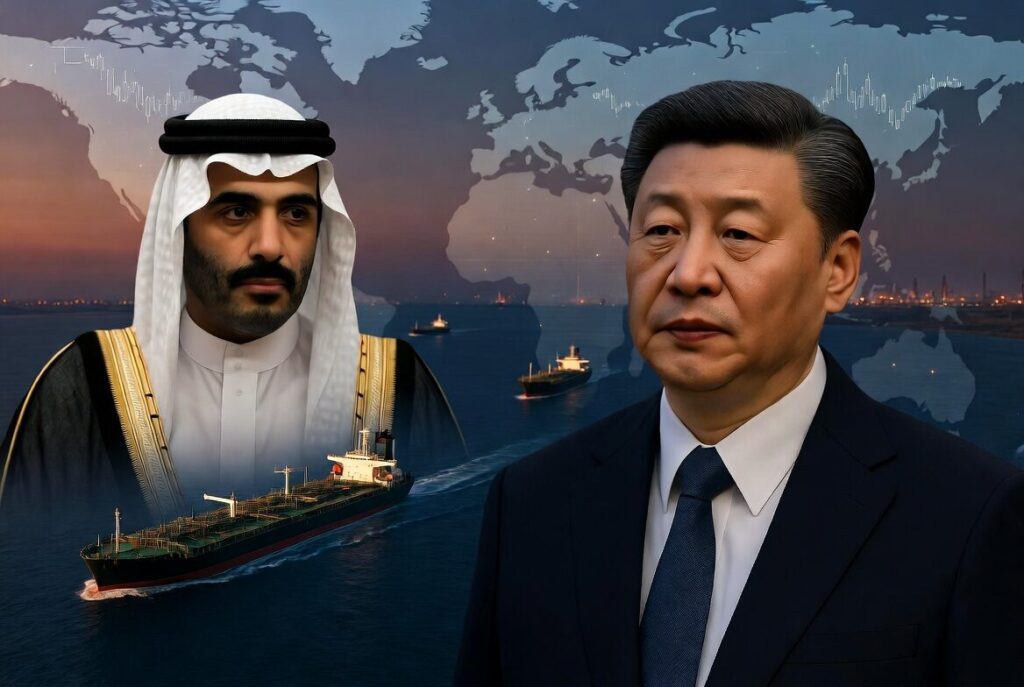
Xi Jinping spent eight weeks publicly refusing to help reopen the Strait of Hormuz.
Then, when the pressure became real, he did not call the White House. He called Riyadh.
That alone tells you this was not a show of strength. It was damage control by a leader who suddenly understood that Trump’s pressure campaign was no longer theoretical.
Cheap Oil Trap
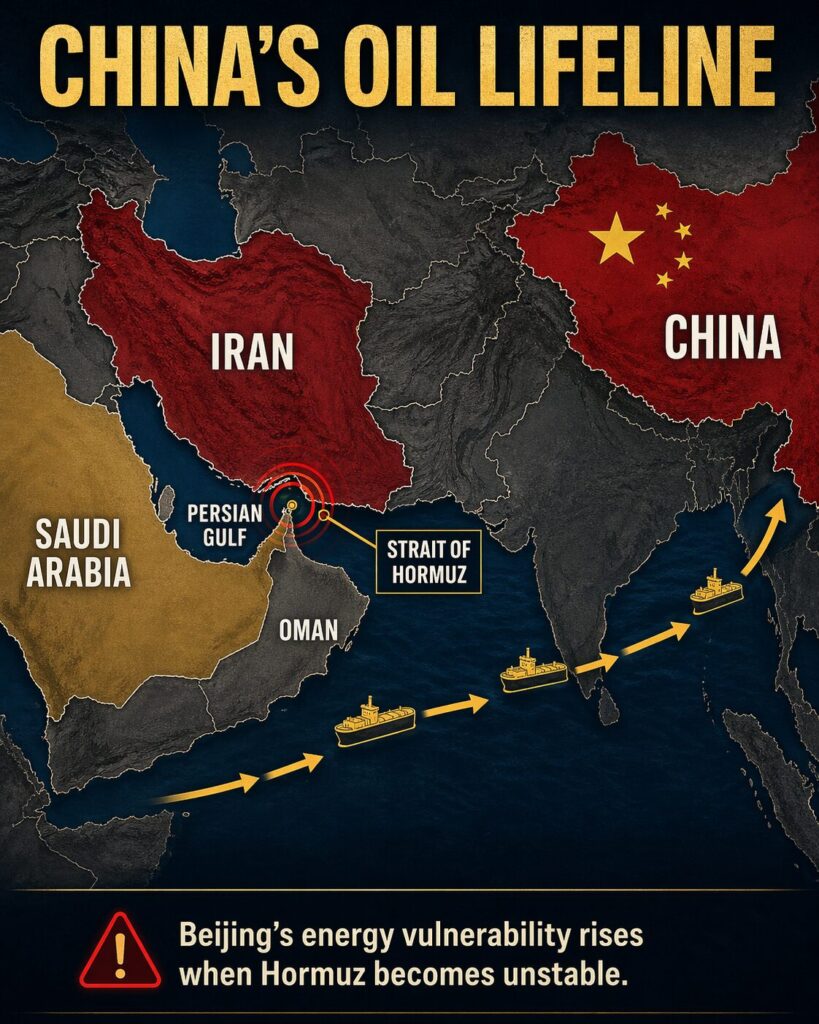
The real problem was not just Iran losing revenue. It was China watching its cheapest source of oil become unreliable at the worst possible moment.
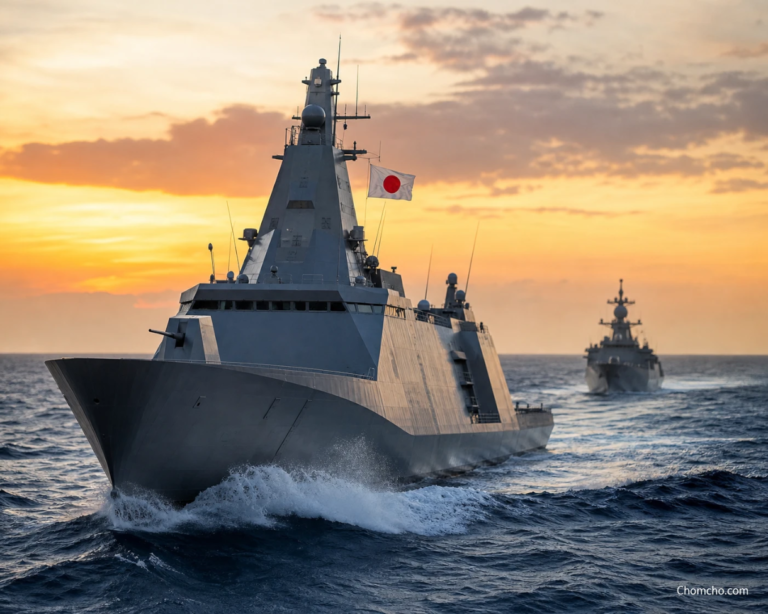
When U.S. naval pressure started turning tankers around, Beijing was forced to confront the cost of depending so heavily on Iranian supply.
Xi could posture for headlines, but he still had to keep Chinese refineries running and prices from spiraling before his meeting with Trump in Beijing.
Media Misread This
That is why the “China warns America” narrative feels backwards. A true warning does not look like a rushed call to one of Trump’s closest regional partners asking for normal shipping to resume.
It looks much more like Beijing quietly admitting that American leverage in Hormuz was hitting where it hurts most: energy, timing, and credibility.
Strength changes calculations.
Truth eventually defeats propaganda.
Response to @Knesix
Replying to https://x.com/Knesix/status/2047354497110843404?s=20