
This post is also available in:
 Português
  Español
  Français
  Deutsch
  Italiano
  Русский
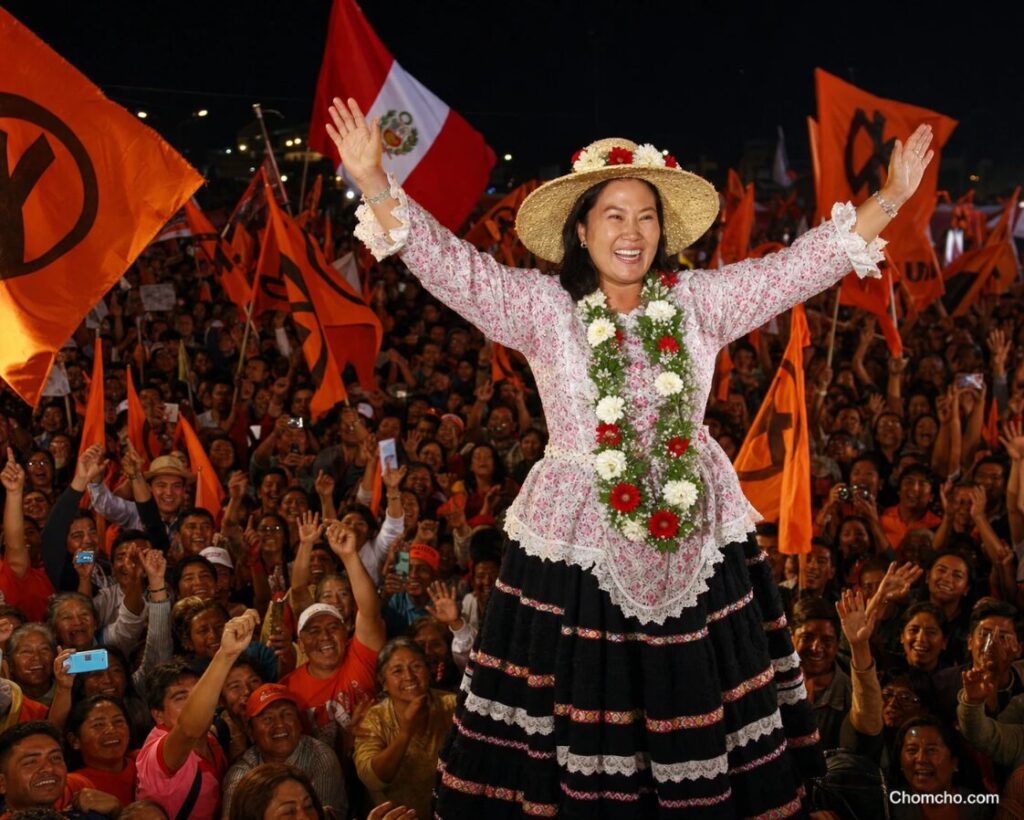
Keiko Fujimori wins: Peru’s long road to a new conservative dawn
On June 29, 2026, Peru’s National Office of Electoral Processes (ONPE) completed the official vote count.
The result: Keiko Fujimori, 51, of Fuerza Popular, holds 50.13% of the vote against leftist Roberto Sánchez’s 49.87%. A margin of roughly 50,000 votes out of more than 20 million cast.
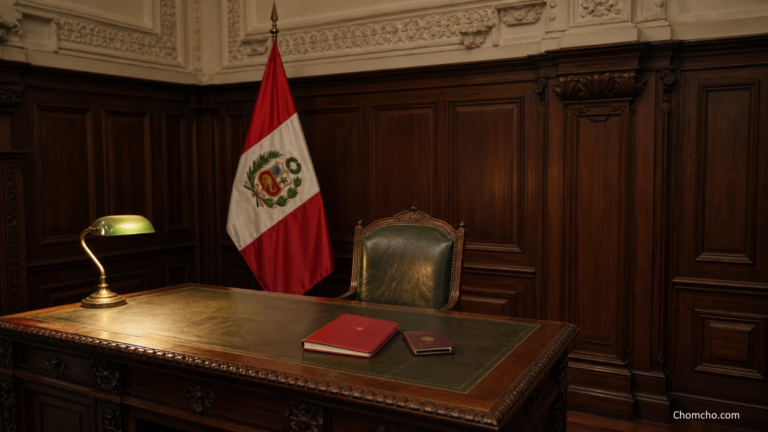
The official proclamation of her as winner is expected by July 3, 2026. She will be inaugurated on July 28, Peru’s Independence Day.
This is her fourth attempt at the presidency. She ran in 2011, 2016, and 2021 — losing in the runoff each time, twice to left-wing candidates by similarly razor-thin margins. This time, Keiko Fujimori wins.
She will become Peru’s first elected female president.
Her campaign slogan was three words: “Peru with order.”
In a country that has suffered nine presidents in ten years and a crime crisis of staggering proportions, those three words resonated like a thunderclap.
Protests expected — but not a revolution
Roberto Sánchez did not concede.
He held a press conference calling the result “fraudulent,” accused authorities of manipulating votes cast abroad, and called for “popular and patriotic resistance.”
He declared he would not recognize a Fujimori presidency.
His base is concentrated in southern Peru — Puno, Cusco, Ayacucho — and in rural indigenous communities that backed Pedro Castillo. Protests are expected in those regions. They may turn violent.
But a Bolivia or Venezuela-style insurrection that forces Keiko out seems unlikely.
The Organization of American States confirmed both rounds of voting proceeded without significant irregularities.
Sánchez got only 12% of the vote in the first round. His national base is limited. And Keiko’s congressional alliance is the strongest any Peruvian president has had in years.
The real risk is legal. Sánchez’s team will file challenges designed to delay the official July 3 proclamation, drag the process past July 28, and create a constitutional crisis around the inauguration.
Peru has a violent political past. The left here is not simply the American progressive left. It has historical connections to armed movements that killed thousands of people.
That context makes every political confrontation carry a heavier weight.
The shadow of Sendero — what Peru lived through
To understand why Keiko Fujimori’s victory matters so deeply, you need to understand what Peru survived.
Between 1980 and 2000, the Maoist terrorist group Sendero Luminoso — the Shining Path — waged a campaign of absolute terror against the Peruvian state and its own people.
Nearly 70,000 people were killed or disappeared during the conflict. Sendero was responsible for the majority of those deaths and disappearances.
Sendero killed at least 12,500 people, including 11,000 civilians murdered and 1,500 who disappeared.
They recruited child soldiers by force. They bombed power lines to plunge cities into darkness. They assassinated mayors, community leaders, judges, and priests.
They also targeted rural indigenous communities — the very people they claimed to liberate — with particular brutality.
In one of the most infamous massacres, Sendero slaughtered 69 people in a single attack, including 18 children. They were killed with blades and blunt instruments.
The truth commission described it as “demented.” It was revenge for locals who had dared resist them.
A second terrorist group, the Marxist MRTA (Túpac Amaru Revolutionary Movement), was also active during this period, though far less deadly than Sendero.
Sendero was founded by Abimael Guzmán, a philosophy professor from Ayacucho who built a Maoist personality cult.
It was designated a terrorist organization by the United States, the European Union, Japan, and Canada.
This was the Peru that Alberto Fujimori inherited when he was elected in 1990.
Alberto Fujimori — the man who stopped the communist takeover
Alberto Fujimori was a political outsider, the son of Japanese immigrants, a mathematics professor who emerged from nowhere to defeat celebrated novelist Mario Vargas Llosa in the 1990 election.
He inherited a country in economic collapse and a terrorist insurgency that was winning.
His greatest achievement came on September 12, 1992, when Peru’s intelligence police raided a safe house in an upscale Lima neighborhood and captured Sendero’s leader Abimael Guzmán.
Fujimori personally orchestrated the media image: Guzmán was displayed to the world in a white-and-black striped prison jumpsuit, humiliated and caged.
The capture effectively broke the back of the insurgency.
He also crushed the MRTA, most dramatically ending the 1996 Japanese ambassador’s residence hostage crisis when Peruvian special forces stormed the compound after 126 days of captivity, in what became known as Operation Chavín de Huántar.
Without Alberto Fujimori, Peru might be Venezuela or Cuba as of June 30, 2026.
That is not an exaggeration. That is the honest assessment of what Sendero was building toward.
But his presidency carried a dark side.
His intelligence chief Vladimiro Montesinos became the real shadow power of Peru.
Before Fujimori, Montesinos had been discharged from the army for spying for the CIA and was working as a defense lawyer for drug traffickers.
Fujimori elevated him anyway, making him head of the SIN (Servicio de Inteligencia Nacional) — Peru’s National Intelligence Service.
Montesinos used that position to build a vast network of corruption, bribery, and extrajudicial violence that reached into every corner of Peruvian society: the legislature, judiciary, military, media, and industry.
In September 2000, a videotape aired on Peruvian television showing Montesinos handing $15,000 in cash to an opposition congressman. Hundreds of additional tapes followed. The government collapsed.
Fujimori fled to Japan and faxed his resignation. He was eventually extradited from Chile in 2007 and convicted of human rights abuses and corruption in 2009.
He maintained his innocence throughout.
Many observers believe his conviction was heavily politicized. His enemies controlled the judiciary, and questions about undue influence over the trial were never fully resolved.
His final pardon was granted by the Constitutional Court in December 2023. He was released from prison and died at home on September 11, 2024, at age 86, from cancer.
Keiko announced his death on X: “After a long battle with cancer, our father, Alberto Fujimori, has just passed to meet the Lord.”
He never stopped believing he had saved Peru. Much of Peru believes he did.
A decade of revolving doors — and the institutions that held
Peru has had nine presidents in ten years. That sounds like a failed state.
It is not.
As Congressman Alejandro Cavero argued in our previous article at Chomcho.com, the frequent presidential removals are not evidence of institutional failure.
They are evidence of institutional strength.
The “permanent moral incapacity” clause in Peru’s 1993 Constitution allows Congress to remove a president — a constitutional safety valve that has, so far, prevented any single actor from consolidating authoritarian power.
The most dramatic proof: Pedro Castillo, a rural schoolteacher and self-described Marxist, won the 2021 runoff by a razor-thin margin against Keiko herself.
He governed chaotically for 17 months, cycling through prime ministers and cabinet members at a dizzying pace.
On December 7, 2022, facing a third impeachment vote, Castillo made his move. He went on television and announced the dissolution of Congress, declaring an emergency government.
Congress voted 101 to 6 to remove him within hours. He was arrested the same day for attempted coup d’état. He was later sentenced to 11 years and five months in prison.
The institutions held.
That is no small thing in a region where Bolivia, Venezuela, and Nicaragua all failed that same test and fell into dictatorship.
Dina Boluarte — Peru’s first female president, accidental and tragic
When Castillo fell, his vice president Dina Boluarte was sworn in as Peru’s first female president on December 7, 2022. She was not elected. She succeeded Castillo constitutionally.
Boluarte had been a member of Castillo’s far-left Free Peru party but was expelled after saying she had never fully embraced its Marxist ideology.
In practice, she shifted sharply right, allying with the right-wing Congress and appointing conservative ministers.
Her government began with promise but descended into catastrophe.
Castillo’s supporters took to the streets demanding his release and new elections. Police responded with force that killed at least 50 protesters. As head of state, she was investigated for homicide.
Then came “Rolexgate.” In March 2024, police raided her home as part of a corruption investigation.
Prosecutors found she owned at least one Rolex Datejust 36 worth $15,000 and a Cartier bracelet worth $50,000 — on a monthly presidential salary of $8,000, after a career as a government bureaucrat earning $18,000 a year. She called the Rolex a “loan.”
A Datum poll in December 2024 gave her 3% approval — the lowest ever recorded for any sitting president in Peruvian history.
Multiple international news organizations, including AFP and The Intercept, called her “the world’s most unpopular leader” — a record that may be without precedent in modern democratic history.
She was also investigated for a secret two-week absence for nose surgery she insisted was medically necessary, and for transporting a fugitive politician in a presidential vehicle.
On October 10, 2025, Peru’s Congress voted 122 to 0 to remove Boluarte from office for “permanent moral incapacity.” Even her own congressional allies abandoned her.
“Chifagate” — Peru’s strangest presidential scandal
Boluarte had no vice president. José Jerí, the president of Congress, became president by constitutional succession.
He lasted four months.
Peruvian media obtained footage showing President Jerí arriving late at night at a Lima chifa restaurant — wearing a hood pulled over his face — to meet secretly with Zhihua Yang, a Chinese businessman holding a state-granted energy concession.
A second meeting was filmed at Yang’s wholesale store. This time Jerí wore dark sunglasses.
A second Chinese businessman, Xiaodong Jiwu, who was under house arrest for alleged illegal activities, was also present.
Jerí’s explanation: he was organizing a Chinese-Peruvian friendship festival. He also said he was just buying candy.
The scandal was immediately dubbed “Chifagate” — after chifa, Peru’s beloved Chinese-Peruvian fusion cuisine.
Congress voted 75 to 24 to remove him on February 17, 2026.
The U.S. Bureau of Western Hemisphere Affairs said it was “concerned” about Chinese influence at the highest levels of Peruvian government, specifically mentioning the Chancay port managed by “predatory” Chinese owners.
Congress then elected 83-year-old former judge José María Balcázar as Peru’s ninth president in a decade.
He governed as a caretaker until the April 12, 2026 election.
The crisis Keiko inherits — crime, division, and 1.6 million Venezuelans
Keiko Fujimori wins the presidency of a deeply wounded country.
Crime has become Peru’s defining national crisis.
Extortion cases increased 1,000% between 2023 and 2025.
Gangs are systematically targeting schools, small businesses, and transportation workers. Drive-by shootings have become common in Lima.
In the 2026 election, 63% of voters named crime as their top concern and 62% named corruption.
Keiko’s promise to implement a 60-day state of emergency to combat citizen insecurity likely decided her victory. Sánchez, on the other hand, had no credible answer on crime.
One significant and politically charged factor in Peru’s security crisis is immigration.
Peru hosts 1.6 million Venezuelan migrants, the second-largest Venezuelan diaspora in the world after Colombia.
Some politicians have blamed Venezuelan gangs for the surge in crime.
However, research by the Brookings Institution found no statistical evidence that Venezuelan migration increased overall crime rates in Peru.
Most of the 1.6 million Venezuelans in Peru work in the informal economy, send remittances home, and contribute positively to economic life.
Venezuelan-owned restaurants, service businesses, and skilled tradespeople have become part of Lima’s economic fabric.
The real problem is a small criminal element that arrived alongside a desperate mass migration — not the migrants themselves.
Many Venezuelans fled Maduro’s socialist collapse precisely because they rejected crime and poverty.
It would be deeply unjust to hold 1.6 million people responsible for the actions of a criminal minority.
Keiko Fujimori will need to make that distinction clearly.
The bicameral shield — why this time may be different
Peru’s 2026 Congress is structurally different from anything the country has had since 1990.
It is now bicameral. The Senate has 60 seats. The Chamber of Deputies has 130.
This is the first bicameral legislature since Alberto Fujimori abolished the Senate in his 1992 self-coup. The irony is not lost: his daughter will govern under the very system her father destroyed.
Popular Force holds 22 senators and 41 deputies — the largest single bloc in both chambers.
With Renovación Popular as a natural ideological ally, Keiko can approach near-majority control in the Senate.
The vague “moral incapacity” clause that has destroyed five Peruvian presidencies is still in the constitution.
Keiko’s enemies will certainly try to use it against her at some point. In Peru’s political culture, that is virtually guaranteed.
But the bicameral structure raises the political cost dramatically. Both chambers must now agree on removal. A Senate that Keiko’s coalition effectively controls becomes a firewall that previous presidents never had.
Combined with an established party organization, a clear popular mandate on crime and security, and a natural right-wing coalition, Keiko Fujimori enters the presidency in a structurally stronger position than any of her nine predecessors.
Conservative wave, U.S. interests, and the hope for Brazil
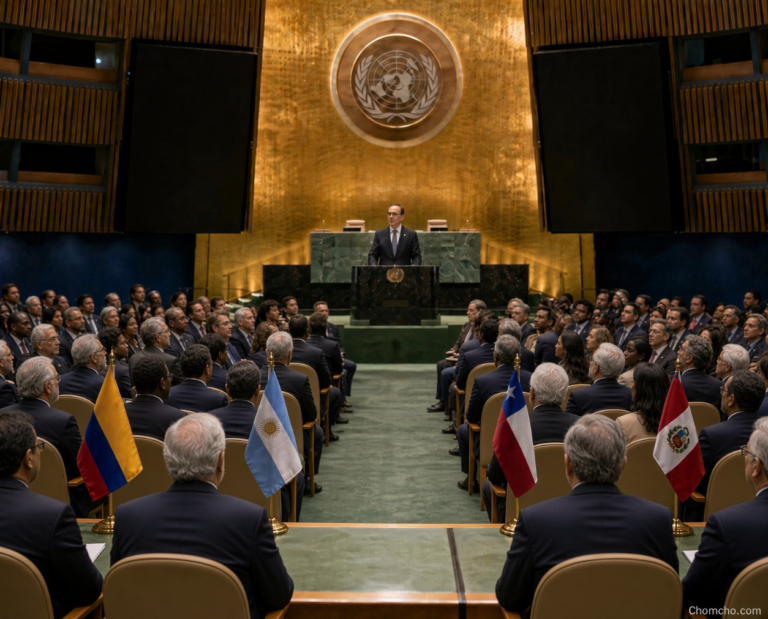
Keiko Fujimori wins as part of a sweeping conservative wave reshaping Latin America.
In December 2025, Chile’s José Antonio Kast won the presidential runoff with 58.2% of the vote, a decisive rejection of left-wing governance.
In June 2026, Colombia’s Abelardo de la Espriella won the presidential runoff, defeating leftist Iván Cepeda backed by the Sao Paulo Forum.
In Argentina, Javier Milei’s free-market revolution continues. Costa Rica, Honduras, and Bolivia have also shifted right.
Some observers on X and social media credit USAID’s dismantling, others credit Milei’s regional influence, others point to Trump’s endorsement strategy.
The truth is simpler: Latin American voters are exhausted by left-wing governance failures, crime, and corruption. They have tried the socialist model. They have seen Venezuela. They are choosing differently.
The next major test is Brazil, where the first round is October 4, 2026, and a potential runoff on October 25.
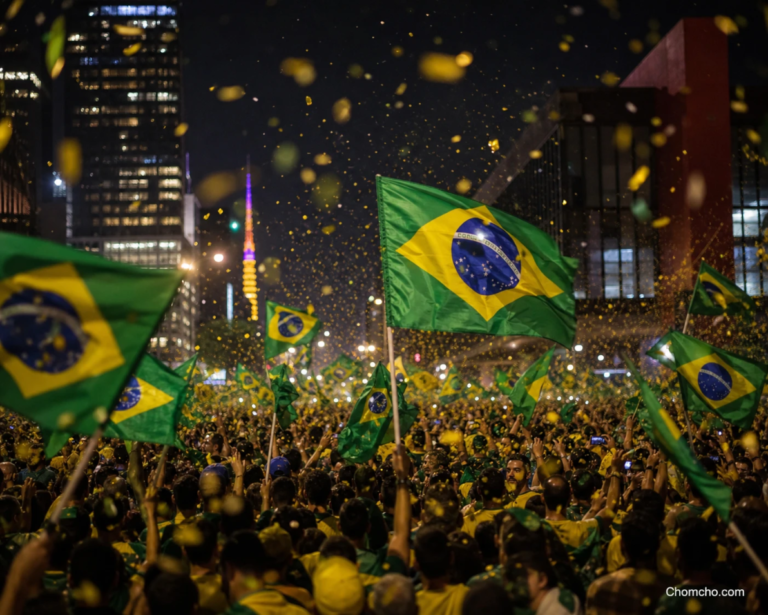
Leftist President Lula, now 80, faces Flávio Bolsonaro in a race that is polling as a virtual dead heat. We at Chomcho pray the conservative wave reaches Brasília.
For the United States, Keiko Fujimori wins matters beyond sentiment. Peru is a key partner in Trump’s America First hemisphere strategy.
As we covered in a previous Chomcho article, the U.S. has been deeply involved in the modernization of Callao naval base, Peru’s main Pacific port, precisely to counter China’s growing strategic influence through the nearby Chancay port, now operated by Chinese state giant COSCO.
The “Chifagate” scandal that toppled Jerí is a reminder of how deeply China is already trying to penetrate Peruvian institutions.
It also strengthens Congressman Cavero’s argument about the resilience of Peru’s institutional system — even a president caught secretly meeting Chinese businessmen in a hood was removed swiftly and constitutionally.
A Fujimori government means a market-oriented Peru aligned with Washington — on trade, on regional security, and on containing Chinese and Cuban influence in South America.
A new chapter begins for Peru on July 28, Independence Day.
We pray it holds.