
This post is also available in:
 Português
  Español
  Français
  Deutsch
  Italiano
  Русский
The Middle East after the MoU: The Iran deal crisis update
The ink on the peace deal was barely dry.
On June 17, President Trump signed the Islamabad Memorandum of Understanding with Iran’s President Masoud Pezeshkian, one at the Palace of Versailles in France after the G7 summit, the other in Tehran.
The deal established a 60-day ceasefire to negotiate a final agreement ending the war, reopening the Strait of Hormuz, and addressing Iran’s nuclear program.
Ten days later, the Iran deal crisis is already here.
U.S. strikes Iran again — what just happened
On June 26, Iran allegedly attacked a cargo ship transiting the Strait of Hormuz. The next day, June 27, the United States responded with force.
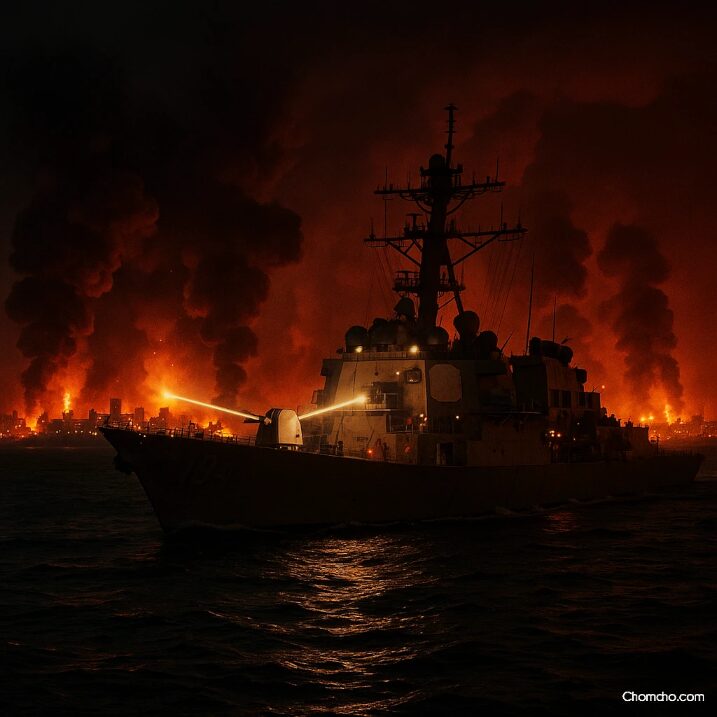
Six U.S. aircraft struck four targets inside Iran: coastal radar installations, drone storage facilities, missile sites, and military surveillance infrastructure near the port of Sirik.
U.S. Central Command described the strikes as defensive, in direct response to Iran’s maritime attack.
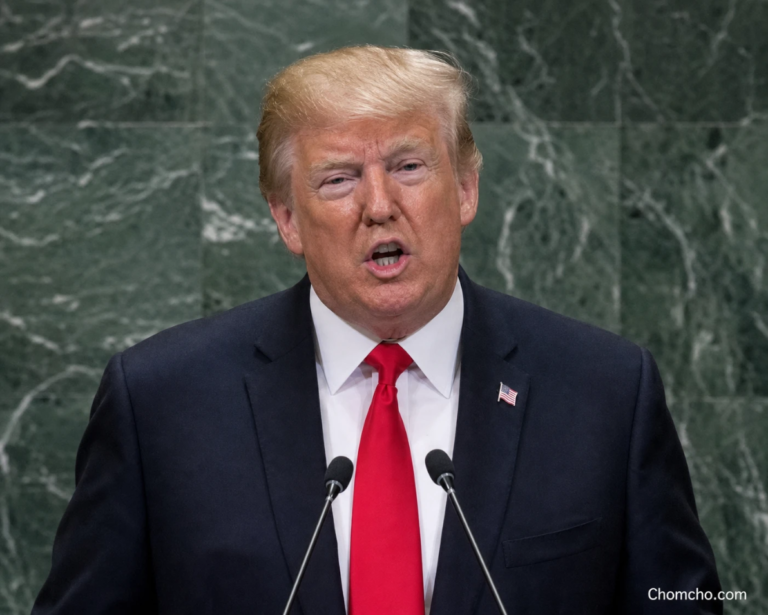
President Trump was blunt. He accused Iran of repeatedly violating the MoU and warned Tehran that the U.S. military could destroy Iran’s entire military capacity in 15 minutes if it chose to.
Iran’s response was predictable. Tehran claimed its Revolutionary Guards retaliated by striking eight U.S. military facilities at the Ali al-Salem base in Kuwait and the Fifth Fleet naval base in Bahrain.
Those claims could not be independently verified.
Iran also accused the U.S. of a “blatant violation” of the memorandum and called the strikes a breach of the United Nations Charter.
Both sides are pointing fingers. The question for many is who is telling the truth.
What Iran says vs. what the facts say
Iran’s official excuse for its actions is this: Israel continued military operations in southern Lebanon after the MoU was signed.
Since the memorandum states the war must end “on all fronts, including in Lebanon,” Iran claims the U.S. violated the deal first.
This argument has one fatal flaw.
Israel never signed the MoU.
Israel is a sovereign nation. It was not a party to the negotiations. The United States cannot legally or constitutionally order Israel to halt its military operations any more than Iran can order Hezbollah to lay down its weapons.
Iran knew this going into the deal. Tehran accepted the MoU with full knowledge that Israel was not a signatory. Using Israeli actions in Lebanon as a pretext to close the Strait of Hormuz and attack U.S. assets is not a legitimate grievance.
It is bad faith.
Vice President JD Vance said it plainly on X: “Iran signed a ceasefire agreement.” Full stop. The obligation belongs to Iran, not to a third country that never signed anything.
Iran does not appear serious about peace. The pattern is clear: negotiate when under maximum pressure, stall when the pressure eases, provoke when an excuse presents itself.
What is really happening in Lebanon — Hezbollah is losing
Here is what Iran does not want the world to notice.
Israel is systematically dismantling Hezbollah in southern Lebanon.
Since March 2026, more than 1,200 Lebanese have been killed and over 1 million people displaced. Israel has been conducting daily airstrikes on Beirut’s southern suburbs and a ground operation across the south of the country.
Hezbollah is still firing. The group launches around 150 rockets per day at Israeli forces. But numbers do not tell the whole story.
The real signal is how Hezbollah is behaving politically.
When Lebanon’s own Foreign Minister Youssef Raggi announced the expulsion of Iran’s ambassador, a senior Hezbollah official named Mahmoud Qamati turned on him publicly.
“Don’t play with fire because this fire will burn you, your people, and those behind you,” Qamati said in a public address.
That is not the language of a powerful organization. That is the language of a cornered one.
The Lebanese people are not fooled. A January 2026 poll found that 73% of Lebanese strongly or somewhat support President Joseph Aoun’s efforts to disarm Hezbollah. Only 9% oppose it.
Lebanon’s government banned Hezbollah’s military activities on March 2. Hezbollah called the ban “a clear capitulation to external pressures.”
Lebanon’s President Aoun has proposed direct peace talks with Israel. Prime Minister Nawaf Salam echoed the call. The U.S. and Western nations welcomed it.
Hezbollah condemned the proposal as a “national and strategic sin.”
A militia that once had veto power over every major Lebanese government decision is now reduced to threatening its own ministers and boycotting cabinet sessions.
Iran’s most powerful Arab proxy is weaker than it has been in decades.
Iran treats Lebanon like a colony
In March, Lebanon declared Iran’s ambassador Mohammad Reza Sheibani persona non grata and ordered him to leave by March 29, but Iran simply refused to comply.
“The ambassador will not leave Lebanon,” an Iranian diplomatic source told AFP, “in accordance with the wishes of Hezbollah.”
Not in accordance with Lebanese law. Not in accordance with international diplomatic norms. In accordance with the wishes of a militia.
The ambassador remains inside the Iranian embassy in Beirut, an illegal resident shielded by diplomatic immunity.
Iran put extreme pressure on Lebanon’s government and Parliament Speaker Nabih Berri, a Hezbollah ally, to reverse the expulsion order.
Hezbollah organized rallies outside the embassy to back the Iranian ambassador against Lebanon’s own government.
Israel’s Foreign Minister Gideon Sa’ar put it perfectly: “This morning, the Iranian ambassador is drinking his coffee in Beirut and making a mockery of the host country. Lebanon is a virtual country that is effectively occupied by Iran.”
That is the reality.
Iran does not see Lebanon as a neighbor. It sees Lebanon as a territory, a buffer zone, a launching pad for rockets against Israel, and a western anchor of its regional empire.
And that empire is now cracking.
Shia vs. Sunni: understanding the conflict in simple terms
To understand why Lebanon’s government is now standing up to Hezbollah and Iran, you need to understand one basic fact about the Muslim world.
Islam has two major branches: Shia and Sunni.
They split about 1,400 years ago over a simple but explosive question: who should lead the Muslim community after the Prophet Muhammad died?
One side chose Muhammad’s close companion Abu Bakr. That side became the Sunnis, today the large majority of Muslims worldwide.
The other side insisted leadership should stay within Muhammad’s own family, specifically his cousin and son-in-law Ali. That side became the Shia.
It is an ancient division, but it shapes modern Middle East politics more than almost any other factor.
Iran is the world’s leading Shia power. Hezbollah is a Shia militia, created and funded by Iran.
Together with Shia-aligned militias in Iraq and the Houthi rebels in Yemen, they form what analysts call the “Shia Crescent”: a corridor of Iranian influence stretching from Tehran through Baghdad, through Syria, and into Lebanon, all the way to the Mediterranean Sea.
On the other side stand the Sunnis. Lebanon’s government is a coalition of Sunni Muslims and Christians.
Syria’s new government, which replaced the Assad regime, is led by Sunni groups. Saudi Arabia, the UAE, Jordan, and Egypt are all Sunni-majority nations that have watched Iran’s Shia expansion with deep alarm for decades.
What we are watching in Lebanon on June 28, 2026, is not just a military conflict between Israel and Hezbollah. It is a 1,400-year-old religious and political power struggle playing out on a modern battlefield.
And for the first time in a long time, the Shia side is losing ground.
Israel, Syria, and the squeeze on Hezbollah
Israel is not limiting its strategy to military strikes.
Israeli officials have reportedly discussed with Syria’s new Sunni government the possibility of coordinating pressure on Hezbollah from the Syrian side.
Syria’s new leadership has every reason to cooperate.
Hezbollah fought alongside Assad against Syrian Sunni rebels for years, killing thousands. There is no friendship between the new Damascus and Tehran’s proxy militias.
Israel’s Defense Minister Israel Katz has also been direct about his country’s intentions.
“The IDF will not withdraw from the security zone in Lebanon,” Katz stated. “Preserving the lives of our soldiers and citizens is a top and absolute priority.”
Prime Minister Benjamin Netanyahu has echoed the position.
Israel will stay in southern Lebanon as long as necessary to prevent Hezbollah from re-establishing the infrastructure it used to launch October 7-style attacks on Israeli civilians.
There will be no return to the pre-war status quo.
This position puts Israel and the Trump administration in an awkward but manageable tension.
Trump criticized an Israeli airstrike on Beirut just hours before announcing the MoU, writing: “This morning’s attack on Beirut should not have happened, particularly on a special day when we are so close to a peace deal with Iran.”
Trump’s priority is the Iran deal and reopening the Strait of Hormuz.
Lebanon is a secondary theater for Washington. The global economy needs the Strait open. Oil markets need certainty. The pressure on Trump is real.
On the other hand, Netanyahu’s position is also understandable.
Israel cannot allow Hezbollah to rearm the moment international attention shifts elsewhere. That is exactly what happened after every previous ceasefire.
The U.S. and Israel are allies with a shared enemy and slightly different timetables. That is not a crisis. That is diplomacy.
The Iran deal crisis and what comes next
And so, the 60-day MoU clock is ticking.
Technical negotiations between U.S. and Iranian officials in Switzerland were postponed after June 18.
Iran’s chief negotiator is making tough statements. Iran’s President Pezeshkian said Tehran would not give up its right to enrich uranium.
Trump responded on Fox News: “He better watch his mouth. He better shape up, or we’ll take over the rest of the country.”
The economic reality is working against Tehran.
Iran’s inflation reached 88.6% in June, driven by the war and sanctions. Iran’s economy has suffered damage that government officials themselves estimate could reach 1,000,000 million dollars.
The country is bleeding. Iran needs this deal far more than it publicly admits.
The hardliners inside the regime may be using provocations to sabotage the peace process before it costs them power domestically.
That is the real Iran deal crisis: not whether America is serious, but whether Iran’s own revolutionary establishment will allow a deal that weakens their grip on the country.
Senator Lindsey Graham was clear about where America stands: “If Iran continues to attack Israel and Lebanon, the new policy will be: we’ll hit Iran.”
Trump is not Obama. There will be no pallets of cash.
No sweetheart nuclear deal that releases frozen funds to finance proxy terrorism across the Middle East.
America’s interests are straightforward: a permanently open Strait of Hormuz, no Iranian nuclear weapon, an end to Iran’s proxy network, and a stable Middle East where U.S. allies can grow and thrive.
Peace through strength. That is the only language Tehran has ever respected.
And right now, strength is exactly what Washington is projecting.