
This post is also available in:
 Português
  Español
  Français
  Deutsch
  Italiano
  Русский
Starmer just unveiled his UK social media ban
On Monday, June 15, 2026, Prime Minister Keir Starmer announced a sweeping ban on social media access for anyone under 16, covering X, TikTok, YouTube, Instagram, Facebook, Snapchat, Reddit, Threads, Twitch, and Kick.
The policy is modeled directly on Australia’s under-16 ban, in effect since December 2025. Starmer called it necessary “to protect the safety and happiness of our children.”
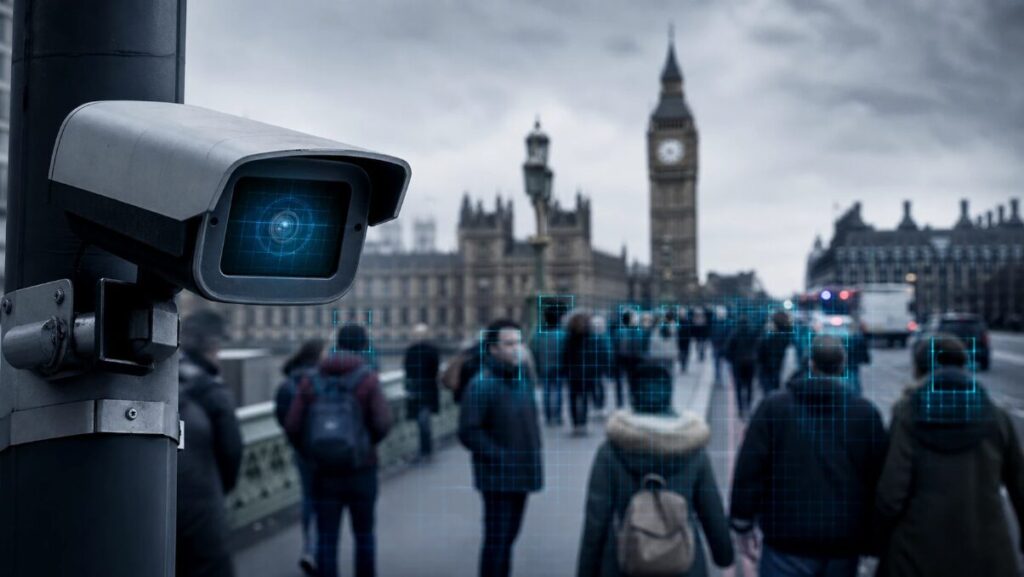
Here is what almost no mainstream outlet led with: enforcing an age ban on minors requires verifying the age of every single user, child or adult.
Under Starmer’s plan, British adults will need to prove they are over 16 using a government-issued digital ID, a facial recognition scan, or credit card verification, simply to keep using social media they have used for years.
Sixteen and seventeen-year-olds face an additional restriction: nightly online curfews.
One platform is conspicuously, if only reportedly, absent from the initial list circulating publicly: Bluesky.
We want to be careful here, since the UK government has not published an official final platform list, and the Bluesky exemption remains a widely repeated claim rather than confirmed policy.
But if true, the optics are difficult to ignore.
Bluesky has become the preferred home for many left-leaning users who left X after Elon Musk’s takeover, while X faces the toughest restrictions of any platform.
The 16-year-old irony deserves its own mention.
Starmer’s government is simultaneously pushing to lower the voting age to 16, while telling 16 and 17-year-olds they need a government-enforced curfew on the same platforms, where they would presumably be free to discuss the politicians they can now vote for.
Mature enough to choose a government, apparently not mature enough to scroll past midnight.
The real goal: not protecting children, but tracking everyone
Elon Musk did not hold back.
“This censorship law is a wolf in sheep’s clothing. The real goal is to enable the UK government to track everyone,” he posted on X, separately calling Britain a “police state.”
Telegram founder Pavel Durov echoed the criticism, drawing on his own experience resisting a nearly identical push in Spain earlier this year, where Prime Minister Pedro Sánchez announced a similar under-16 ban that prompted Musk to call him a “fascist totalitarian.”
France has approved a bill banning under-15s. Greece and Slovenia are reportedly considering similar measures.
The pattern across Europe is now unmistakable. Child safety is the stated justification. Universal identity verification, for every adult user, is the end result.
A speech problem that predates this law
Britain already has one of the most aggressive online speech enforcement records in the Western world.
Joe Rogan, reacting to widely cited figures, noted on his podcast that more than 12,000 people were arrested in the UK in a single year over social media posts, adding that some of the posts in question were nowhere close to violent threats.
Freedom House downgraded the UK’s score in its 2025 Freedom on the Net report specifically because of a rising volume of criminal charges and arrests tied to online speech.
The legal tools enabling this are broad by design.
Section 127 of the Communications Act 2003 criminalizes messages deemed “offensive” or sent to cause “annoyance,” with no requirement to prove any actual harm occurred.
Legal experts have repeatedly flagged this as an unusually low bar for criminal prosecution in any democracy.
The 2023 Online Safety Act layered new offenses on top of this framework, and a petition calling for its repeal gathered over 500,000 signatures, debated in Parliament in December 2025.
We will not pretend international comparisons on this exact metric are perfectly precise, since reporting standards vary by country.
But the consistent message from multiple independent sources, legal experts, watchdog groups, and ordinary citizens, is that Britain now polices online speech more aggressively than most Americans would consider compatible with a free society.
A government already falling apart
This surveillance expansion is landing at the worst possible moment for Starmer’s credibility.
His Labour Party suffered major losses in May 2026 local elections, with Reform UK under Nigel Farage and the Green Party making the largest gains.
Multiple polling organizations, including Ipsos and YouGov, have called Starmer the most unpopular prime minister in British polling history, with disapproval ratings reaching as high as 79% in some surveys.
Despite at least 95 to 100 Labour Members of Parliament publicly calling for his resignation, Starmer has refused to step down, noting that no formal leadership challenge has been triggered within his own party.
Just days before this social media announcement, two senior defense officials resigned over a dispute about military spending: Defense Secretary John Healey and Armed Forces Minister Al Carns, the seventh minister to resign from Starmer’s government in a single month.
James Cartlidge, the Conservative Shadow Defense Secretary, the opposition party’s designated official who would hold that post if the Conservatives returned to power, called the resignations “a wake up call,” arguing Labour should shift funding from welfare to defense.
Britain’s next general election is not scheduled until 2029.
That means a government this unpopular, this internally divided, and now actively hollowing out its own military, could remain in office for three more years, building digital identity infrastructure the entire time.
Washington is watching, and increasingly acting
This is not the first clash between Washington and European digital regulation.
In December 2025, Secretary of State Marco Rubio sanctioned five Europeans, including former EU Commissioner Thierry Breton, for what the State Department called “extraterritorial censorship” targeting American platforms and viewpoints.
“The Trump Administration will no longer tolerate these egregious acts of extraterritorial censorship,” Rubio said.
He also added: “We stand ready and willing to expand this list if others do not reverse course.”
Among those sanctioned was Imran Ahmed, head of the Center for Countering Digital Hate, an organization with direct ties to Starmer’s own chief of staff.
The State Department’s own account posted bluntly on X: “In Europe, thousands are being convicted for the crime of criticizing their own governments. This Orwellian message won’t fool the United States. Censorship is not freedom.”
Republican Congresswoman Anna Paulina Luna has gone further still, threatening sanctions against the United Kingdom specifically if it moves to ban X outright.
Britain’s new social media law, by forcing identity verification onto an American-owned platform’s millions of British users, will almost certainly draw fresh scrutiny from an administration that has made European digital regulation a recurring flashpoint.
Free societies do not typically require citizens to scan their faces or submit government identification simply to post an opinion online.
A government this weak, this unpopular, and this short on credible answers on defense should not be trusted to draw that line responsibly.
Washington should keep watching, and keep pushing back.