
This post is also available in:
 Português
  Español
  Français
  Deutsch
  Italiano
  Русский

FCAS fighter jet project collapse exposes a continent
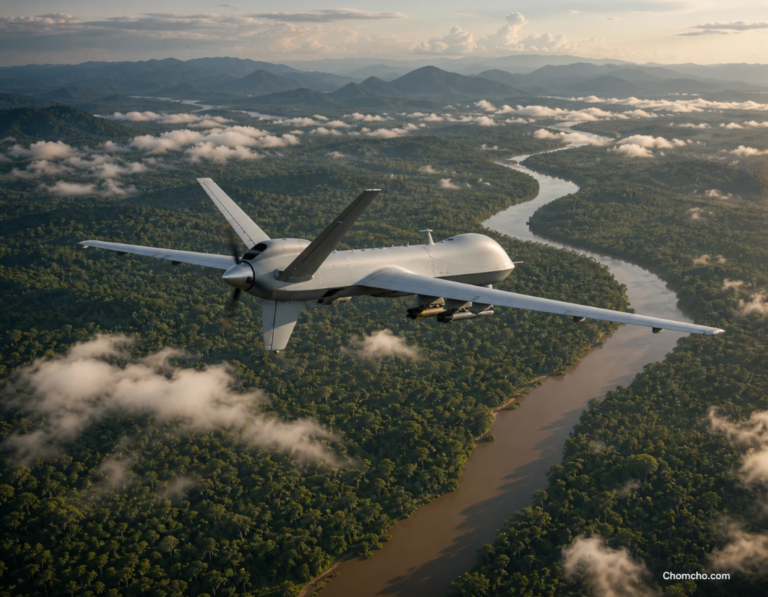
The Europe fighter jet crisis is not really about a war. It is about the death of a fighter jet that was never built.
On June 8, 2026, Germany and France formally cancelled the crewed fighter component of the Future Combat Air System, known as FCAS.
The program was supposed to deliver Europe’s sixth-generation fighter jet by 2040, replacing France’s Rafale and Germany’s Eurofighter.
Launched in 2017 at a cost of roughly 100,000 million euros, it never got past the drawing board.
The reason was simple and very European.
Dassault Aviation, representing France, wanted sole leadership of the project. Airbus, representing Germany and Spain, wanted a balanced industrial structure.
France also insisted on a nuclear-capable aircraft that could operate from aircraft carriers, reflecting its independent nuclear doctrine.
Germany has no such requirement and has no aircraft carrier at all.
After years of failed mediation, including a Macron-Merz dinner in March 2026 that went nowhere, Chancellor Merz told Macron in Montenegro on June 6 that Germany was done.
He announced it publicly two days later at the ILA Berlin Air Show, the same venue where FCAS was unveiled in 2018.
Only the digital “Combat Cloud” component survives. The jet itself does not exist.
Spain bet on FCAS, but now it has nothing
This collapse lands hardest on Spain.
In August 2025, Spain cancelled its planned F-35 purchase after Prime Minister Pedro Sánchez clashed with Trump over NATO’s proposed defense spending target of 5% of GDP.
Sánchez called it “unreasonable” and said “Only Europe will know how to protect Europe.”
Trump called Spain’s position “very unfair” and threatened tariffs.
Spain’s Defense Ministry announced its alternative plan: “The Spanish option consists of the current Eurofighter and the FCAS in the future.”
Here is the problem. Spain’s AV-8B Harrier jump jets, flying off the Juan Carlos I light carrier, retire by 2030.
The F-35B was the only fifth-generation jet capable of short takeoff and vertical landing, the only realistic Harrier replacement.
Without it, Spain’s only carrier becomes a helicopter ship with no fixed-wing fighters.
Spain’s Plan B, FCAS, just died. By May 2026, Spain was reportedly exploring Turkey’s KAAN jet as a fallback.
Spain rejected a working American fighter for a European program that produced nothing in eight years.
France: one carrier, one nuclear umbrella for all of Europe
France operates exactly one aircraft carrier, the Charles de Gaulle, commissioned in 2001. It is the only nuclear-capable surface warship in Europe.
Because the carrier requires lengthy maintenance periods, France does not maintain a permanent sea-based nuclear deterrent.
Despite this single point of failure, Macron has offered to extend France’s nuclear umbrella to protect Britain, Germany, Poland, the Netherlands, Belgium, Greece, Sweden, and Denmark.
He approved a replacement carrier, France Libre, in December 2025. It enters service in 2038, the same year Charles de Gaulle retires.
The country offering to nuclear-shield half of Europe runs on one aging ship and a fighter program that just collapsed.
Canada: defense policy as a trade weapon
In March 2025, newly elected Canadian PM Mark Carney ordered a review of Canada’s 88-jet F-35 order, explicitly in response to Trump’s tariffs and “51st state” comments.
Canada signaled interest in Sweden’s Gripen E, a 4.5-generation jet, pitched with the promise of over 12,000 domestic jobs. Defense analysts called the potential switch a strategic step backward, since the Gripen is a generation behind the F-35 in stealth and sensor technology.
U.S. Ambassador Pete Hoekstra warned that dropping the F-35 would strain NORAD interoperability, forcing American jets to patrol Canadian airspace more often.
More than a year later, the review continues with no end date.
One defense analyst called it possibly “the longest government review process in history.”
Meanwhile, Canada quietly keeps paying for F-35 components anyway, committing funds for additional aircraft even as officials publicly insist no final decision has been made.
The result is the worst of both worlds: continued financial exposure to the F-35 program, no clarity on Canada’s actual future fighter fleet, and a NORAD partner left guessing about Canadian intentions.
A pattern across the West
These are not isolated incidents. They form a pattern of putting politics above defense, energy, and basic national interest.
During the 2026 Iran conflict, Spain refused to let the U.S. use the Rota and Morón bases for operations, with Sánchez saying leaders cannot “play Russian roulette” with global stability.
Germany’s own Chancellor Merz now calls his country’s full nuclear power phase-out a “huge mistake” with real strategic consequences.
Even Germany’s flagship Stuttgart 21 rail project, after seven years of delays, was found to have 1,000 kilometers of incorrectly laid cables, requiring a five-year fix.
None of these problems were caused by Russia, Iran, or China.
Each was a self-inflicted wound, driven by politics, pride, and trade grudges.
The lesson for America is clear.
When allies let domestic politics and trade disputes drive defense procurement, the result is capability gaps, massive wasted spending, and weaker alliances, exactly when the threat environment from Russia, Iran, and China is at its highest in decades.
America First does not mean indifference to these failures.
It means recognizing that strong allies make America stronger, and allies who cannot get their own defense priorities straight cannot be relied upon when it matters most.