
This post is also available in:
 Português
  Español
  Français
  Deutsch
  Italiano
  Русский

The Pentagon just blacklisted China’s biggest companies
On June 9, 2026, the U.S. Defense Department released its updated 1260H list, formally known as the Chinese Military Companies list.
It now names 188 Chinese entities as linked to the People’s Liberation Army. That is up from roughly 130 on last year’s version.
The names on this updated Pentagon China blacklist are not obscure state enterprises buried in some industrial zone.
They are brands that millions of people around the world interact with every day: Alibaba, Baidu, BYD, Tencent, and NIO.
The timing could not be more telling.
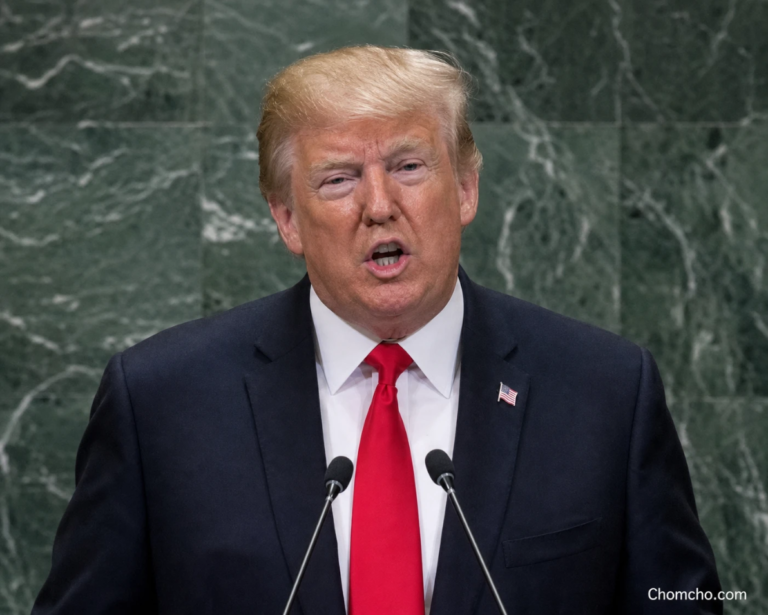
Less than a month ago, President Trump sat down with Chinese leader Xi Jinping in Beijing for a two-day summit aimed at stabilizing the relationship between the world’s two largest economies.
Trump shook hands with Xi. He invited Xi to Washington in September. And then the Pentagon dropped this list.
That is not a contradiction. That is exactly what peace through strength looks like.
BYD sells you a car. The PLA gets the data.
The 1260H designation does not impose sanctions directly, but its consequences are real and growing.
Starting later this month, the Defense Department is prohibited from contracting with any listed company.
By June 2027, the ban extends to purchasing their products or services through third parties as well.
Companies that land on this list have historically gone on to face export controls and broader trade restrictions down the road.
BYD, which surpassed Tesla in 2025 to become the world’s top electric vehicle seller, already faces 100% U.S. tariffs on its vehicles.
It is now also on the Pentagon China blacklist, designated because it operates in or is affiliated with a military-civil fusion enterprise zone.
Alibaba and Baidu were designated due to their connections to China’s Ministry of Industry and Information Technology and the State-owned Assets Supervision and Administration Commission.
With this update, all three of China’s leading AI companies, Alibaba, Baidu, and Tencent, now sit on the Pentagon’s roster.
Tencent was added in 2025 and has been fighting the designation ever since.
Two memory chipmakers, ChangXin Memory Technologies and Yangtze Memory Technologies, were also reinstated after being mysteriously removed from the February version of the list.
The February list was published and then withdrawn within minutes without explanation, just as Trump’s Beijing summit was being finalized. The connection is not hard to see.
Representative John Moolenaar, Republican chairman of the House Select Committee on China, put it plainly:
“This updated list of Chinese military companies is a warning to American businesses, all levels of government, and the American people. These Chinese companies are working with the Chinese military against our national interests.”
He added that any of them trading on U.S. exchanges “should be immediately delisted and their products should be removed from supply chains our country depends on.”
China’s 2017 military-civil fusion law requires all companies to cooperate with Beijing’s military when demanded.
Beijing cries foul — as always
Beijing’s reaction was entirely predictable.
Chinese Foreign Ministry spokesman Lin Jian accused Washington of “overstretching the concept of national security” and making “discriminatory lists to go after Chinese companies.”
Baidu called the designation “entirely baseless.” Alibaba called its inclusion “an error” and threatened legal action. BYD denied any military connection.
They all deny it. They always deny it.
China’s military-civil fusion strategy is not a conspiracy theory.
It is official Chinese Communist Party policy, written into law in 2017, requiring all Chinese companies and citizens to cooperate with national intelligence efforts.
There is no such thing as a purely private Chinese tech company when Beijing decides it needs something.
Alibaba’s cloud infrastructure, Baidu’s AI systems, BYD’s connected vehicle data, Tencent’s communications platform — all of it is accessible to the Chinese state when demanded.
That is not an American accusation. That is how Chinese law works.
Moolenaar had been pressing for many of these additions since December 2025, when he and other congressional leaders sent a formal letter requesting several of these companies be included.
Congress pushed. The Pentagon acted. The system worked as it should.
America is not at war with the Chinese people.
America is not even at war with Chinese business. But America must be clear-eyed about what China’s military-civil fusion strategy means in practice.
When you buy a BYD vehicle, use Baidu search, or store data on Alibaba’s cloud, you may be doing business with a company that Beijing considers part of its military apparatus.
That is not a comfortable thought. But discomfort, as any good leader knows, is often the beginning of wisdom.
As the Book of Proverbs says, the prudent see danger and take refuge, but the simple keep going and pay the penalty.
Washington is finally taking refuge.
American businesses should take note.