
This post is also available in:
 Português
  Español
  Français
  Deutsch
  Italiano
  Русский
  Nederlands
  日本語
日本語  Polski
Iran suspends negotiations as Israel Hezbollah ceasefire reaches a breaking point
The Middle East is on the edge again today, June 1, 2026.
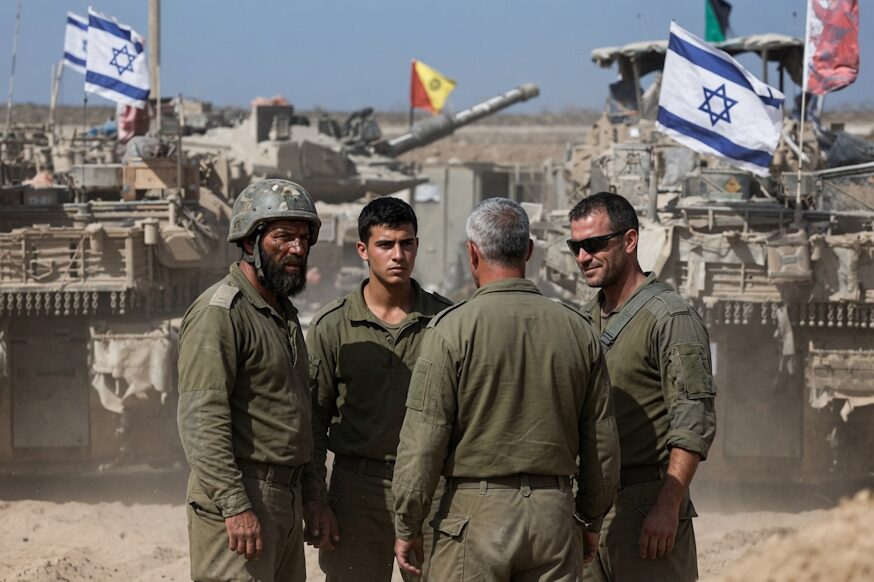
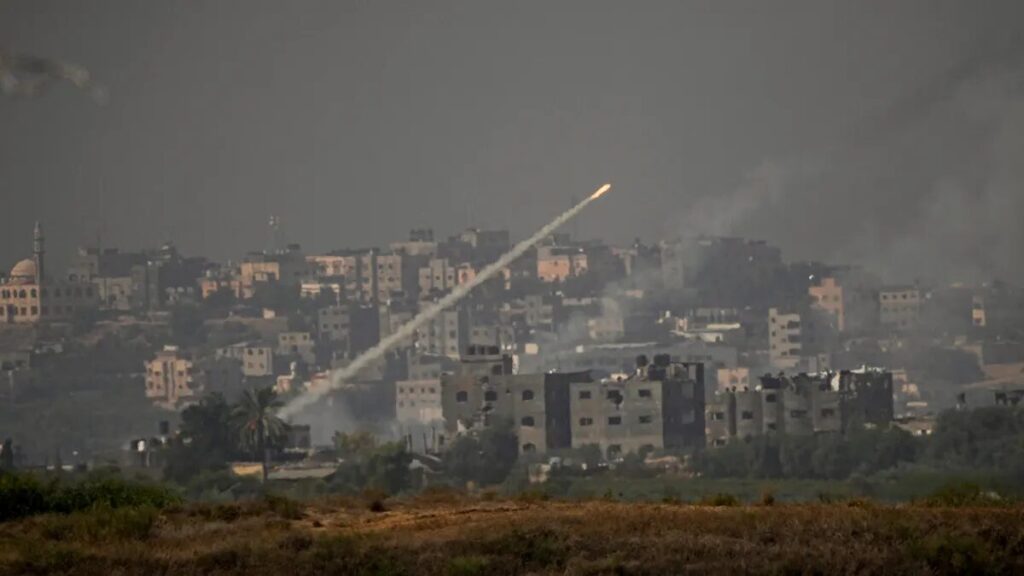
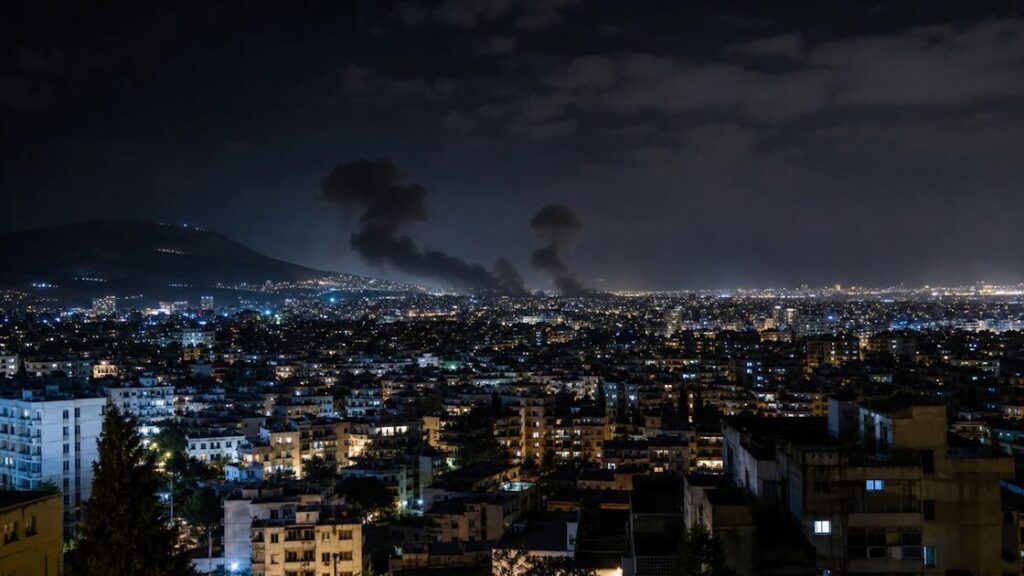
Israeli Prime Minister Benjamin Netanyahu ordered fresh military strikes on Beirut’s Dahieh neighborhood — a known Hezbollah stronghold — just hours after Israeli Defense Forces captured Beaufort Castle, a 900-year-old Crusader fortress in southern Lebanon.
Netanyahu said the strikes were ordered in direct response to “repeated and ongoing violations of the ceasefire in Lebanon” by Hezbollah.
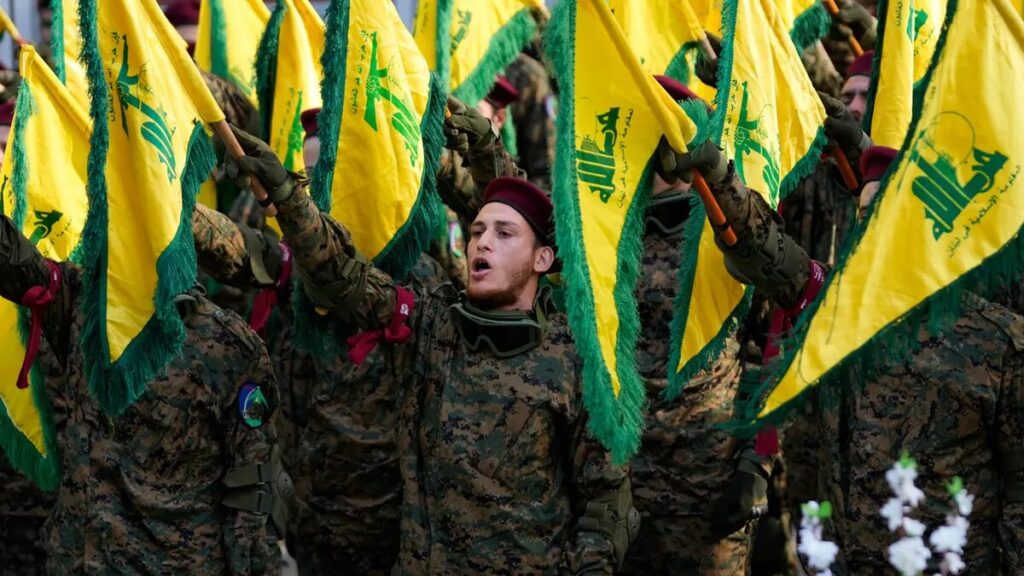
This terrorist group has continued launching rockets and drones into northern Israeli communities despite the fragile truce brokered by Washington. Iran responded immediately.
Foreign Minister Abbas Araghchi posted on X: “The ceasefire between Iran and the U.S. is unequivocally a ceasefire on all fronts, including in Lebanon. Its violation on one front is a violation of the ceasefire on all fronts.”
Within hours, Iran’s state-affiliated Tasnim news agency reported that Tehran had suspended all exchanges with the United States via mediators — citing Israel’s continuing military operations in Lebanon and Gaza as the reason.
The ceasefire that Washington painstakingly constructed is now hanging by a thread.
Breaking down the crisis: who, what, where, when, and why
The who: Israel, Hezbollah, Iran, the United States, and Lebanon’s civilians caught in the middle.
The what: A collapsing ceasefire framework.
The where: Beirut, southern Lebanon, northern Israel, and the negotiating back-channels connecting Washington and Tehran.
The when: Today, June 1, 2026 — the most dangerous day in the ceasefire’s short and troubled history.
The why: Because Iran and Israel fundamentally disagree on whether Lebanon was ever included in the ceasefire at all.
Iran’s ultimatum — ceasefire on all fronts or no deal
Iran’s position has been consistent and uncompromising since the ceasefire was first brokered in April.
Tehran insists the agreement covers all fronts — including Lebanon and Gaza — not just direct U.S.-Iran hostilities.
Iranian spokesman Baqaei stated it plainly: “We insist that a ceasefire in Lebanon is an essential condition for any deal aimed at ending the war.”
Senior advisers to Supreme Leader Khamenei went further on June 1 — declaring that Iran would retain control of the Strait of Hormuz and would not tolerate continued Israeli operations in Lebanon.
Iran’s Parliament Speaker Mohammad Bagher Ghalibaf warned the United States directly that “every choice has a price.”
Iran drops its diplomatic mask — and that should worry everyone
What makes Iran’s escalating warnings unusually significant is that Tehran rarely makes its ceasefire conditions this public or this explicit.
Normally Iranian diplomatic signaling operates through intermediaries and ambiguity.
When Iran’s Foreign Minister, Parliament Speaker, and Khamenei advisers all issue public ultimatums on the same day — that is not coincidence. That is a coordinated signal. Tehran is breaking its own diplomatic playbook.
And suspending back-channel communications with Washington on the very same day makes the message unmistakable.
Iran believes the ceasefire is in real danger — and it wants America to know it.
Iran’s leverage is real: the Strait of Hormuz remains not fully reopened, and any resumption of Iranian interference with shipping would immediately send global oil prices surging again.
Israel’s clear position — Hezbollah must be disarmed
Israel’s position is equally clear and backed by military action.
Netanyahu stated it with characteristic directness: “Israel is stronger than ever, and Iran is weaker than ever.”
Israel’s goal in Lebanon is not territorial expansion — it is permanent security for the approximately 60,000 Israeli civilians who were displaced from northern communities when Hezbollah’s rocket campaign began.
Netanyahu has been explicit: Israeli forces will withdraw from southern Lebanon only when Hezbollah is disarmed.
“If Lebanon takes the necessary steps to disarm Hezbollah, then Israel will respond with reciprocal measures, including a phased reduction of the Israeli military presence in southern Lebanon.”
We believe that to be a reasonable and sovereign position.
No nation on earth would tolerate a heavily armed terrorist organization — financed by a hostile foreign government — sitting on its border and launching rockets at its civilian population.
Israel’s Defense Minister Israel Katz noted that Hezbollah is now “pleading” for a ceasefire after taking heavy losses — suggesting the military campaign is achieving its objectives.
The IDF has eliminated Hezbollah’s command and control infrastructure across southern Lebanon, Beirut, and the Beqaa Valley, neutralized its planned ground invasion force, and established a security buffer beyond the Lebanese border.
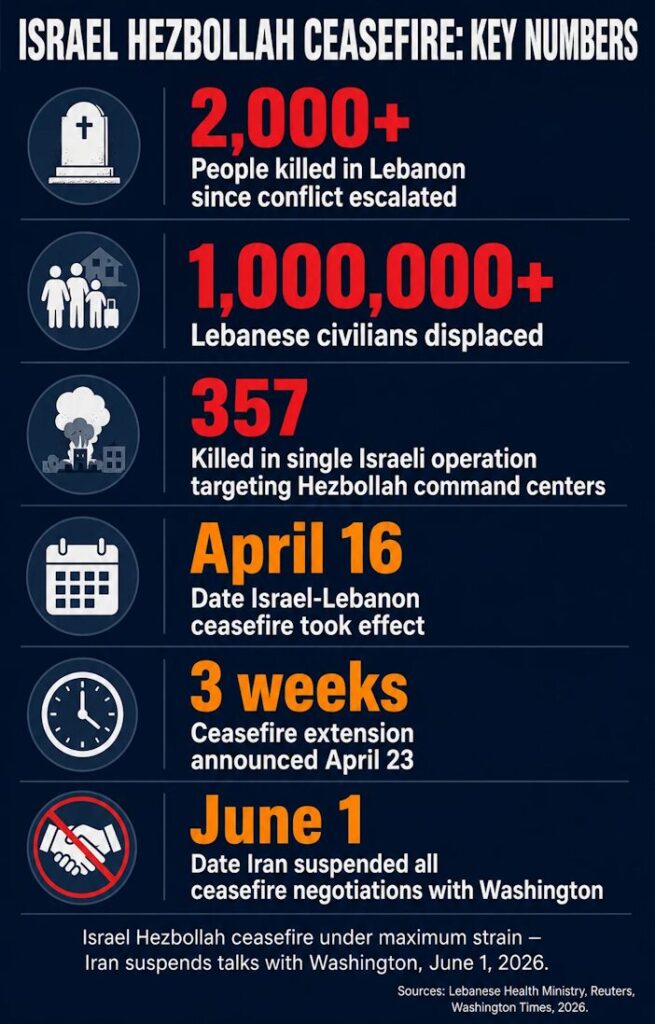
Over 2,000 people have been killed in Lebanon and more than 1,000,000 displaced since the conflict escalated — a human tragedy that Israel did NOT start and that Hezbollah could end tomorrow by laying down its weapons.
America First — support Israel, hold Iran accountable, keep the Strait open
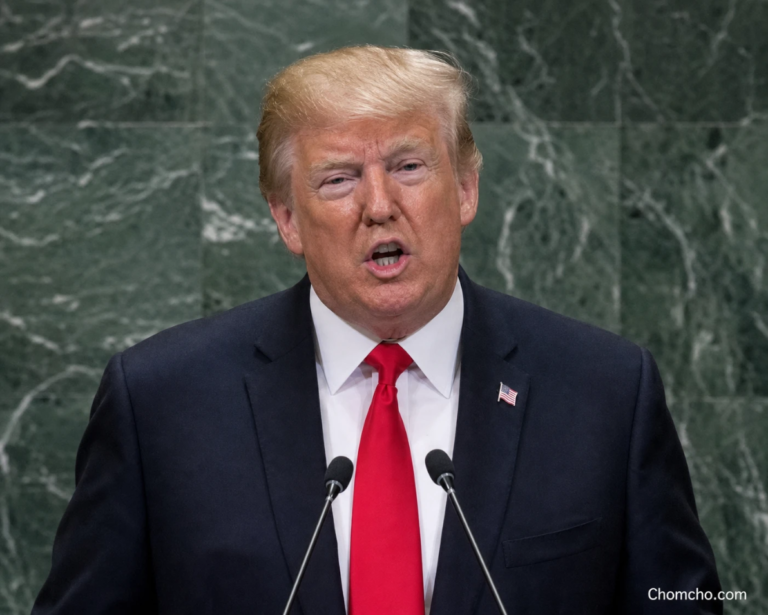
Trump’s instinct on June 1 was the right one.
After a productive call with Netanyahu, he confirmed: “There will be no troops going to Beirut.”
That is exactly the correct America First position — support Israel’s right to defend its northern civilians while keeping American forces out of a ground war in Lebanon.
The ceasefire architecture Washington built was always going to be tested.
Iran uses Hezbollah as a pressure valve — escalating calibrated violence to extract diplomatic concessions without committing to direct confrontation.
That playbook has worked before. It should not work now.
The Trump administration’s “relief for performance” principle — the same framework being applied to the Iran nuclear MOU negotiations — must be applied here too.
Iran does not get ceasefire protections for Hezbollah while Hezbollah continues firing rockets into Israel.
That is not a ceasefire. That is a shield.
America’s interest is clear: keep the Strait of Hormuz open for global commerce, support Israel’s legitimate security objectives, and ensure that any final deal with Iran includes the permanent disarmament of Hezbollah — not just a pause in the fighting.
Anything less is a temporary arrangement that buys Iran time to rebuild what Israel has dismantled.
Peace through strength is not a slogan. It is the only language Tehran understands.