
This post is also available in:
 Português
  Español
  Français
  Deutsch
  Italiano
  Русский
  Nederlands
  日本語
日本語  Polski
US strikes Iran on Memorial Day — and Iran asked for it
US strikes Iran — and the reason matters as much as the strikes themselves.
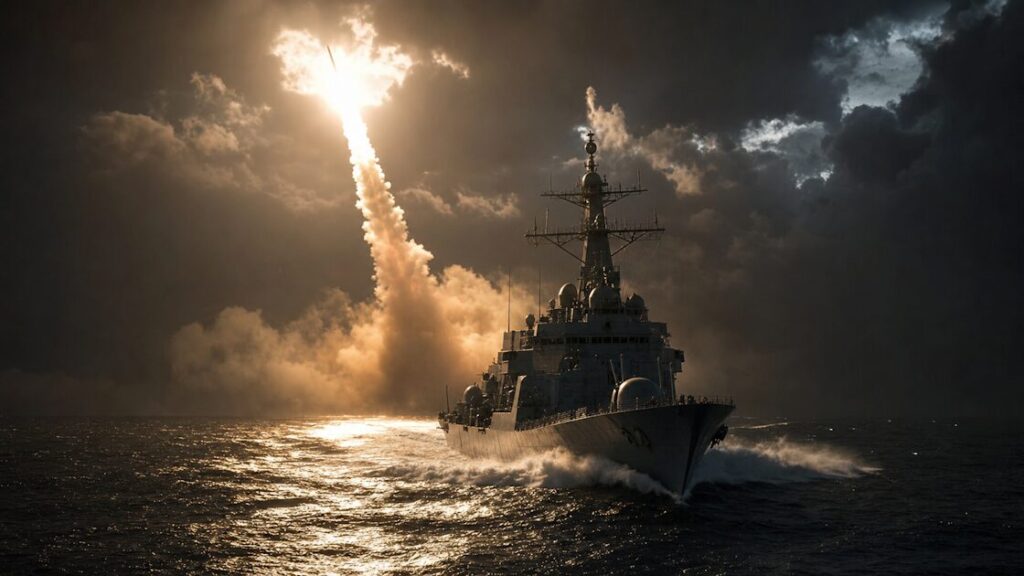
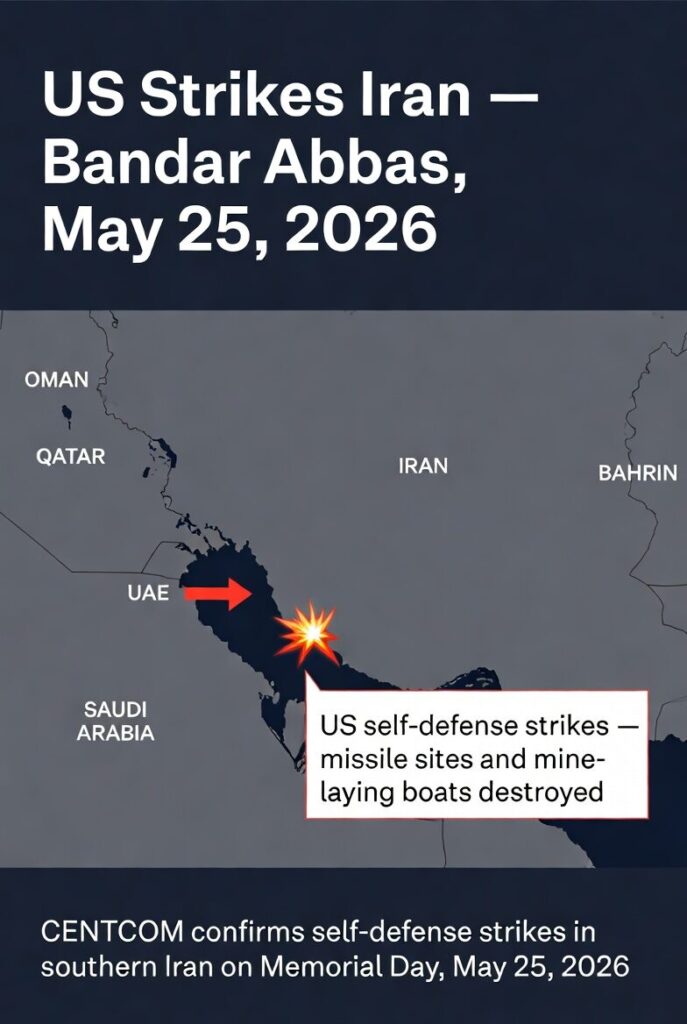
On Memorial Day 2026, U.S. Central Command confirmed that American forces conducted self-defense strikes in southern Iran, targeting missile launch sites and Iranian fast boats caught in the act of laying mines in the Strait of Hormuz.
CENTCOM spokesman Capt. Tim Hawkins (@CENTCOM) was direct: “U.S. forces conducted self-defense strikes in southern Iran today to protect our troops from threats posed by Iranian forces. Targets included missile launch sites and Iranian boats attempting to emplace mines.”
Reports of explosions were confirmed near Bandar Abbas — Iran’s major port city on the strait.
Hawkins added: “U.S. Central Command continues to defend our forces while using restraint during the ongoing ceasefire.”
This is not escalation. This is what self-defense looks like.
You do not get to hide behind a ceasefire while laying mines to kill American sailors.
On the day America honors its fallen, our troops in the Persian Gulf proved that the United States will never stop protecting its own.
Peace talks and mine-laying — Iran’s permanent contradiction
Here is where the story becomes impossible to ignore.
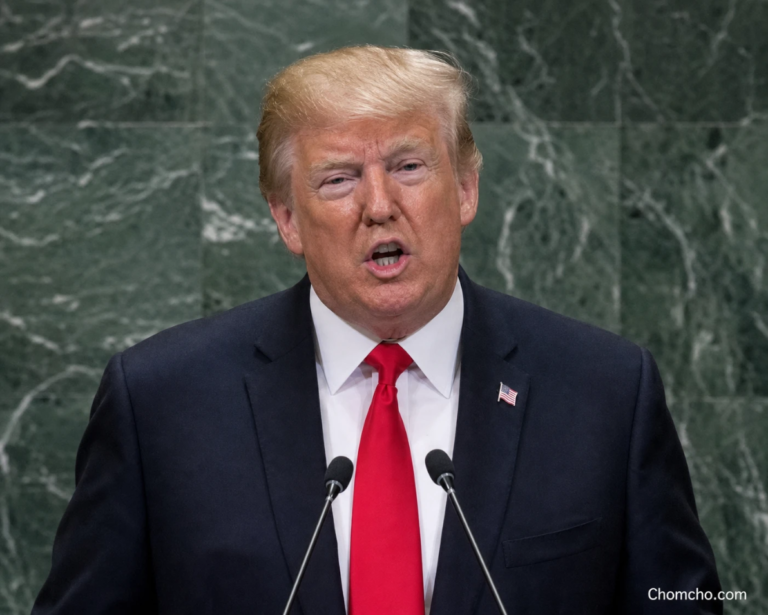
On the very same morning that US strikes Iran in self-defense, President Trump (@realDonaldTrump) posted on Truth Social: “Negotiations with the Islamic Republic of Iran are proceeding nicely! It will only be a Great Deal for all or, no Deal at all — Back to the Battlefront and shooting, but bigger and stronger than before.”
Secretary of State Marco Rubio (@MarcoRubio), on an official visit to India, told reporters the agreement being discussed was “a pretty solid thing on the table in terms of their ability to open up the strait” — adding that the US intended to engage in “a very real, significant, time-limited negotiation on the nuclear matter.”
And yet — at the exact same time — Iranian fast boats were in the water laying mines.
Iran’s parliament speaker and foreign minister were simultaneously meeting Qatari leadership to resolve “outstanding issues” in the negotiations.
Tehran talks peace at the table and lays mines in the water. That is not a ceasefire. That is Iran buying time. It has always been Iran’s playbook — and the world keeps falling for it.
Abraham Accords, nuclear deal, and the stakes for the free world
The bigger picture makes the May 25 US strikes on Iran even more significant.
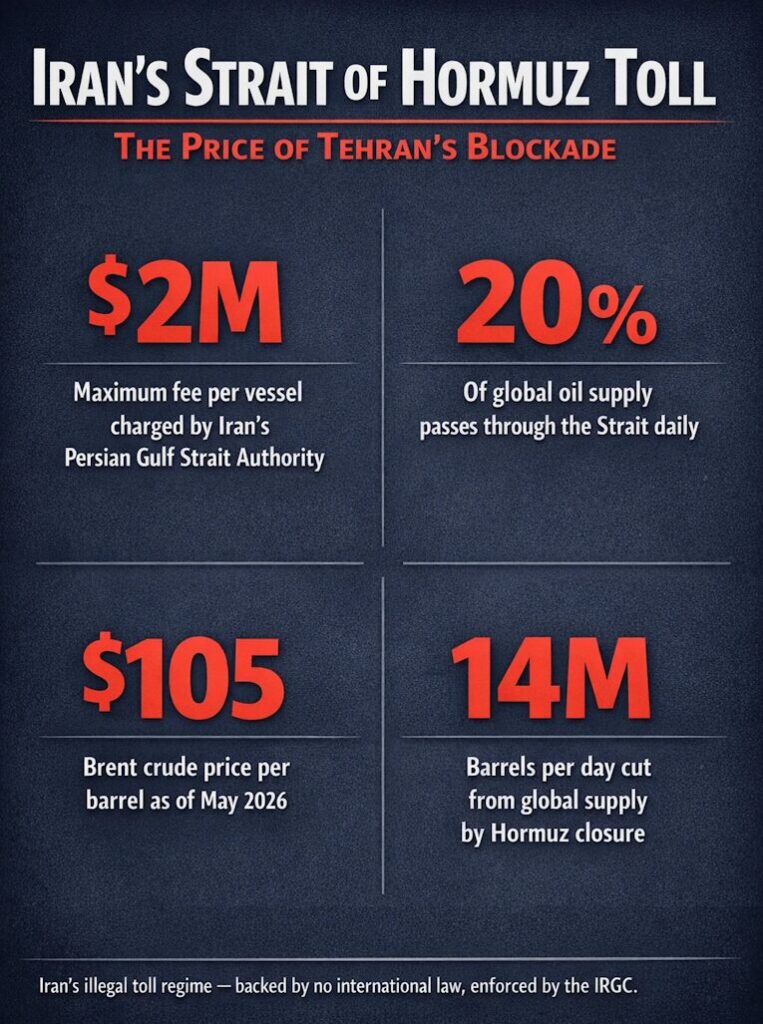
What is actually on the table is historic: an interim deal to extend the ceasefire, reopen the Strait of Hormuz, and begin a time-limited nuclear negotiation.
But Trump went further — he called on Saudi Arabia, Qatar, and other countries involved in the Iran talks to immediately sign the Abraham Accords and normalize relations with Israel.
Remarkably, he extended that offer to Iran itself, saying it would be “an honor” to have Tehran join the Accords if a deal is reached.
That is a breathtaking geopolitical vision — peace between Iran and Israel as part of the same framework that already includes the UAE, Bahrain, Sudan, and Morocco.
Israeli Prime Minister Netanyahu (@IsraeliPM) has expressed serious concerns about the US-Iran negotiations — and those concerns are entirely legitimate.
Israel cannot afford to trust a regime that funds Hamas, Hezbollah, and every proxy army that has targeted Jewish civilians for decades. Even more importantly, Iran has not committed on the nuclear enrichment question. That silence is not a negotiating position. It is a red flag.
Senior US officials confirmed the deal would not be signed that day. But the direction is clear. Trump is pursuing peace through strength — maximum pressure, active military deterrence, and ambitious diplomacy at the same time.
The May 25 strikes in Bandar Abbas were not a contradiction of that strategy.
They were proof that it is working.
In reply to: @EricLDaugh https://x.com/EricLDaugh/status/2059047879470104605?s=20