
This post is also available in:
 Português
  Español
  Français
  Deutsch
  Italiano
  Русский
  Nederlands
  日本語
日本語  Polski
Strait of Hormuz: Iran fights and negotiates at the same time
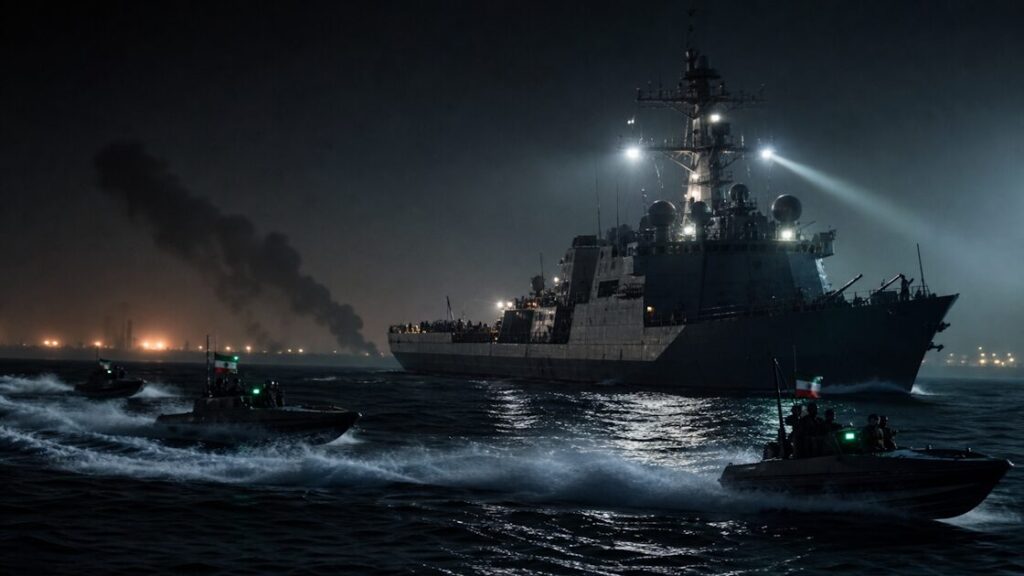
Iran’s top negotiator Mohammad-Bagher Ghalibaf remained in Qatar for peace talks throughout Tuesday — even as news broke that US forces had destroyed several Iranian speedboats and killed IRGC fighters in the Strait of Hormuz the night before.
Tehran’s message was deliberate and clear: the military clash would not derail negotiations with the United States.
Then came the strikes.
CENTCOM confirmed that US forces conducted self-defense operations in southern Iran, destroying IRGC speedboats and targeting missile launch sites near Bandar Abbas.
Iran lost boats and personnel. Yet its negotiating team stayed at the table in Doha.
Secretary of State Marco Rubio (@MarcoRubio) said a deal could come “within days,” adding that the situation in the Strait of Hormuz represented “operational and tactical matters” separate from the strategic diplomatic process.
That framing matters.
Washington is telling the world: we can fight and negotiate simultaneously. So can Tehran — and that tells you everything you need to know about this regime.
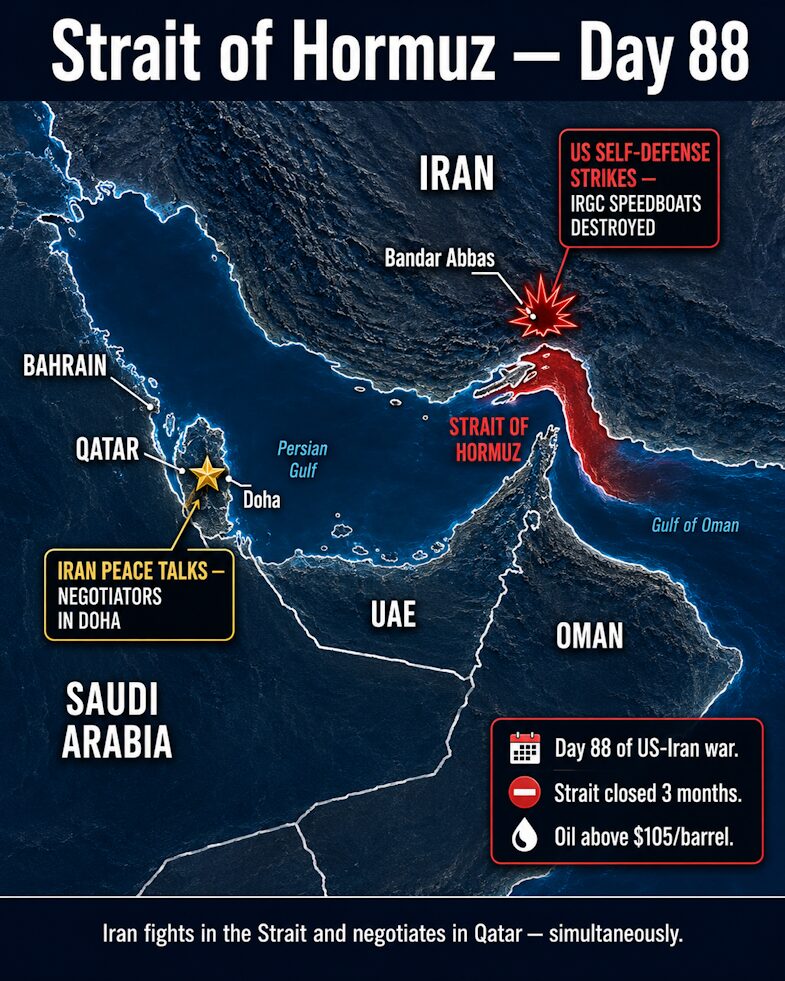
Day 88 — the war, the deal, and the gap between them
This is Day 88 of the US-Iran war that began February 28, 2026.
The Strait of Hormuz has been effectively closed for nearly three months — cutting 20% of global oil supply and pushing Brent crude above $105 per barrel.
Iran’s delegation in Qatar includes Foreign Minister Araghchi, Parliament Speaker Ghalibaf, and Central Bank Governor Hemmati — the presence of the Central Bank Governor alone signals that Iran’s economic pain is very real.
President Trump has said the deal is “largely negotiated” and will be “announced shortly.”
Iran’s foreign ministry says progress has been made but a deal is “not imminent.”
The gap between those two statements is where the war continues — on the water, in the air, and at the negotiating table simultaneously.
Talks in Doha on Monday were described as “generally positive” by Iran’s semi-official Tasnim news agency — covering Iran’s uranium stockpile and Strait reopening as the two central issues.
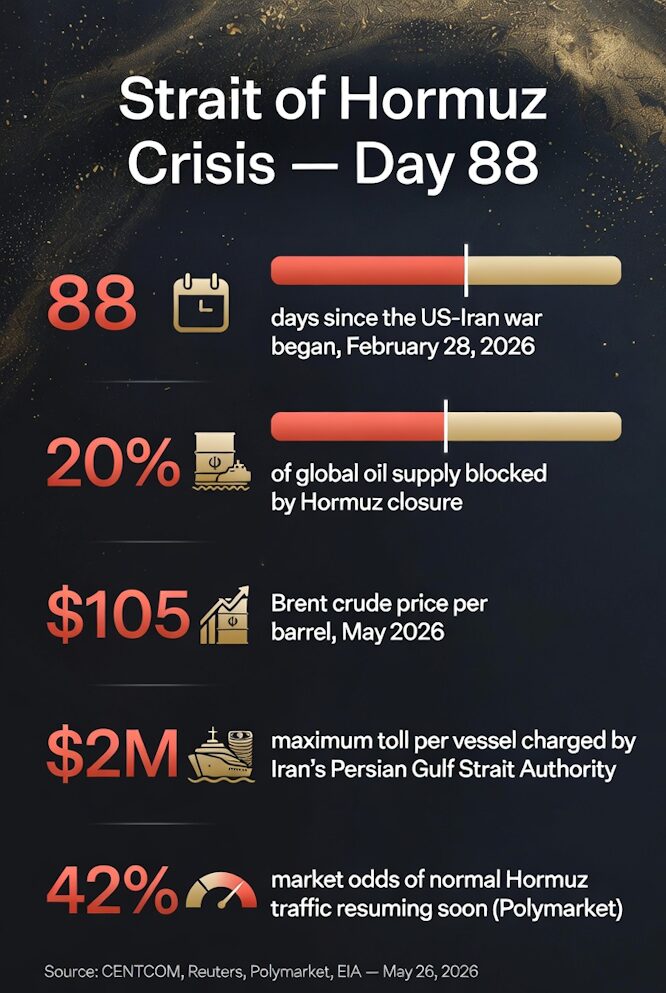
Peace Through Strength — this is what it looks like
Here is the Chomcho take. Iran loses IRGC speedboats and fighters Monday night. Its chief negotiator stays in Qatar Tuesday morning.
That is not a coincidence — that is Peace Through Strength in real time.
Military pressure and diplomatic pressure applied simultaneously, relentlessly, until the other side has no better option than to deal.
R.C.H. Lenski, the great Lutheran theologian, once wrote that the truth does not negotiate with deception — it simply outlasts it.
That principle applies here. Iran has spent decades using deception, delay, and proxy violence as diplomatic tools.
Trump is not giving Tehran the luxury of time.
Every destroyed speedboat, every targeted missile site, every day of closed Strait costs Iran more than it costs America.
The question is not whether Iran will eventually deal. The question is whether the deal will hold once the pressure eases — and given Tehran’s forty-year track record of violating agreements, that is the only honest question worth asking.
But today, the pressure is working. And that is worth acknowledging.
In reply to: @sentdefender https://x.com/sentdefender/status/2059456321460527523?s=20