
This post is also available in:
 Português
  Español
  Français
  Deutsch
  Italiano
  Русский
  Nederlands
  日本語
日本語  Polski
The fastest-growing Jihadist war on earth is happening right now: Africa’s forgotten Jihad
On January 29, 2026, Islamic State Sahel Province militants stormed the international airport in Niamey, the capital of Niger, an attack analysts called unprecedented for its boldness and reach.
It barely made headlines in the West. That single fact captures the entire problem.
While the world’s attention stayed fixed on the Middle East, Ukraine, and the US-China AI race, a catastrophic jihadist insurgency has been quietly consuming three African nations with almost no Western coverage and even less Western action.
The Sahel, the semi-arid belt stretching across Mali, Burkina Faso, and Niger just south of the Sahara Desert, has become, according to the Global Terrorism Index 2026, the world’s epicenter of Islamist terrorism.
Two main groups drive the carnage.
The first is Jama’at Nusrat al-Islam wal-Muslimin, an Al-Qaeda affiliate known simply as JNIM. The second is the Islamic State Sahel Province, an ISIS affiliate known as ISSP.
The conflict they drive killed more than 10,000 people in 2025 alone across the three countries, according to the Armed Conflict Location and Event Data Project (ACLED).
Burkina Faso is now one of the most violent jihadist battlefields on Earth, with the government controlling only about 40 percent of its own territory.
JNIM has placed Mali’s capital, Bamako, under effective siege pressure since September 2025, cutting fuel supply routes and blockading major corridors into the city.
This is not a minor regional conflict. It is Africa’s forgotten jihad, and the silence surrounding it in Western media is itself a scandal.
Who they are and what they want
It is very important to be precise about what is driving this violence, since some legacy media analysts try to reduce it purely to poverty, ethnic grievance, or political instability.
Those factors are real contributing conditions, but they do not explain the ideology.
Both JNIM and ISSP explicitly invoke Islamic law and frame their campaign as a religious jihad.
JNIM enforces sharia in the territories it controls, collects taxes from local populations under threat of violence, and issues communiques justifying every attack in religious terms.
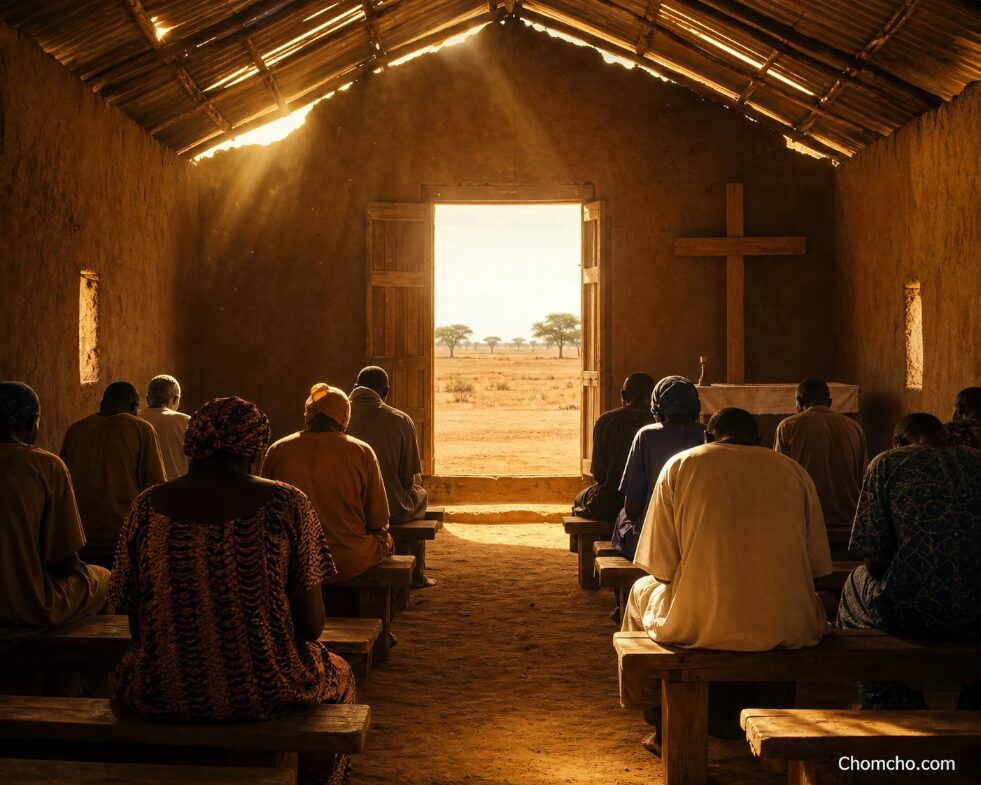
ISSP, the more violent of these two Muslim groups, is documented entering churches during Sunday worship and executing those who refuse to declare the Islamic creed.
Both groups label Christians, moderate Muslims who cooperate with their own governments, and state officials as “infidels” or “apostates” deserving death.
The military juntas now ruling Mali, Burkina Faso, and Niger stand in their way not because of any deep ideological conflict with jihadism, but simply because they represent the state authority that jihadist groups must displace in order to impose their rule.
Even within the limited reporting that mainstream outlets have given this conflict, some analysts have downplayed the religious motive, noting that these groups also kill Muslims and soldiers, as if that fact erases the religious nature of their war.
Let us not be deceived.
This is primarily a religious expansionist terror campaign, not an economic or political insurgency like those seen in other regions of the world, Latin America among them.
Christians are targeted by design, not by accident, and Muslims who refuse to submit to this extremist interpretation of Islam are punished as traitors to the cause.
These groups are now pushing west toward the Atlantic coast and north toward the Mediterranean, and they may already represent a future immigration and security threat to Europe, whether European leaders are prepared to admit it or not.
The massacres the West is not talking about
The documented atrocities in the Sahel are among the worst in the world right now, central to Africa’s forgotten jihad, and they are receiving a fraction of the media coverage given to conflicts where Western interests are more directly visible.
On February 25, 2024, ISSP gunmen entered a Catholic church in Essakane-Village, Burkina Faso, during worship and killed 15 parishioners where they knelt.
In January 2025, more than 200 insurgents attacked three villages in western Burkina Faso, killing at least 26 people, and that same day two Christian catechists were murdered on their way home from religious training.
These were not soldiers or combatants. They were believers, gathered to worship or to study Scripture, killed for refusing to renounce their faith.
ACLED recorded nearly 70 percent more fatalities in Benin in 2025 compared to the prior year, as JNIM deliberately expanded southward toward the Gulf of Guinea coast, a strategic push analysts describe as intentional rather than accidental spillover.
JNIM has also launched unprecedented kidnapping campaigns targeting foreign workers, mining sites, and transit routes as part of what ACLED calls “economic warfare,” taking 30 foreign nationals hostage across Mali and Niger in a single recent stretch.
Over 2 million people have been displaced in Burkina Faso alone. The United Nations Office for the Coordination of Humanitarian Affairs recorded 9,362 deaths across the central Sahel between January and December 2025. These are not statistics. These are brothers and sisters in Christ, killed for their faith, in a conflict the world has chosen not to see.
The geopolitical vacuum: France out, Russia in, America sidelined
The collapse of Western presence in the Sahel has directly accelerated the jihadist advance.
France spent a decade fighting this insurgency through Operation Barkhane, and while its presence was imperfect, it acted as a buffer that prevented jihadists from overrunning major cities.
After military coups in Mali, Burkina Faso, and Niger, the new juntas expelled French forces, expelled United Nations peacekeepers, and aligned instead with Russia’s Africa Corps, the rebranded successor to the Wagner Group.
The results have been catastrophic.
Africa Corps has been characterized by indiscriminate tactics and widespread human rights abuses, often targeting the very civilian populations the juntas claim to protect.
The United States also lost its most strategically important counterterrorism base in the region when Niger expelled American forces from Air Base 201 in Agadez, a critical hub for drone operations and intelligence collection across the entire central Sahel.
China is quietly expanding mining contracts and infrastructure deals across all three countries as Western influence collapses behind it.
The Alliance of Sahel States, formed by Mali, Burkina Faso, and Niger, has formally broken with the West and turned toward Moscow.
The vacuum left by France’s retreat and America’s expulsion has been filled not by stability, but by jihadist expansion and Russian opportunism, a combination that serves neither the people of the Sahel nor the long-term security interests of the West.
A word to the persecuted Church, and a call to pray
The consequences of Africa’s forgotten jihad are already spreading beyond the Sahel’s borders.
European intelligence agencies warn that the combination of jihadist expansion, state collapse, and mass displacement is creating a migration pressure pipeline from sub-Saharan Africa through North Africa toward Europe, the same route that has already destabilized European politics for a decade.
JNIM has openly stated its strategic goal of reaching the Atlantic coast, and Benin, Togo, Ghana, and Ivory Coast are already recording cross-border raids and attacks on military posts.
The director of Open Doors warned in January 2026 that the center of gravity of global Christianity has shifted to Africa, but it is there that the Church is now primarily under attack.
Sub-Saharan Africa is home to nearly one-third of the world’s Christian population, and the Sahel is ground zero for the persecution of that community right now.
Washington has reduced its footprint in the region. Europe is distracted by Ukraine and the Iran nuclear talks. The media has moved on.
But the Church of Jesus Christ in Mali, Burkina Faso, and Niger has not moved on, because it has nowhere else to go.
To every Christian brother and sister enduring this hidden persecution, the Word of God speaks directly across the centuries.
Joshua 1:9: “Remember that I have told you this: Be strong and do not be afraid. Do not be weak but be brave. I, the Lord your God, will be with you, everywhere that you go.”
These words were spoken to a man leading God’s people into a land surrounded by enemies far more numerous and better armed than they were.
They apply with equal force to a congregation in Burkina Faso meeting in secret, to a catechist walking to Bible study in a village under siege, and to a pastor in Niger who has not stopped preaching though the jihadists have promised to return.
Christians everywhere, in the United States, Latin America and around the world, are called to remember the persecuted Church.
Pray by name for Mali. Pray by name for Burkina Faso. Pray by name for Niger. Please remember the names of these countries, which are hardly known by most people outside Africa.
Pray for the believers there as you would pray for your own family, because in Christ, they are.
America First does not mean America alone, and a nation that still calls itself one nation under God owes its prayers, and its voice, to the brothers and sisters this forgotten jihad is trying to silence.