
This post is also available in:
 Português
  Español
  Français
  Deutsch
  Italiano
  Русский
Analysis and opinion on Israel concerns about the MoU
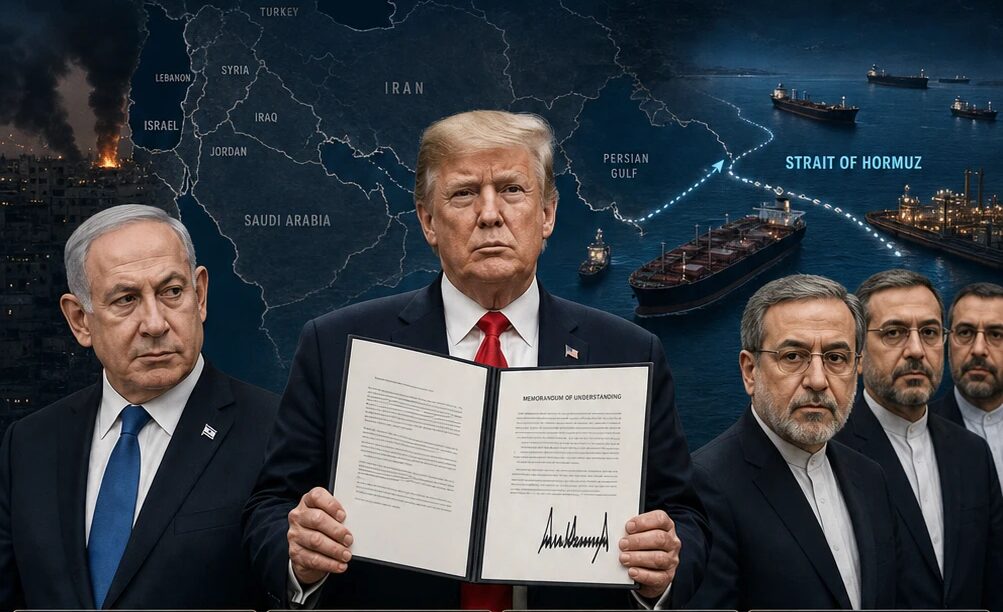
President Donald Trump finalized the Memorandum of Understanding (MoU) between the United States and Iran this week, launching a 60-day negotiation process intended to reduce tensions, reopen the Strait of Hormuz, and create a framework for a broader agreement.
Before examining Israel’s concerns, it is important to understand what this document is and what it is not.
The MoU is not a final peace agreement. It is not a comprehensive settlement of the nuclear issue. It is not a permanent resolution of the broader conflict between Iran, Israel, and the United States.
Instead, it is a framework agreement designed to create conditions for future negotiations.
It is also important to note that Israel did not sign the MoU. Therefore, the document does not directly impose legal obligations on Israel.
For this analysis, we will focus primarily on the published text of the MoU rather than on earlier leaks, draft versions, or reports from Iranian state media.
Those reports often differed from the final published document and created significant confusion during the negotiation process.
The purpose of this article is not to determine whether the MoU is good or bad.
Rather, it is to evaluate the main Israeli concerns and determine whether they are supported by the published text, based on reasonable forecasts, or dependent upon future developments that have not yet occurred.
Sanctions relief before major concessions
One of Israel’s concerns is that Iran could receive economic benefits before making major concessions on security issues.
This concern is understandable, but it requires some nuance.
The published MoU appears to create pathways for future economic relief and expanded commercial activity. However, many of the broader sanctions measures appear linked to future compliance and implementation rather than immediate unconditional relief.
The concern therefore is not necessarily that Iran has already received everything it wants. The concern is that Tehran could gain economic breathing room before the most difficult security issues are resolved.
Based on the published text, this concern is partially supported. Much depends on how the next sixty days unfold and whether future concessions are matched by meaningful Iranian actions.
We certainly hope that Trump will insist on full compliance throughout the 60-day process and that no additional money is released before Iran meets its obligations.
Doing so would help reassure the Israeli side that this concern is being taken seriously and that any future peace agreement will be built on verified actions rather than expectations alone.
The nuclear issue remains unresolved
This is arguably the strongest Israeli concern.
The published MoU does not actually require Iran to dismantle its nuclear infrastructure. It does not require the permanent end of uranium enrichment. It does not require the destruction of existing facilities.
Instead, the agreement postpones those difficult questions to future negotiations.
Supporters of the MoU argue that this is the purpose of a framework agreement. Critics respond that the most important issue has been deferred rather than solved.
Regardless of one’s position, the underlying fact remains the same: the future of Iran’s nuclear program remains unresolved.
For a country that views a potential Iranian nuclear weapon as an existential threat, this concern is entirely understandable.
During the next 60 days, Israeli leaders should consistently remind the Trump administration of one of its stated goals throughout the Iran conflict: the destruction of Iran’s nuclear weapons program.
If that objective remains central to the negotiations, Israel will have greater confidence that its core security concerns are being addressed.
Missiles and proxy networks
Another significant concern involves Iran’s ballistic missile arsenal and support for regional proxy organizations.
The published MoU focuses primarily on de-escalation, maritime security, and future negotiations.
It does not appear to impose major restrictions on Iran’s missile capabilities. Nor does it appear to directly address Tehran’s relationships with groups such as Hezbollah.
This does not mean those subjects cannot be addressed later. However, it does mean they are not resolved as of June 2026.
For Israeli decision-makers, missile capabilities and proxy networks represent security threats separate from the nuclear issue.
As a result, many Israeli observers see this concern as one of the most legitimate criticisms of the current framework.
Hezbollah, Lebanon, and future military pressure
This concern is often misunderstood.
The strongest version of the concern is not that the MoU legally prevents Israel from defending itself. Israel is NOT a signatory to the agreement and remains responsible for its own security decisions.
The concern is instead political and diplomatic.
Critics worry that a successful de-escalation process could create pressure against future Israeli military operations while Hezbollah remains active.
Those concerns are legitimate, especially after President Trump publicly urged Israel to avoid actions that could disrupt the final MoU negotiations.
However, we at Chomcho believe that Israel retains the right of self-defense at all times, including during the most critical stages of a conflict or peace process.
Israel also fears that a prolonged negotiating process could provide time for Hezbollah to recover from recent setbacks.
Whether that ultimately happens remains uncertain.
However, Israeli concerns are legitimate.
Many Israelis point to past ceasefires in Gaza, arguing that Hamas used periods of reduced fighting to rebuild infrastructure, replenish resources, and restore military capabilities.
That experience helps explain why Israeli leaders remain cautious about any arrangement that could allow hostile groups time to recover.
What can also be said in June 2026 is that the published text does not appear to directly restrict Israeli military action.
The debate centers on possible future diplomatic pressures rather than legal obligations contained within the agreement itself.
Different priorities or growing tensions?
The final debate may reveal less about the MoU itself and more about differing priorities among allies.
Israel’s primary concern is national security. Israeli leaders naturally focus on Iran’s nuclear ambitions, ballistic missile capabilities, and support for armed proxy groups operating throughout the region.
The Trump administration faces a broader set of strategic pressures.
The Strait of Hormuz carries roughly one-fifth of global petroleum consumption. Any prolonged disruption affects global energy markets, shipping costs, inflation, and economic stability far beyond the Middle East.
From Washington’s perspective, reopening that vital maritime corridor, preventing a wider regional war, and creating a diplomatic pathway forward are urgent priorities.
These priorities do not necessarily contradict one another.
Israel is focused on long-term security outcomes. Washington may be focused on preventing an immediate regional and economic crisis while attempting to negotiate those longer-term issues afterward.
That does not mean one side is right and the other is wrong.
It may simply mean that close allies are approaching the same problem from different directions.
The real test of the MoU will therefore not be the document itself.
The real test will be what happens during the next sixty days.
Again, many Israeli concerns appear legitimate.
Some are strongly supported by the published text. Others depend on future developments that have not yet occurred but are realistic scenarios that Israeli leaders cannot afford to ignore.
The next phase of negotiations will determine whether this framework becomes a lasting agreement or merely a temporary pause before the next crisis.
Different priorities, shared goals
President Trump also deserves credit for pursuing a difficult balance that few leaders would willingly attempt.
On one hand, he has repeatedly demonstrated support for Israel’s security and its right to defend itself against genuine threats.
On the other, he carries the responsibility of protecting American service members, preventing a wider regional war, and avoiding the economic consequences that could result from a prolonged disruption of global energy markets.
Whether one agrees with every aspect of the MoU or not, the administration’s desire to pursue peace while maintaining security should not be dismissed lightly.
It is also worth remembering that the relationship between the United States and Israel is far larger than any single negotiation or diplomatic disagreement.
For decades, the two nations have shared intelligence, military cooperation, democratic values, and a common commitment to confronting terrorism and regional instability.
Friends may occasionally disagree on tactics, priorities, or timing, but such disagreements should not be mistaken for a breakdown in the alliance itself.
Israel remains one of America’s closest allies, and we hope that the strong partnership between both nations continues long after the current negotiations have concluded.
Strong allies can disagree on tactics while remaining united on strategic goals.