
This post is also available in:
 Português
  Español
  Français
  Deutsch
  Italiano
  Русский
  Nederlands
  日本語
日本語  Polski
Armenia Election Results and the Risk of Another Ukraine
The Armenia election results are official.
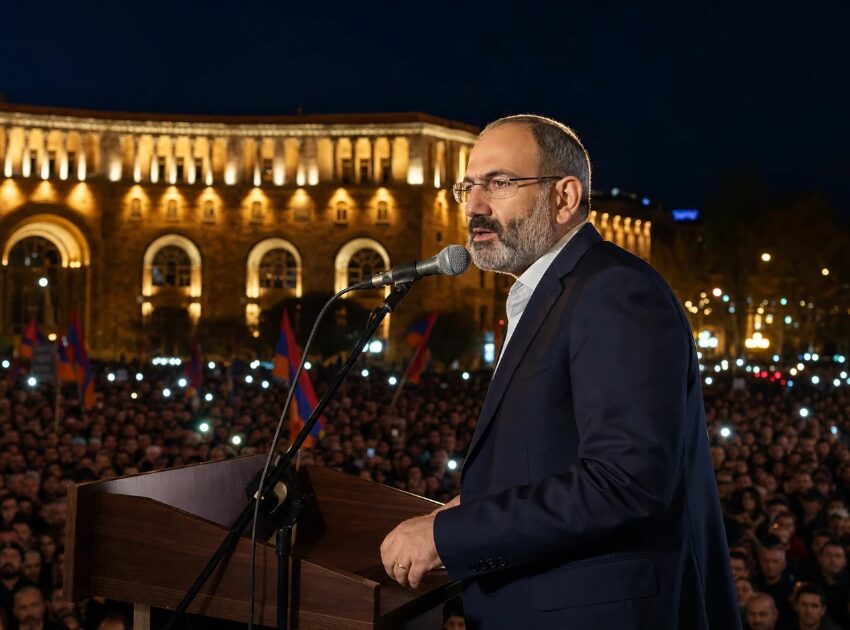
On June 7, 2026, Prime Minister Nikol Pashinyan’s Civil Contract party won 49.8% of the vote.
The pro-Russian Strong Armenia alliance, financed by Russian-Armenian multimillionaire Samvel Karapetyan, came a distant second with 23.3%.
Voter turnout reached nearly 59%. Russia threw its full weight behind this election. Armenia voted anyway.
We covered this story ten days ago when Russia threatened to suspend Armenia from the Eurasian Economic Union (EAEU) after 50 European leaders held a globalist summit in Yerevan.
The EAEU suspension threat, the recalled ambassador, the trade bans on Armenian food exports — all of it was Moscow’s attempt to intimidate a small nation of 3,000,000 people back into its orbit.
It failed.
A brief history: Armenia, Russia, and the Soviet shadow
To understand what just happened, a little context helps.
Armenia spent most of the 20th century as a Soviet republic, fully absorbed into Moscow’s empire from 1920 until independence in 1991.
For decades after independence, Russia remained Armenia’s dominant security guarantor, energy supplier, and economic partner.
Russian troops were stationed on Armenian soil. Russian gas kept Armenian homes warm at subsidized prices. The EAEU gave Armenian exporters access to Russia’s vast market.
But Russia’s usefulness as a protector collapsed in 2020, when Azerbaijan, a nation with 10.45 million people — with Turkish military support — launched a devastating offensive and recaptured Nagorno-Karabakh.
Russian peacekeepers stood and watched.
The mutual defense treaty Armenia believed it had with Moscow proved hollow.
In 2023, Azerbaijan completed the expulsion of all ethnic Armenians from their ancestral homeland in Karabakh, and again Russia did nothing.
That betrayal fundamentally broke Armenian trust in Moscow. Pashinyan began the pivot West, and Armenian voters have now ratified it twice.
Why Armenians want the EU — and what they are really seeking
Armenian enthusiasm for EU integration is not primarily ideological.
Most Armenians are not passionate globalists. They are not marching for gender ideology or open borders.
They are a deeply Christian people — the first nation in history to adopt Christianity as a state religion, in 301 AD — with a fierce sense of national identity forged by centuries of survival, including the 1915 Turkish genocide that nearly destroyed their people entirely.
The 1915 genocide was carried out by the Ottoman Empire, the predecessor of modern Turkey, killing an estimated 1,500,000 Armenians through systematic massacres, deportations, and starvation.
Turkey has never acknowledged it.
Remarkably, Pashinyan is now pursuing diplomatic normalization with Ankara anyway — the calculated pragmatism of a small nation trying to survive in a very dangerous neighborhood.
What Armenians want from the EU is practical: economic diversification away from Russian dependency, visa-free travel for their diaspora, investment, rule of law reforms, and above all a security umbrella that Russia has proven it cannot or will not provide.
As analyst Thomas de Waal of Carnegie Europe has noted, Armenia’s EU pivot is driven primarily by survival instincts, not Western liberal values.
The EU promises prosperity and protection. Russia delivered betrayal at Karabakh.
For ordinary Armenians, the choice has become that simple.
EU foreign policy chief Kaja Kallas said after the results that the Armenian people showed their “firm commitment to democracy, peace” and to “closer ties with Europe” despite “heavy Russian pressure” and “economic coercion measures.”
Ursula von der Leyen called Russia’s trade bans “nothing short of economic coercion” and promised an EU economic support package.
The EU is now Armenia’s largest foreign donor and is pursuing visa liberalization, energy diversification, and digital connectivity agreements.
Russia’s reaction and the Ukraine parallel nobody wants to say out loud
Moscow’s reaction was predictable and revealing.
The Kremlin said it was “waiting for final results” and noted “numerous irregularities.”
Russian Foreign Ministry spokeswoman Maria Zakharova accused the West of “unprecedented pressure on the opposition and interference.”
Russia blamed the EU for manipulating the election.
The irony is almost too much. Russia, which ran disinformation campaigns, funded the pro-Russian opposition, recalled its ambassador, and imposed trade bans on Armenian products — accused the EU of interference.
But here is the uncomfortable question that nobody in Brussels wants to answer honestly. Is Armenia becoming the next Ukraine?
The parallel is striking.
A post-Soviet nation in Russia’s backyard. A pro-Western government moving toward EU integration. A Russian-backed opposition financed by oligarchs. A globalist summit held in the capital with Macron personally campaigning in the streets. French arms promises.
And now an election result that Moscow refuses to fully accept.
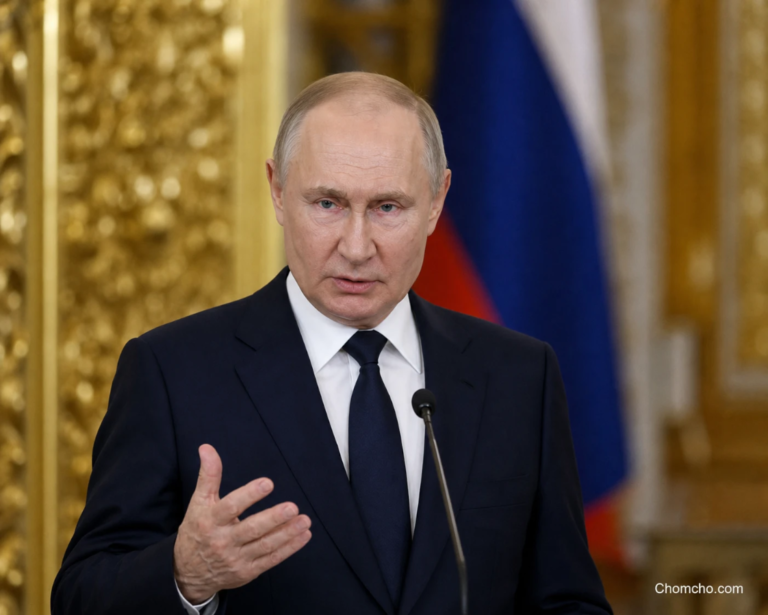
Vladimir Putin himself drew the comparison explicitly, warning that Armenia’s EU pivot resembles Ukraine in 2013, when Western pressure to abandon a Russian trade deal triggered the Maidan revolution and eventually the full-scale war of 2022.
That warning is not irrational, even if it comes from a man with blood on his hands.
The globalist expansion agenda — and what it could cost Armenia
Macron promised Armenia weapons and a formal France-Armenia Strategic Partnership covering defense, AI, and cybersecurity.
The EU is building transport and energy corridors through Armenian territory.
The U.S.-backed TRIPP corridor — the Trump Route for International Peace and Prosperity — aims to create new transit routes linking Armenia, Azerbaijan, and the wider region.
Three scenarios now exist for Armenia.
The optimistic scenario: EU integration proceeds peacefully, Russia accepts the new reality, economic diversification reduces Armenian dependency on Moscow, and the TRIPP corridor brings genuine prosperity. This is possible.
The dangerous scenario: Russia escalates — economically, politically, or militarily — treating Armenia the way it treated Ukraine after the 2014 Maidan.
With Russian border guards already withdrawn from Armenian checkpoints and Moscow’s trust destroyed, the deterrence that once existed is gone.
France is promising weapons, but France is not going to fight Russia in the South Caucasus. No Western European country would do that.
History reminds us that great powers make grand promises from a comfortable distance.
Some of them have a complicated record when the moment of truth arrives even on their own soil, much less on the soil of another nation.
Armenia should weigh globalist Macron’s guarantees accordingly.
Third, the most likely scenario: a prolonged cold confrontation in which Armenia suffers economically, Russia applies continuous pressure, the EU offers support packages but no real security guarantees, and Armenia is left navigating an increasingly dangerous position largely alone.
America First — the right position is still the same
Trump endorsed Pashinyan personally on Truth Social, calling for his “COMPLETE and TOTAL” re-election.
Secretary of State Marco Rubio signed a strategic partnership in Yerevan in May. The TRIPP corridor is a U.S.-backed initiative that serves American interests in the region.
American sympathy for Armenian sovereignty is entirely understandable. No small Christian nation should be economically strangled into submission by a nuclear power.
Armenia’s people deserve to choose their own future.
But America’s strategic interest and European globalism’s expansion agenda are not the same thing.
The EU is absorbing nations on Russia’s border as fast as it can.
Macron is handing out arms promises like business cards. And the expectation will be that Washington steps in when the situation escalates. Not if. When.
We wrote it before and we will write it again.
America has no vital national interest in fighting a proxy war with nuclear Russia over Armenia’s EU membership.
The TRIPP corridor is worth supporting. Economic engagement is worth pursuing. But military entanglement in Europe’s imperial expansion into Russia’s historical backyard is not America First policy.
The Armenia election results are a victory for the Armenian people. They deserve respect for their courage. But courage in the ballot box does not guarantee security in the years ahead.
Europe has a long track record of making bold promises to smaller nations and quietly stepping back when the cost of keeping them becomes real.
NATO members spent decades underfunding their own defense, expecting America to carry the burden.
Ukraine was promised a European future and got a war instead. Armenia should study that pattern carefully.
When trouble comes, and in that neighborhood trouble always comes, the same European leaders cheering in Yerevan in June 2026 will be the first to call Washington for help and the last to send their own soldiers.
We hope Washington remembers that.
Let’s pray for the brave and long-suffering people of Armenia. They are also our brothers and sisters in Christ!