
This post is also available in:
 Português
  Español
  Français
  Deutsch
  Italiano
  Русский
Iran attacks the U.S. while Trump was seeking peace
The title says it all.
On the night of June 8, 2026, President Trump was attending Game 3 of the NBA Finals in New York.
He told reporters there was a “good chance” of signing a peace deal with Iran within “two or three days.”
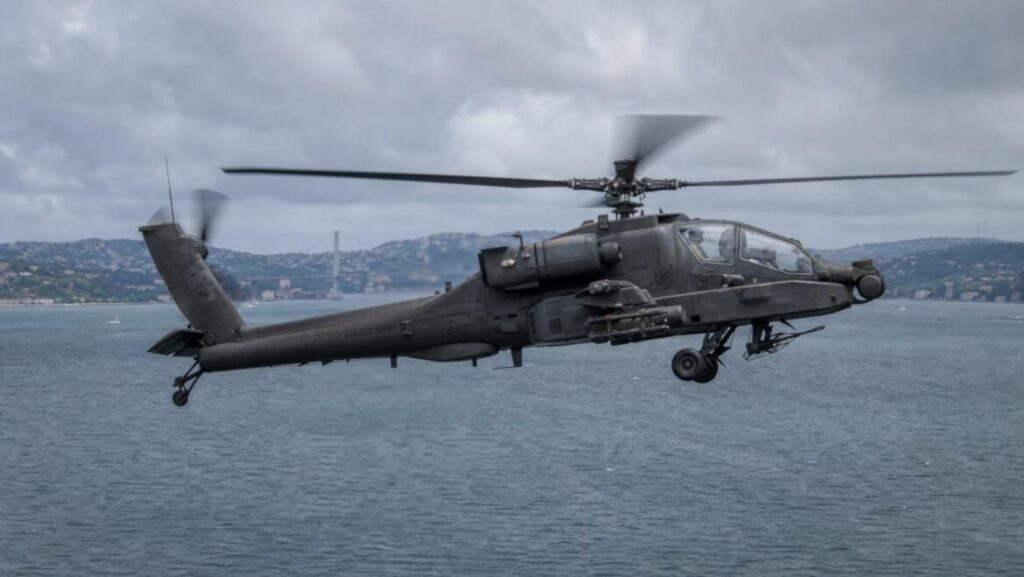
Hours later, Iran shot down a U.S. Army Apache helicopter near the Strait of Hormuz.
Trump posted on Truth Social the next morning: “The United States must, of necessity, respond to this attack.”
And it did.
How we got here: the last few days
- Iran demanded any U.S.-Iran ceasefire must include a halt to all Israeli operations in Lebanon
- Israel and Lebanon reached a U.S.-brokered conditional ceasefire on June 3-4, 2026
- Hezbollah immediately rejected the deal, declaring: “We have given no commitment to anyone”
- Iran’s Foreign Minister Abbas Araghchi warned: “The U.S. must choose, ceasefire or continued war via Israel. It cannot have both”
- Iran declared Israel had “crossed all red lines” in Lebanon and launched multiple waves of ballistic missiles against Israeli territory on June 7-8
- Israel retaliated with strikes inside Iran, despite Trump’s explicit calls for restraint
- Iran then shot down the U.S. Apache helicopter, escalating directly against American forces
- Trump vowed to respond. U.S. strikes resumed against Iran within hours
What Iran’s behavior is really telling us
Iran’s insistence on linking Lebanon to any peace deal reveals something important.
Hezbollah is hurting badly. It no longer has Syria as a supply corridor.
Lebanon itself expelled Iran’s ambassador in March 2026, declaring him persona non grata over Iran’s direct military operations on Lebanese soil.
Iran defied the expulsion order and refused to leave.
Israel has confirmed it is targeting IRGC commanders operating inside Lebanon.
Iran is fighting desperately to protect what remains of Hezbollah because without it, Iran loses its most powerful weapon against Israel.
Israeli Defense Minister Israel Katz vowed to intensify operations against Hezbollah and rejected Iran’s attempts to link the two fronts entirely.
Israel read the situation correctly. Iran’s demand to include Lebanon in any deal was not a negotiating position. It was a distress signal.
Iran war lessons: when goodwill becomes an invitation to attack
Consider the sequence carefully.
Iran attacked Israel even though Iran itself was not the one attacked first in this latest round.
Then Iran attacked U.S. forces directly, even as Trump was publicly and sincerely pursuing a diplomatic solution.
Even as JD Vance had signaled that U.S. and Israeli interests sometimes “diverge,” offering Iran a diplomatic opening. Iran’s response was to shoot down an American helicopter.
From these events, one conclusion is hard to avoid.
Israel has long argued that Iran only understands force.
Even some of America’s best leaders, including Trump, may have underestimated that reality.
Restraint was met not with reciprocity but with escalation. Iran does not interpret goodwill as an opportunity. It interprets it as a weakness to exploit.
A regime running out of leaders
Iran entered this conflict with a seasoned military command structure.
That structure is now largely destroyed.
IRGC commander Ahmad Vahidi, appointed only in March 2026 following the deaths of his two predecessors, is now reported killed in Israeli strikes on Tehran as of June 8. These reports remain unconfirmed.
Supreme Leader Mojtaba Khamenei has not appeared publicly since his appointment. Israeli analysts describe him as an “empty entity” who does not appear to control the regime.
It is not even clear whether he is alive.
What is clear is this. The IRGC has now gone through at least three commanders since this conflict began. At least 11 senior IRGC commanders have been confirmed killed.
Also, Iran’s entire Axis of Resistance has been degraded.
Hamas’s original leadership is gone. Hezbollah’s Hassan Nasrallah was killed in 2024. The command network that Iran spent decades building has been systematically dismantled.
And yet the regime keeps escalating. New leaders replace the dead ones. And the new ones make the same mistakes.
Trump wanted peace. He pursued it openly and patiently. Iran shot down his helicopter while he watched basketball.
Trump and Netanyahu may not want to send ground troops into Iran. They have made that clear.
But as they have already demonstrated, they can reach any Iranian leader, anywhere, no matter how well hidden.
Iran’s current leadership would do well to ask what happened to the ones who came before them.
Iran only learns one lesson at a time. And it never seems to learn it fast enough.