
This post is also available in:
 Português
  Español
  Français
  Deutsch
  Italiano
  Русский
  Nederlands
  日本語
日本語  Polski
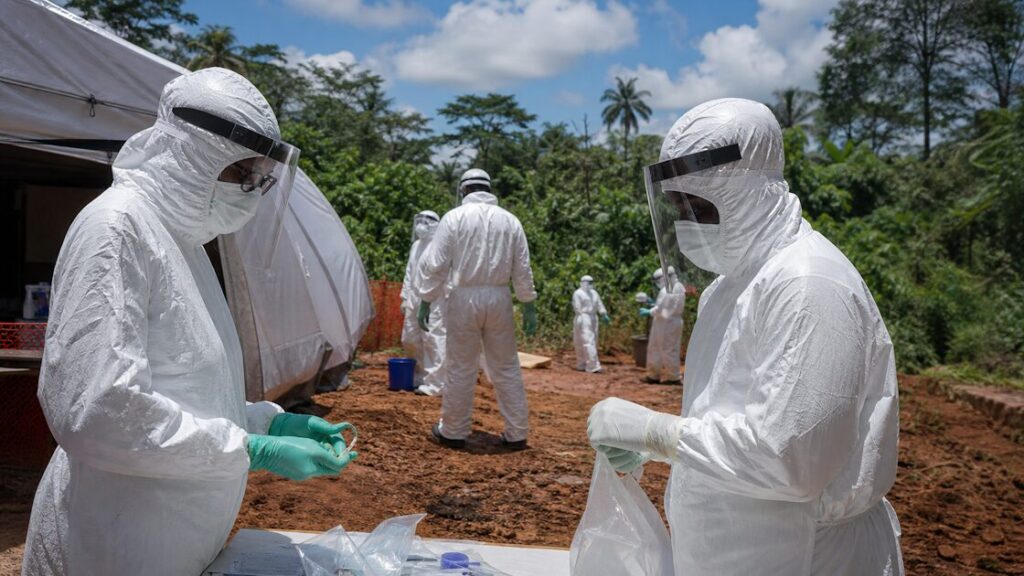
Ebola outbreak in Democratic Republic of Congo (DRC) hits World Cup doorstep
The World Health Organization (WHO) declared the Ebola outbreak in the Democratic Republic of Congo a Public Health Emergency of International Concern on May 17, 2026.
This is not a routine announcement.
A PHEIC is the highest alert level WHO can issue — the same designation used for COVID-19.
The strain involved is Bundibugyo, and here is the detail that should concern everyone: there is no approved vaccine. No licensed therapy. Nothing.
WHO Director General Tedros Adhanom warned bluntly that the outbreak is “outpacing the response” and personally flew to Congo on May 28 to assess the situation on the ground.
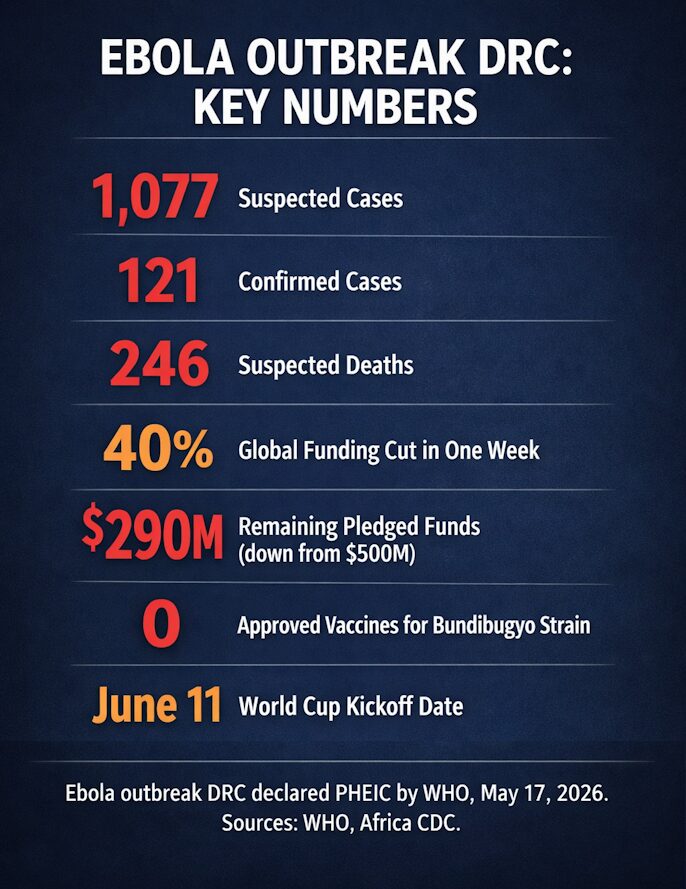
As of May 27, there are 1,077 suspected cases, 121 confirmed, and 246 suspected deaths — with health experts warning that real numbers are almost certainly much higher due to massive underreporting in active conflict zones where armed groups control territory and attack health workers.
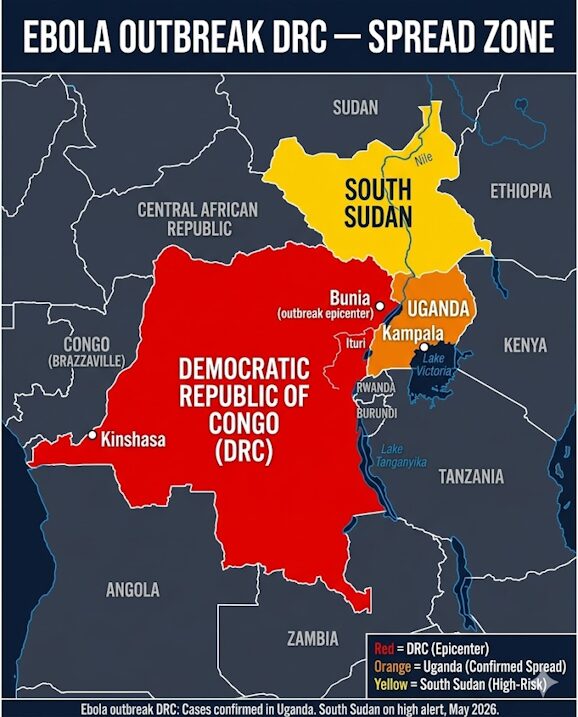
The epicenter is Ituri province and the North and South Kivu regions of eastern DRC — areas partially controlled by Rwanda-backed M23 rebels.
Isolation tents have been burned. Hospitals have been attacked by mobs. Aid flights in and out of Bunia are being blocked.
The transport ministry is not processing exemptions for medical aid workers trying to reach patients.
WHO said it plainly: “Attacks on health facilities make tracking cases and their contacts nearly impossible.”
This is not just a health crisis. It is a security crisis, a governance crisis, and a funding crisis all happening simultaneously in one of the most unstable regions on earth.
Ebola outbreak DRC: no vaccine, no funding, no plan
The funding situation alone should alarm every serious observer.
Africa CDC Director Jean Kaseya announced that $500 million initially pledged by the global community collapsed to approximately $290 million within days — a 40% funding cut in less than a week.
Kaseya was direct and emotional about it: “People are dying! How can we come and say: we commit X million dollars, and the next day they are calling me to say no, it was a mistake?”
That is not a bureaucratic complaint. That is a man watching people die while donor nations quietly walk back their commitments.
Africa CDC is now pushing the World Bank and the African Development Bank to repurpose existing funds to fill the gap.
Meanwhile, WHO confirmed that developing a Bundibugyo-specific vaccine could take three months or more — far too late for the current wave.
Vaccines may come — but trust in them is gone
Researchers are evaluating whether existing Zaire-strain vaccines offer any cross-protection, but human trials are unlikely before August at the earliest.
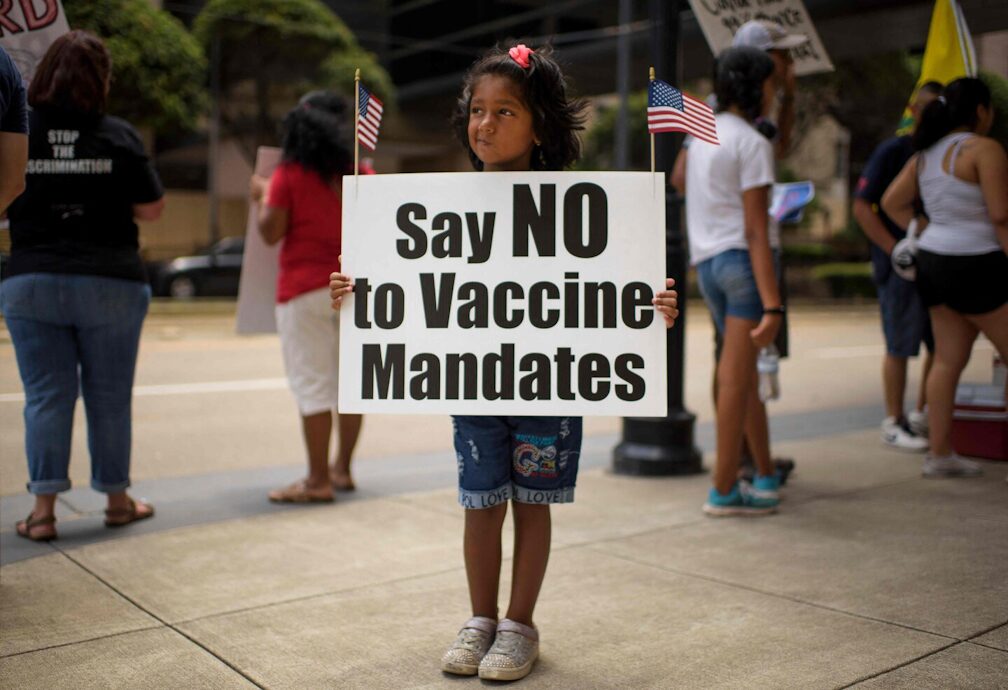
And here is the uncomfortable truth that no global health bureaucrat wants to say out loud — even if a vaccine were ready tomorrow, a significant portion of the world’s population would not take it.
Trust in rushed vaccines collapsed after COVID-19.
Millions of people watched health authorities mandate experimental shots, silence legitimate scientific debate, punish dissenting doctors, and then quietly walk back their own guidance when the science caught up with the skeptics.
That credibility is not coming back overnight.
Any Ebola vaccine rolled out under emergency authorization will face the same wall of distrust — and frankly, after the way COVID-19 was handled, that skepticism is not entirely unreasonable.
Governments that want people to accept future vaccines must first answer honestly for what they did with the last one. That conversation has barely started.
Ebola outbreak DRC exposes open border risks before the World Cup
And here is where this story hits American soil directly.
The 2026 FIFA World Cup kicks off June 11 — hosted jointly by the United States, Canada, and Mexico. Millions of international visitors. Dozens of stadiums. Maximum cross-border movement.
On May 27 and 28, all three host nations issued coordinated travel measures in direct response to the Ebola outbreak DRC emergency.
The United States banned non-citizens who had been in DRC, Uganda, or South Sudan in recent weeks — and the CDC extended that ban to green card holders who visited those countries in the previous 21 days.
Canada imposed a 90-day entry ban for residents of affected countries and required citizens returning from those areas to observe a 21-day quarantine starting May 30.
Mexico tightened airport Ebola screening and also asked arrivals from DRC to self-quarantine for 21 days.
Kenya approved a U.S. request to establish an Ebola quarantine facility at Laikipia air base for Americans evacuated from the region.
Cases have already spread to Uganda.
South Sudan and Rwanda are on high alert. The Bahamas, Jordan, Bahrain, Thailand, and the Cayman Islands all announced their own travel bans or quarantine requirements on May 27.
India postponed the India-Africa Forum Summit that was scheduled for May 28-31 in New Delhi.
This is the broadest coordinated international travel response since COVID-19 — and it is happening two weeks before the biggest sporting event on American soil in a generation.
Secretary of State Marco Rubio (@MarcoRubio) and the State Department must ensure that World Cup entry screening is airtight.
This is exactly why border sovereignty, controlled entry, and national health security are not separate issues — they are the same issue.
America First means protecting Americans first — from every threat, including biological ones.
Vigilance today prevents catastrophe tomorrow.